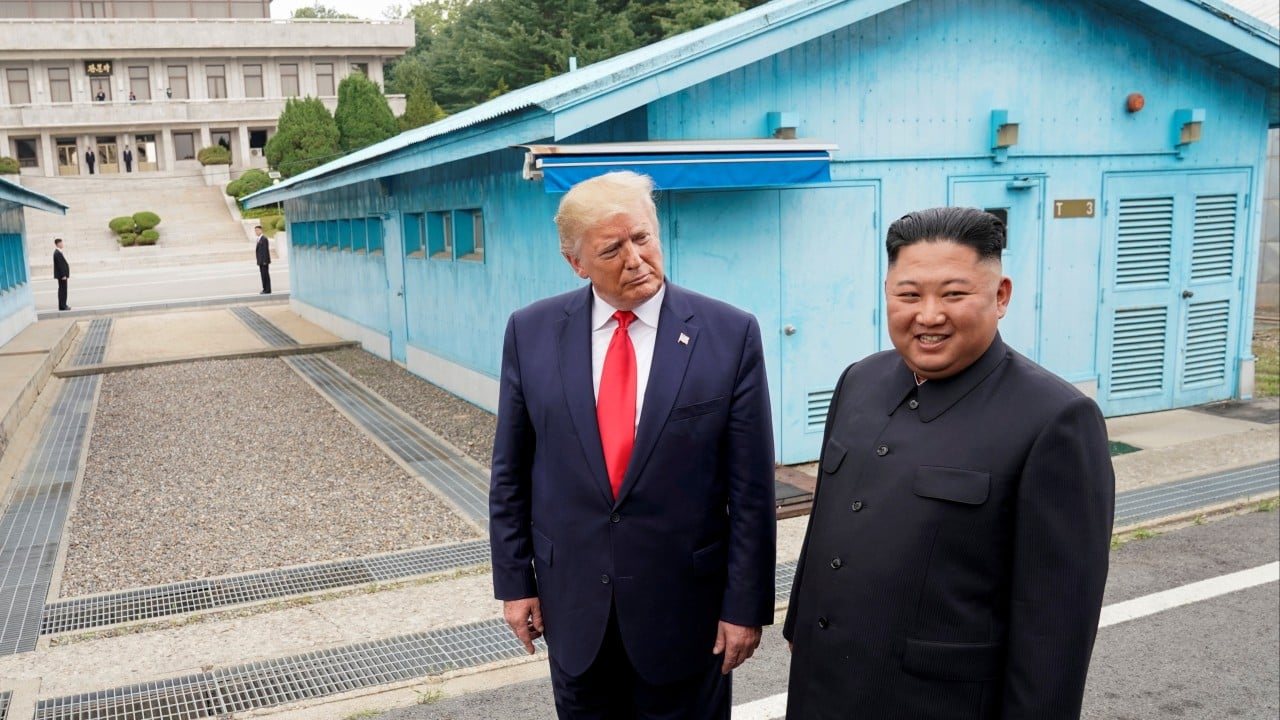
Whispers inside diplomatic corridors point to a startling foreign policy pivot originating from Beijing. The Chinese government is quietly positioning itself to mediate a renewed diplomatic summit between Donald Trump and North Korean leader Kim Jong Un, potentially targeting the upcoming APEC summit. Surface-level reporting treats this as a straightforward peace-brokering exercise. Decades of observing East Asian power struggles reveal a much darker, calculated game. Beijing is not volunteering to facilitate dialogue out of a sudden charitable urge for regional stability. Instead, Chinese President Xi Jinping is deploying diplomacy as an instrument of containment, aiming to check Moscow's alarming encroachment on the Korean Peninsula while reasserting absolute control over its own backyard.
The geopolitical chessboard shifted dramatically when North Korea and Russia forged a deep military and economic alliance. Kim Jong Un realized he no longer needed to rely solely on Beijing for survival. By supplying artillery, munitions, and troops to support Vladimir Putin’s campaign in Ukraine, Pyongyang unlocked billions in trade and technical assistance, effectively bypassing decades of international isolation and eroding the United Nations sanctions framework. For Beijing, this blossoming bromance between Moscow and Pyongyang is a nightmare scenario. A completely rogue North Korea tethered to Russian military patronage gives China a dangerous neighbor it cannot fully control.
By offering to host or facilitate a meeting between Washington and Pyongyang, Beijing seeks to reclaim its status as the indispensable center of gravity in Northeast Asia. It is a classic wedge strategy. If Xi Jinping can successfully chaperone Kim back to the negotiating table with an American president, Beijing reminds both Washington and Pyongyang that no major security arrangement on the peninsula can bypass Chinese consent.
The Price of Admission
Kim Jong Un enters any potential talks from a position of absolute refusal to compromise on his nuclear arsenal. During past encounters, culminating in the wreckage of the Hanoi summit, North Korea demanded immediate relief from crushing international penalties without offering irreversible disarmament in return. Today, the stakes are exponentially higher. Kim has formally codified his nuclear status into law, deepened ties with Moscow, and watched Washington's strategic documents subtly drop explicit demands for total denuclearization.
Any diplomatic overture brokered by Beijing will carry a devastatingly high price tag. Analysts close to the negotiations suggest that Pyongyang will demand explicit U.S. recognition of its nuclear-armed status alongside sweeping sanctions relief. Donald Trump has historically shown an appetite for unconventional diplomacy and flashy photo opportunities, frequently dismissing standard bureaucratic guardrails. Yet, granting de facto nuclear legitimacy to Pyongyang upends decades of non-proliferation norms and sends shockwaves through traditional U.S. allies in Seoul and Tokyo.
South Korea finds itself trapped in an agonizing bind. Seoul’s defense strategy relies heavily on extended American deterrence. If Washington engages in bilateral horse-trading with Kim Jong Un over the heads of South Korean officials, the security architecture of the entire region fractures.
The APEC Calculus
Current intelligence points toward the November APEC gathering in Shenzhen as the logistical focal point for these machinations. Preliminary visits by American envoys to Chinese tech hubs earlier in the autumn fed speculation that backchannel communications are moving past the theoretical stage. Beijing wants to ensure that any prospective meeting serves Chinese core interests before allowing it to proceed. If the White House enters these talks without pre-established concessions, Beijing retains the leverage to slowroll or sabotage the initiative entirely.
This maneuver exposes the fundamental transactional nature of great power competition. China fears a runaway North Korean state more than it fears American diplomatic engagement, provided that engagement occurs under Chinese supervision. By acting as the bridge between Washington and Pyongyang, Beijing simultaneously sidelines Russian influence, manages American unpredictability, and anchors its own dominance across the Pacific rim.
The impending diplomatic theater is less about achieving lasting peace on the Korean Peninsula and more about who gets to write the rules of the post-western regional order. As envoys finalize schedules behind closed doors, the underlying reality remains unchanged. Pyongyang keeps its warheads, Moscow keeps its munitions pipeline, and Beijing keeps its hand firmly on the geopolitical steering wheel.
For a closer look at how international analysts evaluate these shifting regional dynamics, watch this analysis on Xi Jinping's potential mediation strategy.
http://googleusercontent.com/youtube_content/1