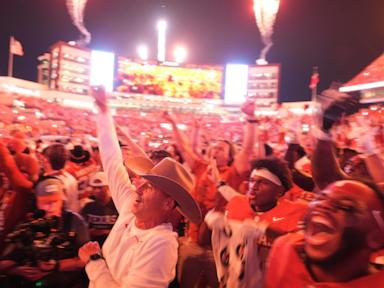
The crisp smell of autumn does not arrive on a calendar date. It arrives with the low, rolling rumble of a distant stadium PA system echoing across a campus quad, the sharp scent of lighter fluid and charred lighter wood in a tailgating lot, and the sudden, electric snap of shoulder pads colliding under a Friday night stadium light or a Saturday afternoon sun.
For millions, this isn't entertainment. It is rhythm. It is a generational clock by which we measure time, youth, and belonging.
Yet, behind the painted faces and the roaring student sections, a quiet, high-stakes war is being waged over the machinery that powers it all. It is a war fought in the sterile committee rooms of Washington, D.C., and inside the glass-walled offices of athletic directors who no longer recognize the sport they manage. At the center of this storm lies a legislative push known as the Protect College Sports Act—a bill designed to freeze the chaos of modern amateur athletics, but one that risks breaking the very thing it seeks to save.
To understand why this legislation matters, you have to step away from the podiums and walk into a locker room in late August.
Consider Marcus. He is a hypothetical twenty-year-old redshirt junior offensive tackle at a mid-tier Division I program. He wakes up at 5:00 AM. His knees ache before his feet even hit the hardwood floor—the permanent tax of squatting four hundred pounds and absorbing sixty-car-crash collisions every autumn. By 6:00 AM, he is in the film room, dissecting defensive blitz packages. By noon, he is attending classes in finance, fighting to stay awake after a morning workout that burned two thousand calories.
For decades, Marcus and thousands like him played under a system that promised them an education in exchange for their physical prime, while billions of dollars flowed into university coffers, television network accounts, and coaching salaries that rival Fortune 500 CEOs. When the Supreme Court unanimously ruled against the NCAA's amateurism rules in 2021, the dam broke. Name, Image, and Likeness rights arrived. The transfer portal opened. Players could finally profit off their own labor and move when circumstances changed.
The landscape shifted overnight. But freedom, it turns out, is messy.
Chaos followed. Boosters formed deep-pocketed collectives, dangling six-figure paydays to lure star quarterbacks away from traditional powerhouses. Programs began to resemble professional minor leagues operating without a collective bargaining agreement, salary caps, or standard contracts. Athletic directors panicked. Coaches threatened to walk. Fans watched their favorite players cycle through three different schools in three years, eroding the loyalty that forms the bedrock of college sports fandom.
Enter the legislative counter-offensive.
The Protect College Sports Act is pitched as a lifeline. Its proponents argue that without federal intervention, the Wild West of college athletics will devour itself. They want to codify amateurism definitions, curb the unchecked power of state-by-state NIL laws, and establish a uniform national standard. On paper, it sounds like order. It sounds like protection.
But law is a blunt instrument. When you drop a legislative hammer on a living, breathing ecosystem, you rarely fix the disease; you often cripple the patient.
If you strip away the legal jargon, the core conflict of the Protect College Sports Act boils down to a fundamental question: Who owns the value of the game?
For generations, the answer was simple: the university, the conference, the NCAA. The players were compensated with a scholarship—valuable, certainly, but a fraction of the economic footprint they generated. When a Saturday afternoon broadcast pulled in twenty million viewers, the players who risked their ligaments on the turf received zero broadcast royalties, while coaches secured multi-million-dollar buyouts that could fund academic departments.
The arrival of NIL was not a corruption of college sports; it was a long-overdue reckoning. It was the correction of a historic imbalance.
Yet, the pendulum swung hard. Without guardrails, the system lurered toward anarchy. Enterprising agents, unregulated collectives, and opaque bidding wars created an environment where high school seniors were commanding endorsement deals before ever taking a college snap. It is entirely understandable why university presidents and athletic directors are sounding the alarm. They look at the current trajectory and see an unsustainable bubble.
The danger of the Protect College Sports Act is that in its zeal to restore order, it risks rolling back the hard-won economic rights of the athletes. If federal legislation defines student-athletes strictly in ways that shield institutions from employment status or collective bargaining, it locks players back into a system of institutional paternalism. It silences their voice at the exact moment they have finally found it.
Look closely at the debate surrounding the return of college football this season. The stands are packed. The ticket prices are staggering. The television contracts are astronomical. The machine is roaring louder than ever.
And underneath it all, the players are carrying the weight.
When Marcus steps onto the field for the opening kickoff, he isn't thinking about federal antitrust exemptions or state NIL statutes. He is listening to the roar of ninety thousand people, feeling the adrenaline spike in his veins, and hoping his left knee holds up for four quarters. He is living out a dream that demands everything he has, body and mind.
We owe it to Marcus, and to the millions who pour their hearts into these autumn Saturdays, to build a system that is both sustainable and fair. Freezing the clock through heavy-handed federal fiat is not the answer. Creating transparent, equitable frameworks—where athletes can share in the wealth they create while preserving the academic and competitive integrity of the institutions—requires patience, negotiation, and courage.
The season has returned. The lights are burning bright against the autumn dusk. The roar is back.
How we manage the business behind the game will determine whether that roar remains a celebration of human potential or fades into just another corporate product, stripped of the soul that made us fall in love with it in the first place.