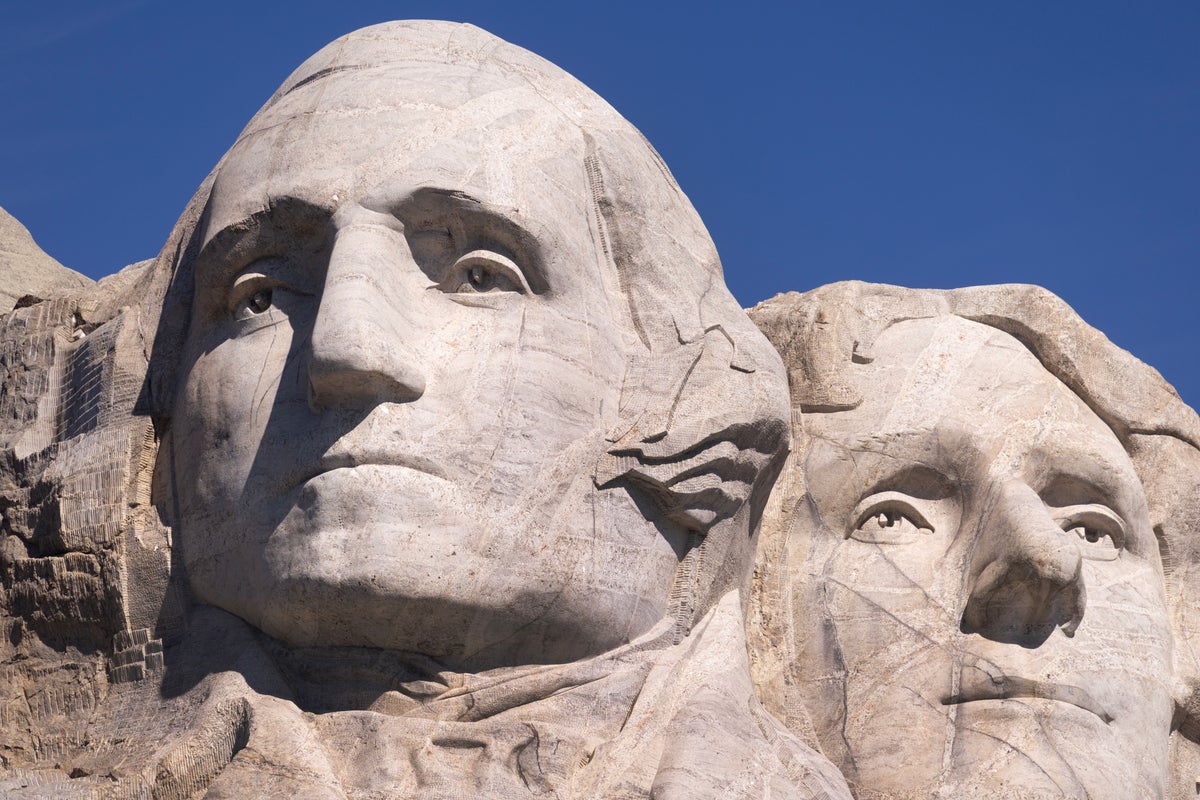
The United States is hurtling toward July 4, 2026, marking exactly 250 years since the signing of the Declaration of Independence. Yet, the national mood is far from celebratory. Instead of a unifying moment of historical reflection, the upcoming semiquincentennial has ignited a fierce ideological civil war over the legacy of the man who penned those foundational words, Thomas Jefferson. The primary tension is no longer about balancing his brilliant political philosophy against his ownership of enslaved people. The conflict has evolved into a structural battle over how modern institutions, museums, and politicians weaponize his memory to serve competing visions of America’s future.
Historians and cultural institutions are completely divided on how to handle the third president as the national anniversary approaches. Some advocate for a radical dismantling of his traditional status, while others warn that purging Jefferson from the national pantheon hollows out the very foundations of American democracy. This is not a academic debate confined to university lecture halls. It is playing out in corporate boardrooms, museum curation budgets, and federal planning committees.
The Financial Evaporation of Monticello and Historical Tourism
For decades, Thomas Jefferson’s mountaintop plantation, Monticello, operated as a secular shrine. It drew hundreds of thousands of visitors annually, eager to see the architectural marvels and artifacts of the ultimate American polymath. Today, the estate functions more like a crime scene investigation. Under the leadership of the Thomas Jefferson Foundation, the tour scripts have shifted dramatically to center on the lives of the roughly 400 enslaved people who lived and labored on the mountain, most notably the Hemings family.
This shift was data-driven and intentional, aimed at addressing centuries of historical erasure. However, the institutional pivot has triggered an unintended economic backlash that few in the museum world are willing to discuss openly.
Internal visitation metrics across the historic triangle of Virginia show a distinct pattern. Ticket sales at properties that have aggressively overhauled their narratives to focus heavily on critical race historiography have seen a steady decline in traditional domestic tourism over the last five years. Conservative donors, who once formed the financial bedrock of endowment funds for these estates, are quietly pulling their capital. They are redirecting their philanthropy toward organizations that promise to protect a more traditional, celebratory version of early American history.
This has left institutions like Monticello in a precarious financial vice. They must maintain their progressive historiographical integrity to retain academic accreditation and progressive foundation grants, but doing so alienates the mass-market tourist base needed to keep the lights on. The financial reality is brutal. Without a massive infusion of state or federal funding specifically tied to the 250th anniversary, several foundational historic sites face severe operational downsizing just as the national spotlight intensifies.
The Political Re-Branding of the Declaration
While cultural institutions grapple with funding shortages, the political establishment is engaged in a parallel effort to strip-mine Jefferson's texts for partisan advantage. The upcoming anniversary has created an insatiable demand for historical justification.
On the political right, there is a concerted effort to decouple Jefferson’s words from his personal life entirely. Conservative legal foundations and think tanks are pouring millions into a narrative that frames the Declaration of Independence as a divinely inspired, immutable contract. In this view, Jefferson was merely the vessel for absolute truths. By isolating the text from the messy reality of the man who wrote it, this strategy seeks to shield the founding documents from contemporary critiques of systemic inequality. They argue that focusing on Jefferson’s flaws is a deliberate attempt to delegitimize the American experiment itself.
Conversely, the political left has increasingly adopted a stance that treats Jefferson’s hypocrisy as the defining feature of the American origin story. The fact that he wrote "all men are created equal" while holding human beings in bondage is not viewed as a tragic contradiction, but as the foundational DNA of American capitalism and governance. This perspective argues that the 250th anniversary should not be a celebration at all, but a period of national mourning and structural truth-telling.
This ideological polarization has paralyzed the federal U.S. Semiquincentennial Commission, known officially as America250. Plagued by internal political infighting, executive turnover, and conflicting mandates, the commission has struggled to launch a coherent national narrative. States are increasingly taking matters into their own hands, creating localized commissions that reflect their own dominant political leanings. The result is a fragmented anniversary where a visitor in Boston will experience a fundamentally different version of 1776 than a visitor in Richmond.
The Overlooked Repercussions on Global Democratic Movements
Amid the domestic squabbling over monument removal and curriculum standards, American analysts are missing a critical geopolitical dimension. The global prestige of American democracy is tied directly to the moral authority of its founding myths.
For two centuries, dissidents, revolutionaries, and democratic reformers worldwide have used Jefferson’s language to challenge autocracy. From the French Revolution to the Tiananmen Square protests of 1989, the Declaration of Independence served as a universal toolkit for liberation.
When America signals that it no longer believes in its own founders, that skepticism echoes globally. Authoritarian regimes in Beijing, Moscow, and Tehran are actively exploiting America's internal historical warfare. State-run media in these nations regularly translate and broadcast American domestic debates about Jefferson's slaveholding past to their own populations. The narrative they push is simple: if the United States admits its founding ideals were fraudulent from the beginning, then Western-style democracy is a hypocritical sham that no other nation should emulate.
By reducing Jefferson to a single-dimensional caricature, the domestic debate inadvertently undermines the soft power that has protected democratic interests globally for generations. American activists who believe they are merely correcting local historical records are often oblivious to how their arguments are being weaponized by foreign adversaries to suppress democratic movements abroad.
The Myth of the Perfect Founder
The root of the crisis lies in a fundamental flaw in how the American public consumes history. The United States has long suffered from a form of civic hagiography, treating its founders as flawless deities rather than complex, flawed politicians navigating the constraints of their era.
Jefferson was a man of intense contradictions. He was an agrarian idealist who racked up catastrophic personal debts buying luxury consumer goods from Europe. He was an advocate for small government who executed the Louisiana Purchase without explicit constitutional authority. He detested the institution of slavery in his writings, yet he emancipated only a tiny fraction of his own enslaved workforce, primarily members of the Hemings family, upon his death.
Attempting to resolve these contradictions by either whitewashing his sins or completely erasing his contributions is a failure of intellectual honesty. The mechanism of American progress has always been the tension between the magnificent scope of the ideals laid out in 1776 and the painfully slow, agonizing struggle to realize them in practice.
The 250th anniversary is forcing a realization that the nation cannot survive on myth alone, yet it cannot cohere without shared ideals. If Jefferson is completely discarded, the nation loses the vocabulary of its own rights. The language used to fight for civil rights, women's suffrage, and labor reforms throughout American history was drawn directly from Jefferson's well. Stripping his name from universities and pulling down his statues does not punish the long-dead planter; it disarms the modern citizens who require his rhetoric to demand accountability from power.
The Structural Reality of the 2026 Commemoration
The logistics of the upcoming anniversary reveal that the debate will ultimately be decided by local municipal power and private capital, not academic consensus.
In major urban centers, corporate sponsorships for America250 events are lagging significantly behind the pacing of the 1976 Bicentennial. Fortune 500 companies are hyper-aware of the culture wars. They view the entire founding era as a public relations minefield. A marketing campaign featuring Jefferson risks boycotts from the left, while ignoring him risks boycotts from the right. Consequently, corporate dollars are shifting away from historical themes entirely, flowing instead into safer, forward-looking sponsorships centered on technology, environmental sustainability, and generalized community service.
This corporate retreat ensures that the 250th anniversary will be underfunded, localized, and highly erratic. The defining feature of the event will not be a singular national epiphany, but a stark manifestation of a divided country. The memory of Thomas Jefferson has become a mirror; what a citizen sees in it says far less about the man who died in 1826 than it does about the deep, unresolved fractures of the nation he helped create.