Walk into the office of one of India’s most powerful cabinet ministers and you expect polished teak, framed portraits of national leaders, and maybe a gleaming scale model of a Vande Bharat train. You don't expect a bare, empty nail sticking out of the wall.
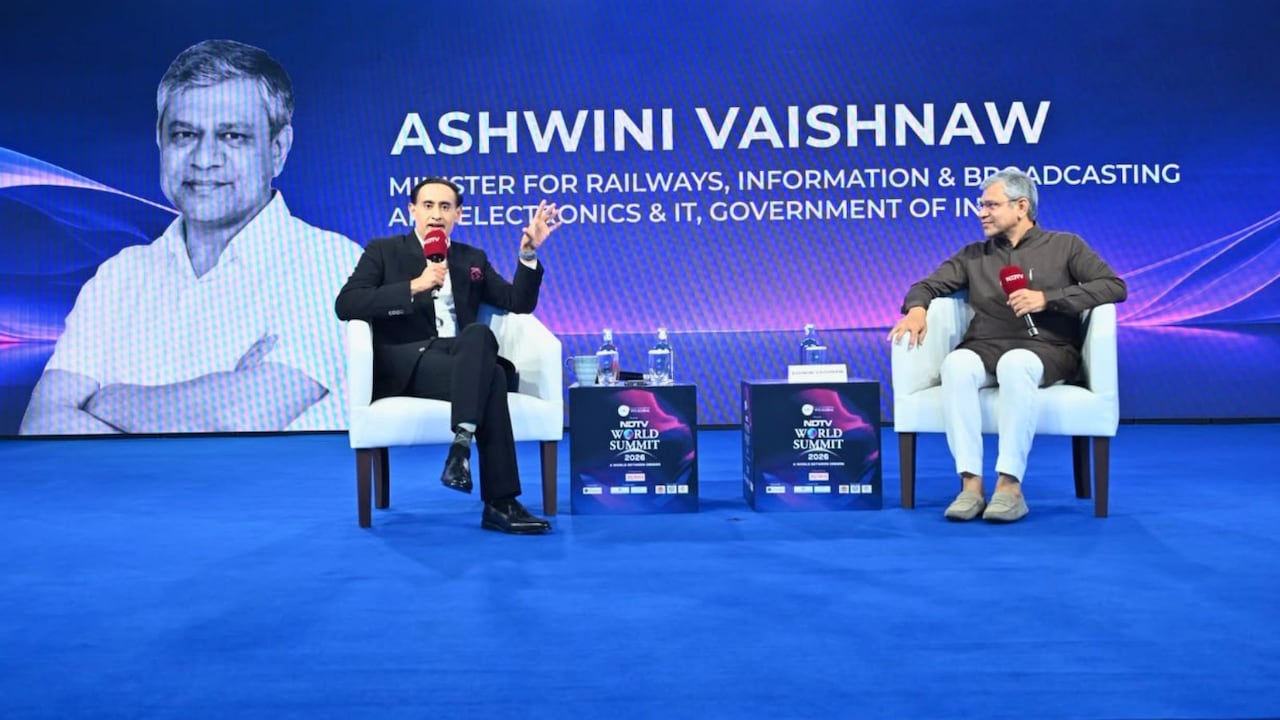
Yet that exact detail stole the spotlight during the NDTV World Summit 2026. When Union Minister for Railways, Information and Broadcasting, and Electronics and Information Technology Ashwini Vaishnaw shared the story behind that lonely piece of metal, it wasn't just a quirky personal anecdote. It was a deliberate window into how New Delhi currently views governance, bureaucracy, and its own unfinished business.
People have been searching for the story behind the bare nail in Ashwini Vaishnaw's office because political symbolism in India rarely happens by accident. Every prop in a minister's room sends a message. An empty nail sends a louder one than a gold-plated trophy ever could.
The Story Behind the Empty Wall at the NDTV World Summit 2026
During his session at the NDTV World Summit 2026, Vaishnaw fielded questions about India's massive infrastructure push, semiconductor manufacturing, and digital public infrastructure. Then the conversation turned to his workspace and mindset.
He pointed out a simple reality about his office setup. There is a bare nail on the wall with nothing hanging on it.
Why leave it empty? Because in traditional Indian government offices, walls get crowded fast. Ministers hang photographs of inaugurations, framed certificates, awards, and ceremonial mementos. Those frames celebrate what has already been done. They turn a workspace into a museum of past achievements.
Vaishnaw’s explanation cut straight through typical political self-congratulation. Leaving the nail bare serves as a daily reminder that the job isn't finished. You don't hang a trophy while the match is still in the first half.
It's a classic management philosophy—the idea of "Day One" thinking popularized in Silicon Valley, transplanted directly into the heart of Lutyens' Delhi. Before entering politics, Vaishnaw worked as an IAS officer, earned an MBA from the Wharton School, and held senior corporate roles at General Electric and Siemens. That corporate-meets-bureaucracy background shows up constantly in how he communicates. He treats ministries like high-stakes execution engines rather than ceremonial posts.
Why Political Minimalism Hits Different in Indian Governance
Let's be honest about how power usually looks in India.
For decades, ministerial offices were designed to intimidate and impress. Heavy velvet curtains, oversized portraits, endless rows of silver-plated plaques presented by visiting delegations—the visual language screamed status. Visitors were meant to feel small. The minister was meant to look untouchable.
Against that backdrop, talking about a bare nail at a major global forum like the NDTV World Summit 2026 is sharp positioning. It signals a shift from status-driven politics to outcome-driven administration.
Look at the three portfolios Vaishnaw manages simultaneously:
- Ministry of Railways: Overseeing track electrification, station redevelopment, Kavach safety rollouts, and next-generation train sets.
- Ministry of Electronics and Information Technology (MeitY): Driving the India Semiconductor Mission, AI compute capacity, and Digital Public Infrastructure.
- Ministry of Information and Broadcasting: Navigating media regulation, digital creator economies, and legacy broadcast transitions.
Managing one of these ministries is a full-time crisis-management job. Managing all three at once means you simply don't have time to admire framed photos on your wall. If you start celebrating early, something breaks—literally, in the case of railways, or economically, in the case of global supply chains.
The Trap of Premature Victory Laps
Politicians love ribbon-cutting ceremonies. The public sees a gleaming new terminal or a groundbreaking ceremony for a chip plant and assumes the hard part is over.
Anyone who has ever built large-scale infrastructure or tech ecosystems knows the opposite is true. Groundbreaking is the easiest day of the project. The misery happens in the middle—land acquisition bottlenecks, supply chain delays, talent shortages, vendor disputes, and software bugs that show up at two in the morning.
When a minister keeps a bare nail on the wall, they're acknowledging that signing a Memorandum of Understanding (MoU) isn't the same thing as shipping a product. Announcing a policy isn't the same thing as executing it on the ground.
What That Bare Nail Actually Represents Across Vaishnaw's Ministries
If you strip away the media soundbites from the summit, the metaphor of the unfinished wall maps directly onto the biggest challenges sitting on Vaishnaw's desk right now. None of his flagship projects have crossed the finish line yet. They're all in the messy middle.
1. India's Semiconductor Gamble
India spent decades watching Taiwan, South Korea, the United States, and China dominate chipmaking. Missed opportunities in the 1980s and early 2000s became painful case studies in bureaucratic hesitation.
Under the India Semiconductor Mission, the government committed billions of dollars in fiscal support to attract fabrication and assembly plants, including major projects by Tata Electronics, Micron, and CG Power. Construction is underway in places like Dholera and Sanand.
Still, construction isn't production. A fab isn't a success when the concrete dries; it's a success when commercial wafers roll off the line with competitive yield rates. Until Indian-made chips are powering global electronics at scale, that nail stays bare.
2. Railway Modernization vs. Daily Commuter Reality
Ask any frequent rail traveler in India about the state of Indian Railways and you'll get two completely different answers depending on which train they boarded.
On one hand, the transformation is undeniable. Vande Bharat Express trains have changed expectations around semi-high-speed regional travel. Station redevelopment projects are turning chaotic junctions into airport-style terminals. Broad-gauge electrification has raced toward near-100% completion.
On the other hand, millions of general-class passengers still deal with severe overcrowding during peak seasons. Freight speeds still need to climb to lower India's logistics costs. Automatic train protection systems like Kavach require massive, relentless track-side deployment across tens of thousands of kilometers.
Celebrating the Vande Bharat while general coaches remain packed would be hanging a picture on the wall too early. The work is visibly incomplete.
3. The AI and Digital Public Infrastructure Race
India proved the world wrong with Aadhaar and UPI. Critics once argued that a developing nation with patchy internet couldn't build real-time digital payment rails for hundreds of millions of people. Today, UPI processes billions of transactions every month and serves as a global benchmark.
Now comes the harder sequel. Under the IndiaAI Mission, the government is trying to build sovereign compute infrastructure, support domestic foundational models, and regulate deepfakes and algorithmic harm without straggling innovation.
Unlike UPI, where India had a clean slate, artificial intelligence is a hyper-competitive global race dominated by massive private capital in the US and China. Yesterday's digital public infrastructure wins won't automatically hand India an AI victory.
The Psychology of Visible Reminders in High-Stakes Leadership
Is keeping a bare nail on the wall a bit theatrical? Sure. Every seasoned politician understands the power of a sticky visual story that journalists will repeat in headlines.
Even so, the underlying habit is grounded in real behavioral psychology. Physical cues in an environment shape daily decision-making far more than abstract mission statements written in a binder.
Consider how high-performing leaders use physical anchors:
- Jeff Bezos famously left an empty chair in Amazon conference rooms to represent the customer—the most important person in the room who wasn't actually there.
- Sports coaches routinely put up photos of championship losses rather than wins inside training facilities to prevent complacency during the off-season.
- Product engineers keep physical prototypes of failed hardware on their desks so they remember the exact failure modes they need to prevent in version two.
When you walk into your office every morning and see an empty nail at eye level, it creates mild psychological friction. Your brain registers an incomplete loop. Psychologists call this the Zeigarnik effect—the human tendency to remember and focus on uncompleted or interrupted tasks far better than completed ones. Once a task is finished and a trophy is hung, mental urgency drops.
In a government system historically notorious for slow file movement and comfort with the status quo, keeping that urgency alive is half the battle.
What Critics and Observers Often Miss
Whenever a political story goes viral, reactions split into two predictable camps. Supporters treat it as proof of unmatched humility and work ethic. Critics dismiss it as clever PR designed to distract from real-world problems.
Both reactions miss the point.
You don't need to treat a bare nail like a miracle to understand why it matters. At the same time, dismissing it as "just PR" ignores how organizational culture actually changes in massive bureaucracies.
Civil servants and junior officials mirror the behavior of the person at the top. If a minister obsesses over photo-ops, framing every ribbon-cutting ceremony and decorating hallways with self-congratulatory posters, the entire ministry optimizes for photo-ops. Files move fast only when a camera crew is scheduled to arrive.
When the minister explicitly rejects premature trophies and frames everything around unfinished targets, the internal signal shifts. Officials realize that announcing a scheme won't earn them praise—hitting actual operational milestones will.
Of course, symbolism only works if the execution backs it up. A bare nail looks inspiring when trains are being built, fabs are rising out of the dust, and digital networks are expanding. If projects stall for years, that same empty nail starts looking like a monument to missed deadlines. That's the risk of setting a public standard like this: it invites everyone to judge you by what hasn't been hung on the wall yet.
How You Can Apply the "Bare Nail" Principle to Your Own Work
You don't need to run a government ministry to steal this idea. Most professionals and founders suffer from the exact same disease—falling in love with their own early wins.
You launch a website, hit your first revenue milestone, get a promotion, or receive positive feedback on a project, and suddenly your edge dulls. You spend more time talking about what you built last year than fixing what's broken today.
Try applying the same physical rule to your own workspace this week:
- Clear the vanity metrics off your immediate line of sight. Put away the old certificates, past press mentions, or completed milestone trackers sitting right next to your monitor. Keep them in a drawer if you want, not in your primary field of vision.
- Create one physical placeholder for an unfinished goal. Leave a blank spot on your whiteboard, an empty frame on your shelf, or a single sticky note with one uncompleted metric that actually moves the needle for your business or career.
- Audit your "announced vs. delivered" ratio. Look at your current project list and separate things you've merely planned or talked about from things that are actually live, tested, and delivering real results.
- Delay the celebration until the boring maintenance phase works. Anyone can survive launch day. Hold off on hanging the picture until the system runs smoothly six months after the initial hype fades.
Ashwini Vaishnaw's story at the NDTV World Summit 2026 resonated because deep down, most people recognize how easy it is to confuse motion with progress. A bare nail doesn't build a railway track or fabricate a microchip, and it won't solve India's infrastructure bottlenecks on its own—but it's a sharp reminder that until the work delivers for the person at the end of the line, the wall belongs empty.