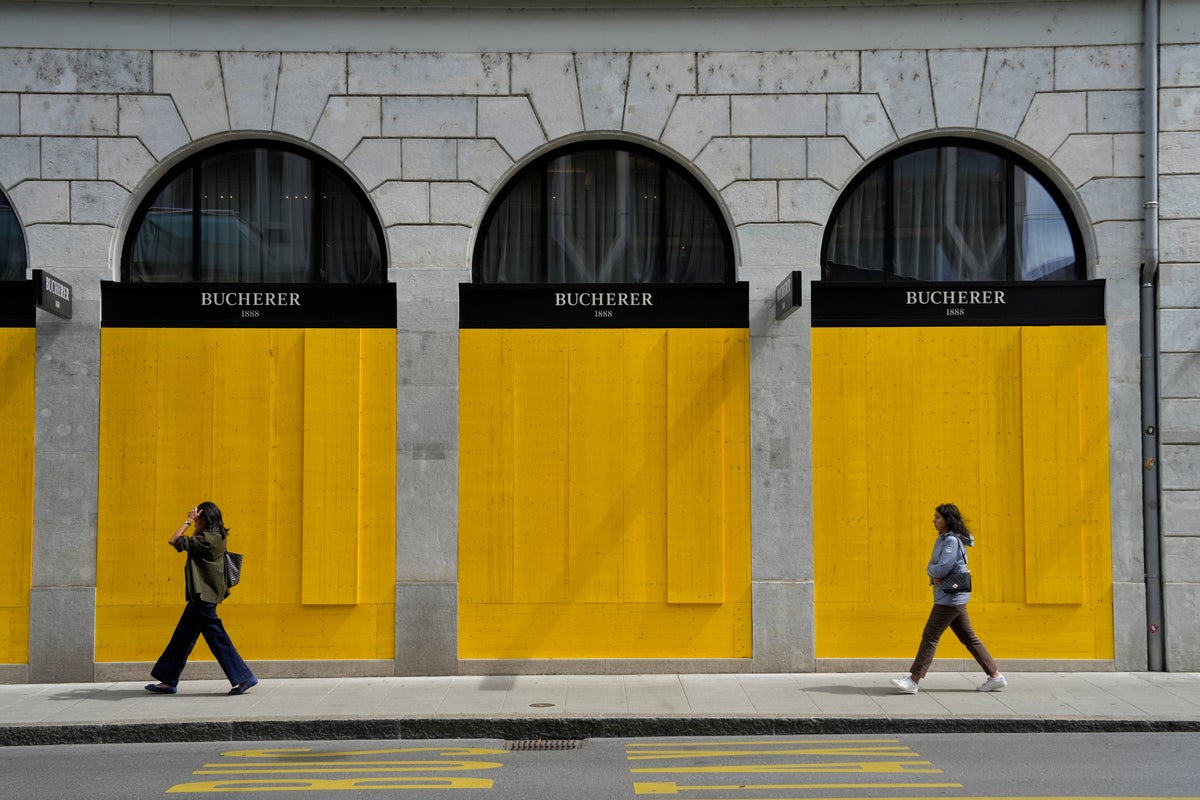
The coffee machine at the Café de la Paix always rattles when the heavy transport trucks roll past. It is a familiar, rhythmic vibration that the locals usually ignore. But this week, the trucks are different. They are painted in olive drab and dark, matte blues. They carry rolls of razor wire that catch the pale morning light bouncing off Lake Geneva.
For the people who live in the quiet towns straddling the Swiss-French border, the transition from postcard-perfect tranquility to fortified fortress happens with terrifying speed.
Every few years, the global spotlight swings like a heavy, blinding searchlight toward a chosen corner of the map. This time, it has landed on the borderlands here, where the G7 summit is convening. The world’s most powerful leaders are arriving to debate inflation, war, climate change, and the fragile architecture of global trade. They will sit in soundproofed rooms, shielded by bulletproof glass and diplomatic immunity.
But outside, in the winding streets and lakeside promenades, a different kind of reality is being constructed. It is a reality of checkpoints, concrete barriers, and an underlying current of intense anxiety.
The Border that Vanished and Returned
To understand what is happening here, you have to understand what this border usually represents. In normal times, the line between Switzerland and France in this region is almost invisible. People cross it to buy bread. They cross it for their morning commute. It is a fluid, gentle boundary marked only by historical signs and the occasional empty customs hut.
Now, look at what happens when the global elite arrive.
The invisible line suddenly hardens. Thousands of police officers, soldiers, and security personnel have descended upon the region. They are establishing a ring of steel. Helipads have been cleared. Airspace is restricted. The local population finds itself living inside a high-security experiment.
Consider a hypothetical resident named Pierre. He runs a small bakery just a mile from the French side of the border. In a normal week, half his customers walk over from Switzerland. This week, Pierre’s morning routine does not begin with the smell of rising dough; it begins with a security pat-down and the presentation of three different forms of identification just to get down his own street.
"They tell us it is for our safety," Pierre says, wiping his hands on a flour-dusted apron. "But when you see men with automatic rifles standing next to the schoolyard, you do not feel safe. You feel like a target."
This is the psychological tax of high-stakes diplomacy. The summits are meant to solve global crises, but for the communities that host them, they create an immediate, localized crisis of daily life.
The Ghost of Genoa
The extraordinary level of security is not a product of paranoia. It is born from history. The organizers of these massive international gatherings are haunted by ghosts.
Specifically, they remember Genoa.
Back in 2001, the Italian port city hosted the G8 summit. What was meant to be a celebration of global cooperation devolved into a war zone. Hundreds of thousands of protestors filled the streets. The confrontations between black-bloc anarchists and riot police turned lethal. Buildings burned. A young protestor was shot and killed. The images of tear gas drifting past historic Italian architecture permanently changed how these summits are policed.
Since then, the strategy has been simple: isolation.
By choosing a venue on the Swiss-French border, organizers are utilizing geography as a weapon of defense. The lake provides a natural barrier on one side. The mountains hem in the terrain on the other. It is beautiful, yes, but it is also highly defensible.
Yet, this isolation creates a profound paradox. The G7 leaders are meeting to discuss the future of the global population, yet they must be entirely insulated from that very population to do so. The further the leaders retreat behind layers of armor and concrete, the more detached they appear from the struggles of the average citizen. It creates a visual narrative of the rulers versus the ruled, played out against a backdrop of breathtaking alpine scenery.
The Cost of the Invisible Wall
The financial numbers thrown around during these summits are dizzying. Millions of dollars are allocated for overtime pay, surveillance technology, and temporary infrastructure. But the human cost is measured in smaller, quieter ways.
- The hotel owner who had to cancel dozens of tourist bookings because the entire zone is locked down.
- The commuter who faces a two-hour detour through mountain passes because the main highway is reserved for official motorcades.
- The local activist whose peaceful demonstration has been moved to a designated "free speech zone" miles away from where anyone can actually hear them.
There is an undeniable tension in the air. The police forces are on edge. They have been briefed on every nightmare scenario imaginable, from drone attacks to mass cyber disruptions. When everyone is on high alert, the margin for error disappears. A dropped backpack or a car backfiring can trigger a lockdown.
This tension trickles down to the protestors who are arriving in the region. Not all of them are looking for a fight. The vast majority are climate activists, trade unionists, and anti-poverty advocates who genuinely believe that the policies decided inside the summit will harm the planet.
But the presence of the riot gear and the razor wire changes the nature of dissent. It creates an adversarial environment before a single word is spoken or a single sign is lifted. It suggests that disagreement is inherently dangerous.
When the Circus Leaves Town
By the end of the week, the motorcades will speed back to the airports. The helicopters will stop buzzing overhead. The G7 leaders will issue a joint communique filled with carefully worded promises and diplomatic compromises. They will fly away to their respective capitals, leaving behind a mountain of paperwork and a temporary sense of relief.
Then, the slow work of dismantling the fortress begins.
The concrete barriers will be loaded back onto the flatbed trucks. The razor wire will be rolled up and stored in warehouses until the next time the global spotlight needs a secure location. The invisible border will become invisible once again.
But the memory of the occupation lingers.
On the final evening of the summit, as the sun dips below the peaks of the Alps, the lake looks remarkably peaceful. The water is still, reflecting the pinks and oranges of the twilight sky. But if you walk close to the water’s edge, near the promenade where tourists usually stroll, you can still see the deep grooves left in the grass by the heavy boots of the border guards. The turf is torn and muddy, a small, stubborn scar on a beautiful landscape, reminding everyone of the price required to keep the rest of the world at bay.


