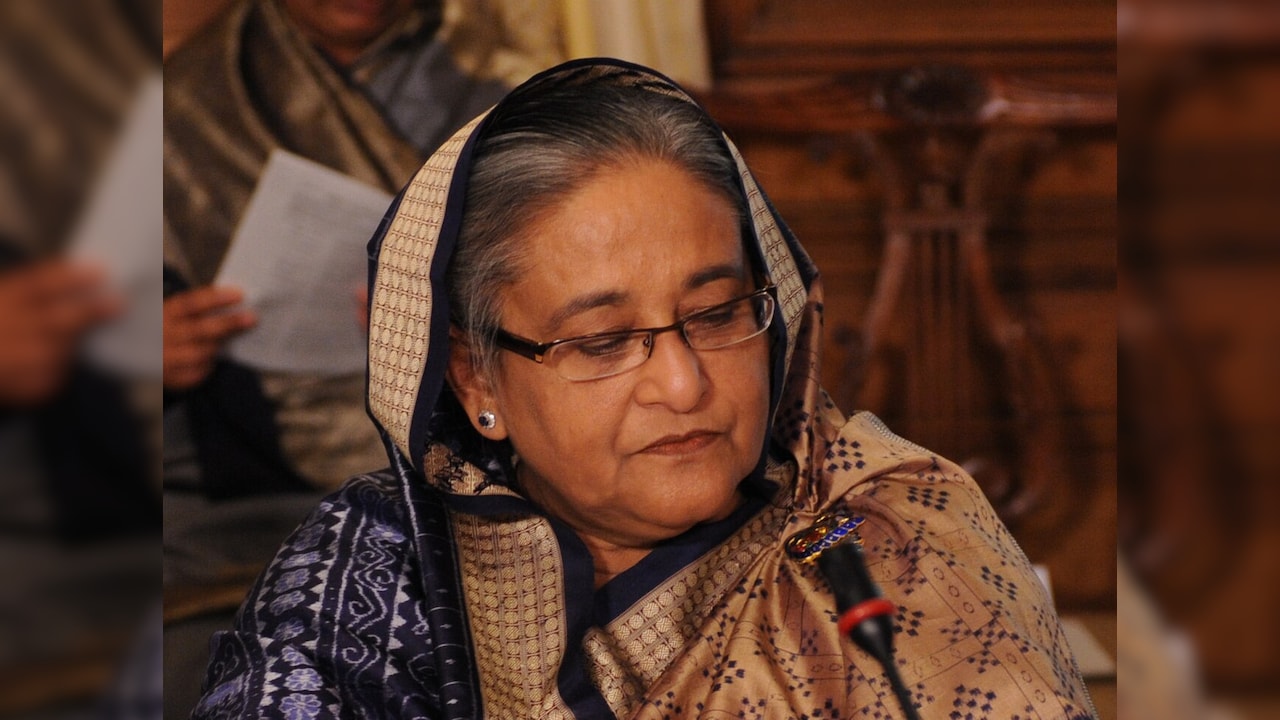
The political chess game in Bangladesh just took a bizarre, high-stakes turn.
After fleeing to India in a military helicopter during the August 2024 student-led uprising, former Prime Minister Sheikh Hasina has dropped a bombshell: she plans to return to Bangladesh by December 2026.
She is seventy-eight, her political party is banned, and she faces a death sentence passed in absentia by the country's International Crimes Tribunal (ICT). Yet, she claims she is ready to surrender and face the music.
Instead of panic, the response from the interim government in Dhaka was practically a dare. Zahed Ur Rahman, adviser to Prime Minister Tarique Rahman, shrugged and welcomed the news. His message to the exiled leader? "Let her bring the best lawyers in the world."
This is not just standard political posturing. It is a calculated gambit on both sides, and the outcome will dictate the stability of South Asia for the next decade.
The Audacity of the December Plan
Let’s be honest: politicians don't usually volunteer to return to a country where a gallows is waiting for them.
Hasina’s stated goal is to challenge the legal ban on her party, the Awami League, and to fight what she calls "farce" trials. She’s urging other exiled loyalists to join her in a mass surrender.
"They may arrest me on my return, they may even kill me," Hasina said in a recent interview. "Still, I have to go."
It sounds noble, but it's highly tactical. By returning voluntarily, she does a few things at once:
- She defuses India's diplomatic nightmare. New Delhi has been stuck in a terrible spot, trying to maintain ties with the new Bangladeshi administration while hosting its most wanted fugitive.
- She tests the state's judicial legitimacy. If Dhaka locks her up or executes her without what the international community deems "due process," they risk looking just as authoritarian as she did.
- She mobilizes her remaining base. The Awami League is down, but it isn't entirely dead. A public trial is the ultimate platform for political theater.
Why Dhaka is Smiling
You might think Dhaka would want to keep Hasina far away. In reality, her return solves a massive headache for the current administration.
Ever since the ICT handed down her death sentence, Bangladesh has been badgering India for her extradition. India has dragged its feet, hiding behind "legal processes" to avoid handing over a long-time ally. If Hasina flies back on her own dime, that friction vanishes.
Dhaka is so confident that they are promising a fully transparent, televised trial. They want international observers in the room.
But there’s a quiet legal escape hatch built into this "welcome."
Zahed Ur Rahman pointed out that the judiciary is independent, meaning the court could theoretically revise the verdict or even acquit her. "That too could happen," he noted.
By highlighting that death row can be revised, Dhaka is signaling to the world—and to Western critics—that this is a legitimate judicial process, not a kangaroo court designed for state-sponsored execution. They are betting that their evidence of her crackdowns on student protesters is airtight. They want the spectacle of a fair trial because winning it legally legitimizes the entire 2024 revolution.
The Catch-22 of the Legal Battle
Don't buy into the narrative that this will be a clean, simple trial. It is going to be incredibly messy.
The legal framework being used to try Hasina—the International Crimes Tribunal—was actually set up by Hasina herself back in 2010 to prosecute war crimes from the 1971 liberation war. Now, the tools she built are being turned against her.
However, legal experts have raised serious flags about how the current interim government has modified this tribunal. There have been rapid, retroactive changes to the laws governing it, and the prosecution’s reliance on leaked audio recordings has drawn skepticism from international legal observers.
If Hasina actually lands in Dhaka, her legal team will almost certainly target these procedural anomalies.
Furthermore, the Chief Prosecutor of the ICT has stated that Hasina must physically surrender to exercise her right to appeal her death sentence. This means she cannot fight the ruling from the safety of New Delhi. She has to put her head in the lion’s mouth just to ask the lion not to bite.
What Actually Happens Next
If you are tracking this situation, don't expect a quiet winter. The logistics of a former dictator returning to the scene of her ouster are incredibly volatile.
Here is what you need to watch for as December approaches:
- The Extradition Bluff: Watch if India and Bangladesh quietly negotiate a quiet, controlled transfer before December to avoid a chaotic airport circus in Dhaka.
- Security Mobilization: If Hasina actually boards a flight, Dhaka will go into a security lockdown to prevent massive clashes between Awami League loyalists and the student groups that ousted her.
- The Legal Defense Team: Look at who Hasina hires. If she employs high-profile international human rights lawyers, the trial will turn into a global debate on the legitimacy of Bangladesh's post-revolution legal system.
The interim government is calling her bluff. Now, we wait to see if Hasina actually books the ticket.