You think you're making a healthy choice. You grab a bagged salad or hit a drive-thru for a quick taco, expecting some crisp crunch. Instead, you end up with a microscopic nightmare that hijacks your digestive tract for weeks.
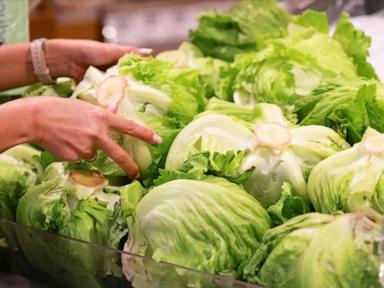
That is exactly what thousands of Americans are facing right now. A massive outbreak of Cyclospora cayetanensis—a nasty little parasite—has triggered a sweeping 27-state recall of shredded iceberg lettuce supplied by Taylor Farms de Mexico. This isn't your standard 24-hour stomach bug. We are talking about an aggressive, weeks-long gastrointestinal siege that has already sickened thousands and landed over a hundred people in the hospital. If you liked this article, you might want to look at: this related article.
If you have bagged lettuce in your fridge or frequently eat out, you need to understand what's happening. The official recall list is long, but the actual risk might be even wider.
The Massive Scale of the 2026 Iceberg Recall
The U.S. Food and Drug Administration (FDA) and the Centers for Disease Control and Prevention (CDC) traced the outbreak back to a single supplier: Taylor Farms de Mexico. Specifically, the contaminated greens originated from an independent farm in Guanajuato, located in central Mexico. For another perspective on this development, check out the latest coverage from CDC.
Taylor Farms operates as a massive quiet giant in the food industry. They supply the bulk shredded lettuce used by major fast-food chains, sit-down restaurants, and massive grocery retailers like Walmart, Target, and Costco. Because they handle so much volume, a single contaminated lot spreads across the country at lightning speed.
Right now, the voluntary recall covers bulk food-service packages and certain retail bagged iceberg products distributed between June 29 and July 16, with "best by" dates extending out to August 3. The official recall spans 27 states:
Alabama, Arkansas, Connecticut, Florida, Georgia, Iowa, Illinois, Indiana, Kansas, Kentucky, Louisiana, Massachusetts, Maryland, Michigan, Missouri, Mississippi, North Carolina, New Hampshire, New Jersey, Ohio, Oklahoma, Pennsylvania, South Carolina, Tennessee, Texas, Virginia, and Wisconsin.
The sheer volume of cases is staggering. Michigan alone has reported over 5,000 cases of cyclosporiasis. Nationwide, confirmed cases and those currently under investigation have rocketed past 7,000. To put that into perspective, the entire United States only saw 249 confirmed cases during the same period last summer. We are looking at an explosion of infections, and federal health officials openly admit the numbers will continue to climb as the investigation plays catch-up.
The Taco Bell Connection and Beyond
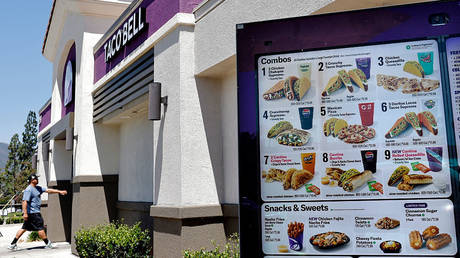
The first major domino to fall was Taco Bell. Investigators interviewing sick patients noticed a glaring pattern: a huge cluster of people had eaten at Taco Bell locations across Indiana, Kentucky, Michigan, Ohio, and West Virginia. The common denominator on the menu was shredded iceberg lettuce.
Taco Bell moved quickly, pulling the lettuce from its supply chain nationwide and replacing it within 24 hours. Major restaurant distributors like Sysco and US Foods also scrambled to stop shipments and ordered their commercial clients to destroy any inventory sourced from the central Mexico facility. Walmart also pulled affected retail items, specifically mentioning its Marketside-brand bagged lettuce.
But here is where it gets incredibly messy for you, the consumer: Taylor Farms has been highly secretive about the specific brand names and retail locations involved. Their official recall notice listed vague internal brand codes and product descriptions but omitted the actual names of grocery stores or restaurants where the general public bought the lettuce.
Food safety advocates are furious. Public health experts argue that without explicit retail distribution lists, a recall is basically a guessing game for the average shopper. You could easily have a contaminated bag of salad mix sitting in your crisper drawer right now, totally unaware that it originated from the implicated Guanajuato facility.
What Is Cyclospora and Why Is It So Hard to Get Rid Of?
Most people are familiar with Salmonella or E. coli, which are bacterial infections. Cyclospora cayetanensis is entirely different. It’s a microscopic, single-celled parasite.
The way it spreads is incredibly unappealing. Cyclospora is transmitted through the fecal-oral route. It happens when human feces containing the parasite contaminate food or water systems. In large-scale agriculture, this usually tracks back to contaminated irrigation water sprayed directly onto the crops, or poor sanitation infrastructure for field workers.
Once the parasite hitches a ride on a leaf of lettuce, you can't just rinse it off. Cyclospora digs in. It has a sticky outer shell that clings desperately to the rough surface of leafy greens. Standard kitchen vegetable washes or a quick rinse under the tap won’t do anything to budge it.
Even worse, the symptoms don't hit you right away. While bacteria might make you sick within hours, Cyclospora takes anywhere from one to two weeks to mature inside your small intestine before unleashing chaos. This long incubation period makes tracking the source an absolute nightmare for public health officials. By the time you start experiencing explosive, watery diarrhea, severe stomach cramps, bloating, nausea, and extreme fatigue, the meal that caused it is a distant memory.
Left untreated, the sickness doesn't just pass. It moves in waves. You might feel better for a couple of days, only for the debilitating diarrhea and fatigue to roar back. It can linger for a month or longer, causing severe dehydration and rapid weight loss. Regular over-the-counter anti-diarrheal medications won't cure it. You need a specific course of prescription antibiotics—typically trimethoprim-sulfamethoxazole (Bactrim)—to actually kill the parasite.
Why the Threat Is Likely Wider Than Iceberg Lettuce
Taylor Farms claims that no other products or branded salad kits are affected. They emphasized that none of their retail salad kits contain iceberg lettuce. That might technically be true, but history tells us to take these early corporate reassurances with a massive grain of salt.
The FDA investigation is explicitly ongoing. When a facility has a systemic contamination issue—such as a tainted water source used across multiple fields—it rarely stops at just one type of crop. Romaine, spinach, cilantro, and other greens grown in the exact same region or processed on the same lines frequently end up cross-contaminated.
Look at the geographic anomalies. States like New York and Colorado are currently reporting major spikes in cyclosporiasis cases, yet they weren't included in Taylor Farms' 27-state distribution recall list. What does that mean? It means the parasite is likely moving through other supply chains, other brands, or entirely different produce items that haven't been caught yet.
Historically, summer produce recalls expand over time. In previous years, initial alerts about a single item eventually snowballed to include everything from fresh basil and snow peas to imported raspberries. Assuming you’re completely safe just because you switched from iceberg to romaine is a dangerous gamble right now.
Your Immediate Protection Strategy
Do not wait around for Taylor Farms or the FDA to publish a perfectly clear list of retail brands. If you live in or near any of the 27 affected states, you need to take absolute control of what you are putting on your plate.
Check your refrigerator immediately. If you have any bagged, pre-cut, or shredded iceberg lettuce, check the packaging. Look for any connection to Walmart’s Marketside brand or any product that mentions being sourced from Mexico. If the bag contains shredded iceberg and you bought it anytime after late June, throw it directly into the trash. Do not eat it, do not try to cook it, and do not feed it to pets. If you are unsure where the lettuce came from because you threw the outer packaging away, err on the side of caution and toss it out.
When dining out over the next few weeks, ask questions. If you order a sandwich, burger, taco, or salad that features shredded lettuce, ask the staff where they source their greens. If they don’t know, or if they confirm it comes from a commercial food-service distributor like Sysco, substitute the greens or change your order entirely.
Finally, listen to your body. If you developed severe, ongoing gastrointestinal distress, extreme fatigue, or sudden weight loss over the last couple of weeks, do not assume it’s a standard virus. Go to a doctor and explicitly ask for a stool test that checks for parasites like Cyclospora. Standard bacterial cultures won't flag it, and you need the right diagnosis to get the specific antibiotics required to wipe the parasite out of your system. Protect your health by being aggressively cautious with your produce until this outbreak is fully contained.