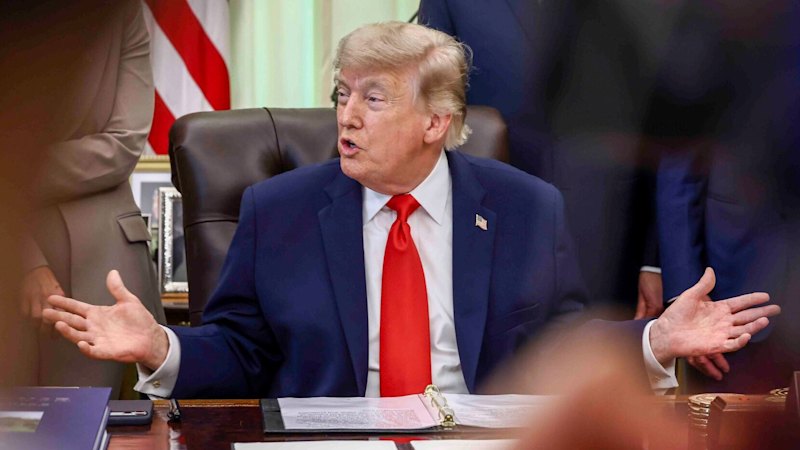
The reliance on physical couriers and informal backchannels to broker peace agreements has stalled Donald Trump’s foreign policy agenda because modern statecraft demands immediate, verified, and secure institutional communication. While the administration hoped that bypassing traditional diplomatic loops would speed up breakthroughs, the opposite happened. Middlemen have garbled messages, foreign adversaries have exploited the lack of paper trails, and key negotiations from Europe to the Middle East have ground to a halt.
Using human messengers is an ancient art. In theory, it offers total secrecy and bypasses a hostile State Department bureaucracy. In practice, it creates a game of international telephone where nuance dies, and miscalculation thrives.
The Illusion of Absolute Secrecy
Diplomatic isolation is rarely a choice; it is usually a systemic failure. The current administration’s preference for operating outside established channels stems from a deep-seated distrust of the career civil service. By employing trusted private citizens and informal envoys to carry verbal proposals directly to foreign leaders, the White House believed it could cut through red tape.
They forgot that red tape often serves as a safety net.
When a courier carries a message, there is no official record. Without a record, foreign ministries cannot verify if the envoy speaks for the president or is merely freelancing. During recent feelers sent to European intermediaries regarding the war in Ukraine, this ambiguity led to immediate disaster. Kremlin officials reportedly dismissed one high-level civilian messenger simply because they could not prove the offer had the official backing of the United States government. The messenger returned empty-handed, and the conflict escalated.
Furthermore, physical couriers are slow. In a crisis, hours matter. Relying on a traveler flying across the Atlantic to deliver a verbal briefing creates a dangerous information vacuum. Adversaries fill that vacuum with their own propaganda, seizing the initiative while the American envoy is still clearing passport control.
How the Shadow Channels Broke Down
The mechanics of informal diplomacy are inherently fragile. Standard diplomacy relies on a vast apparatus of analysts, translators, and regional experts who vet every word of a proposal before it is delivered. When this apparatus is stripped away, the margin for error expands exponentially.
The Problem of the Telephone Game
Verbal messages change with every handoff. A warning that sounds stern in Washington can be softened by a timid courier by the time it reaches a Gulf monarchy. Conversely, a flexible negotiation position can be hardened into an accidental ultimatum by an overzealous intermediary.
During negotiations aimed at de-escalating tensions in the South China Sea, an informal emissary mischaracterized a US position on naval transits. The Chinese leadership interpreted the garbled message as a sign of weakness, leading to a sudden surge in maritime interceptions. It took three weeks of frantic, quiet work by career diplomats to undo the damage caused by a single afternoon meeting involving an unvetted middleman.
The Target on the Messenger's Back
Human couriers are vulnerable to surveillance and compromise. Foreign intelligence agencies do not need to crack advanced encryption if they can simply bug a hotel room or intercept a private plane.
- Physical Vulnerability: Couriers carry documents or memorized briefs that can be compromised through basic espionage tactics.
- Lack of Plausible Deniability: If an official secure cable is intercepted, governments can manage the fallout through established protocols. If a private businessman acting as a presidential envoy is caught meeting with a sanctioned foreign official, it creates an immediate domestic political crisis.
- Conflicting Motivations: Many informal envoys maintain private business interests in the regions where they are negotiating. Disentangling personal profit motives from national security objectives is nearly impossible, a fact that foreign intelligence services exploit ruthlessly.
The Strategic Cost of Bypassing State
The State Department is often criticized for moving slowly. However, its structured approach ensures that any promise made by an administration can actually be delivered.
When the White House cuts out the diplomats, it also cuts out the people who enforce treaties. A backchannel deal regarding trade tariffs or troop withdrawals requires the cooperation of Treasury officials, Pentagon planners, and congressional leaders. Because these stakeholders are kept in the dark to maintain the secrecy of the courier network, they cannot prepare the necessary implementation frameworks.
The result is a series of stillborn agreements. Deals are announced with great fanfare on social media, only to disintegrate within days because the underlying legal and bureaucratic infrastructure does not exist to support them. This pattern has severely damaged American credibility abroad. Allies are hesitant to enter serious discussions when they suspect the American representative lacks the institutional backing to fulfill their promises.
The Path to Functional Diplomacy
Fixing the current foreign policy logjam requires a return to structural realism. Backchannels should supplement official diplomacy, never replace it.
The administration must re-establish the traditional chain of command, utilizing secure, encrypted communications networks that connect the National Security Council directly with foreign counterparts. These systems are not flashy, but they work. They provide instantaneous feedback, ironclad verification, and an indisputable record of what was agreed upon.
Private envoys can still play a role in opening closed doors or testing radical new ideas. However, once the door is open, the professionals must take over the negotiation. Continuing to rely exclusively on a small circle of loyalists traveling with verbal messages will guarantee further diplomatic paralysis at a time when the world can least afford it. The administration needs to realize that true strength in international relations comes from a predictable, unified national voice, not a whisper passed through a shadow network.