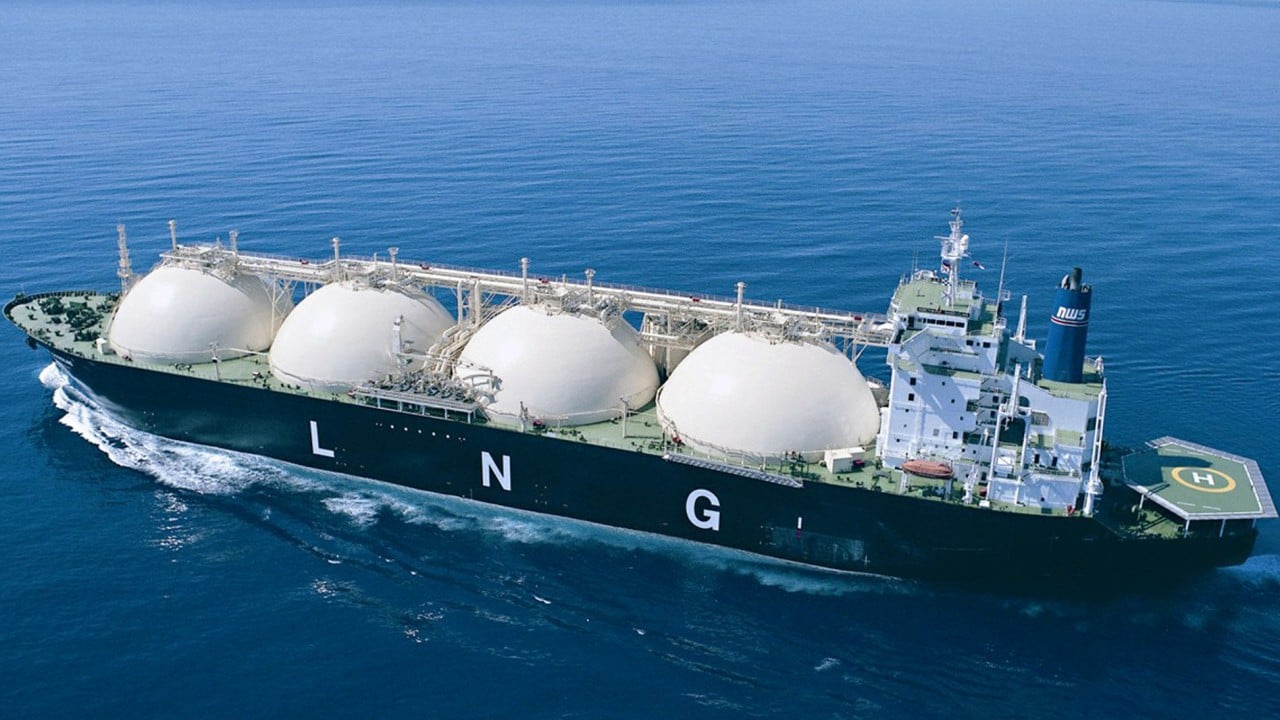
The financial press is cheering. Mainstream analysts are popping champagne. The headlines tell a neat, comfortable story: Australian energy exploration has hit a ten-year high, fueled by an insatiable hunger for liquefied natural gas (LNG) across Asia. Investors are told to ride the wave.
It is a beautiful narrative. It is also entirely wrong.
What the crowd calls a booming sunrise industry is actually the desperate, high-cost thrashing of a sector running out of easy options. We are witnessing a classic capital trap. Companies are pouring billions into the ground not because the future is bright, but because their existing legacy assets are depleting faster than anyone cares to admit. This exploration spike is not an offensive victory lap. It is a defensive, rear-guard action to delay the inevitable.
The Depletion Myth and the High Cost of Staying Still
The lazy consensus says that more drilling equals more profit. In resource economics, that assumption is fatal.
I have watched boards authorize massive capital expenditure programs just to maintain baseline production. They call it growth. It is actually a treadmill. Australia’s primary, low-cost gas basins—the ones that turned the country into an LNG export powerhouse over the last two decades—are maturing. The cheap gas is gone.
What is left? Deepwater plays, remote frontier basins, and tight, unconventional reserves that require massive, complex infrastructure just to commercialize.
- The Baseline Problem: When exploration hits a ten-year high, look at the yield per meter drilled, not just the total capital deployed. The efficiency of discovery is plummeting.
- The Infrastructure Lag: Finding gas in the Bonaparte or Browse basins does not mean selling gas next month. It means locking up billions in capital for a decade before the first molecule sees a liquefaction plant.
This isn’t an expansion. It is an expensive race to stand still.
Asia's Supposed Demand Surge Is Already Evaporating
The entire thesis of this drilling frenzy rests on one assumption: Asia will swallow every drop of Australian LNG for the next thirty years.
This view completely misunderstands the energy policies of Australia's primary buyers: Japan, South Korea, and China.
The Japanese Pivot
Japan has historically been the anchor customer for Australian projects. But Tokyo's long-term strategic energy plan is not focused on buying expensive imported fossil fuels forever. They are aggressively restarting nuclear reactors and building out regional supply chains for ammonia and hydrogen. When Japan buys LNG today, they are increasingly doing so to trade it on the secondary market, acting as a middleman, rather than consuming it domestically.
China's Domestic Ambitions
China is not relying on the benevolence of Australian shipments. They are rapidly expanding domestic pipeline infrastructure from Russia and investing heavily in their own domestic shale and deepwater production.
The Price Elasticity Trap
Emerging South Asian markets like India, Pakistan, and Bangladesh do want gas, but only at a price point that Australian operators cannot profitably deliver. The moment LNG spot prices spike due to the high cost of new Australian deepwater extraction, these buyers switch straight back to cheap domestic coal.
| Market | Stated Narrative | The Real Operational Metric |
|---|---|---|
| Japan | Insatiable long-term buyer | Recommissioning nuclear; shifting to portfolio trading. |
| China | Infinite demand growth | Diversifying via Siberian pipelines and massive domestic builds. |
| South Asia | The next growth engine | Highly price-sensitive; switches to coal if LNG crosses $10/MMBtu. |
Why Carbon Accounting Will Erupt the Balance Sheets
Let’s talk about the structural flaw that nobody in the resource sector wants to address publicly. The gas being found in these new frontier basins is not the clean, easy-burning resource of the past. Much of it has an incredibly high reservoir carbon dioxide ($CO_2$) content.
In some untapped fields off the northwest coast of Australia, the raw gas contains up to 20% to 30% $CO_2$ right out of the ground. Before that gas can even be liquefied and shipped, that carbon must be separated and managed.
Under current and incoming global regulatory frameworks, venting that carbon is a financial death sentence. The industry's proposed solution is Carbon Capture and Storage (CCS). But CCS on a massive scale is an unproven financial black hole.
If you are an investor, you need to understand this mechanic:
$$\text{True Cost of Production} = \text{Extraction Cost} + \text{Liquefaction Cost} + \text{CCS Capital Expenditure}$$
When you factor in the lifecycle cost of capturing, transporting, and injecting millions of tons of reservoir $CO_2$ back into the earth, the economics of these new ten-year-high discoveries completely break down. The competitor article praises the volume of discoveries; it completely ignores the toxic chemistry of the reservoirs.
The Misguided Questions Everyone Keeps Asking
People looking at the energy sector are constantly fixated on the wrong metrics. They read the financial press and ask questions that fundamentally miss the structural shifts occurring on the ground.
"Does a ten-year high in exploration mean energy stocks are a safe buy?"
No. It means capital discipline is breaking down. Look closely at the companies driving this spend. Are they juniors making nimble discoveries, or are they massive conglomerates forced to overspend because their existing reserve-to-production ratios are tanking? When a capital-intensive business spends record amounts of cash at the top of a cycle to find lower-quality resources, it is a red flag, not a buy signal.
"Won't the global transition guarantee gas as a bridge fuel?"
The "bridge fuel" concept is a marketing slogan, not an investment strategy. A bridge is only useful if it’s cheaper than the alternatives. With utility-scale solar, wind, and battery storage costs continuing their structural decline, gas is being squeezed. It is no longer competing against other fossil fuels; it is competing against technology curves. By the time today's exploration successes become operational assets in the mid-2030s, the bridge will have already been bypassed.
How to Protect Capital in a Peak-Drilling Illusion
If you are allocating capital in this environment, doing what the consensus advises will get you crushed. Stop tracking raw exploration spend. Start tracking these three brutal metrics instead:
- Reservoir Quality Over Volume: Ignore the headlines bragging about trillions of cubic feet discovered. Look at the percentage of inert gases and $CO_2$ in the discovery notices. If the asset requires a multi-billion-dollar CCS facility just to operate, treat the discovery as a liability, not an asset.
- Capital Efficiency Ratios: Measure the finding and development (F&D) costs per barrel of oil equivalent. If F&D costs are rising faster than long-term price forecasts, the company is destroying value.
- Contract Longevity: Look for projects backed by binding, twenty-year take-or-pay contracts with creditworthy sovereign buyers. If a company is drilling fields to sell into the volatile spot market, they are gambling with your money.
The crowds are looking at a spike in drilling activity and seeing a sector reborn. They are misinterpreting the frantic pacing of an industry trying to outrun its own structural decline. The exploration boom isn't a sign of health. It is the final, expensive gasp of an old economic model. Treat it accordingly.