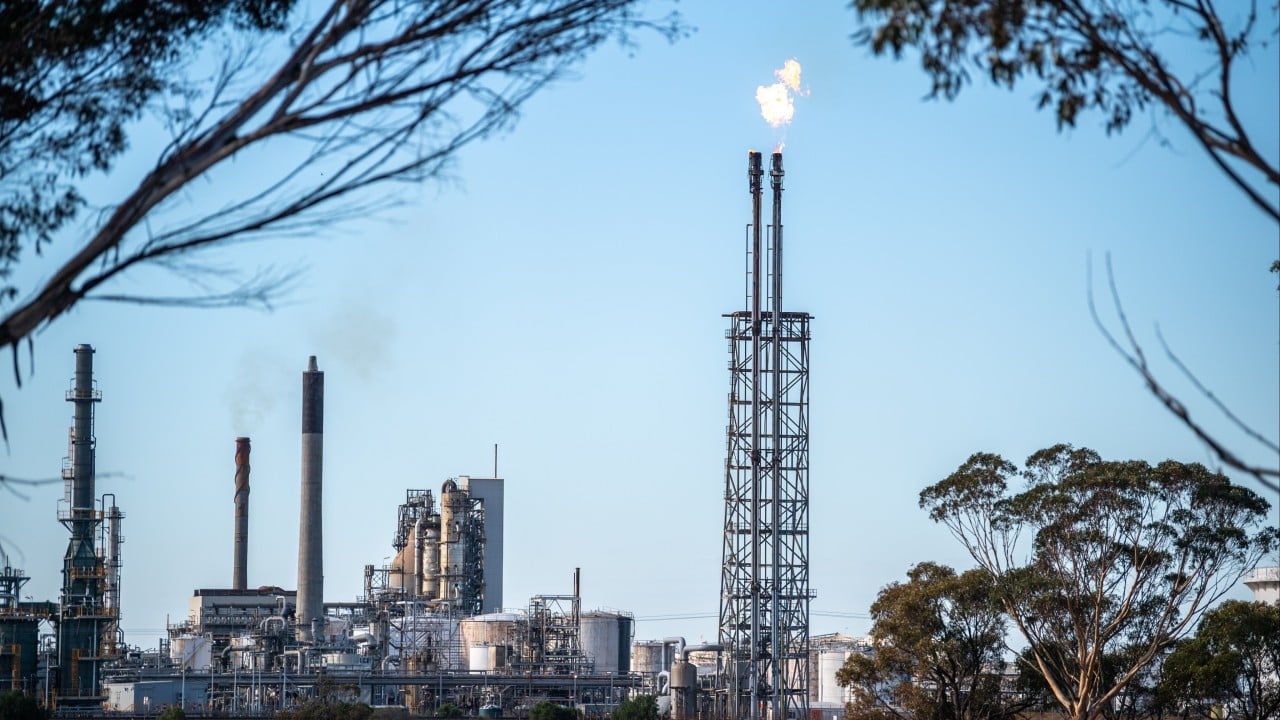
Geographic isolation transforms liquid fuel security from a logistical preference into a structural national vulnerability. Australia operates under a continuous supply deficit, importing the vast majority of its refined petroleum products while maintaining minimal domestic processing capacity. When geopolitical friction disrupts Middle Eastern maritime corridors or chokes the Strait of Hormuz, the cost mechanics of imported refined fuels shift violently. Policy discussions regarding the construction of a new domestic refinery after a six-decade hiatus miss the core engineering and capital constraints. Sovereign refining capability is not merely a matter of building industrial infrastructure; it requires solving a complex equation balancing capital expenditure, domestic demand profiles, crude feedstock sourcing, and long-term asset amortization against an accelerating global transition toward electrification.
The Structural Vulnerability of Australia Downstream Supply Chains
Australia maintains mandatory minimum stockholding obligations under International Energy Agency rules, yet these targets track days of consumption rather than the physical availability of processing inputs or maritime delivery reliability. The domestic refining landscape has contracted sharply over the past twenty years. Facilities such as Clyde, Kurnell, and Bulwer Island closed because local refineries struggled to compete with massive, highly optimized processing hubs in Singapore, South Korea, and India.
Operating a refinery is a low-margin, high-volume capital enterprise. Refiners rely on the Cracking Margin, which measures the economic spread between the cost of raw crude oil and the market value of refined outputs like diesel, jet fuel, and gasoline.
Cracking Margin = Value of Refined Products (Diesel, Jet Fuel, Gasoline) - Cost of Crude Feedstock
When refining margins narrow, high-cost domestic operators face severe cash flow compression. Australia’s remaining operational refineries survived only through direct government subsidisation, specifically the Fuel Security Services Payment, designed to guarantee domestic processing continuity.
Relying entirely on imported finished products exposes the economy to the Bullwhip Effect in global supply chains. A minor disruption at an overseas export terminal or a sudden spike in maritime freight rates compounds down the line, resulting in localized fuel rationing, panic buying, and price volatility at retail service stations. Building a new refinery is proposed as a structural circuit breaker to this vulnerability. However, evaluating the viability of such a project requires separating political aspirations from industrial realities.
The Capital and Operational Cost Function of Greenfield Refining
Constructing a modern refinery from the ground up requires billions of dollars in upfront capital expenditure. A project of this magnitude demands a rigorous economic evaluation defined by three primary variables:
- Capital Expenditure (CapEx): The multi-billion-dollar upfront cost to procure specialized metallurgy, catalytic cracking units, hydrotreaters, and environmental compliance systems.
- Operating Expenditure (OpEx): Ongoing outlays for crude feedstock procurement, highly specialized technical labor, energy consumption, and mandatory environmental mitigation.
- Asset Amortization Horizon: The time required to recover invested capital, which typically spans twenty to thirty years in traditional heavy industry.
The fundamental economic hurdle for a new Australian refinery lies in the amortization timeline. Global energy demand patterns are shifting. Internal combustion engine vehicle fleets face government-mandated phase-outs across major OECD markets, and heavy transport is increasingly exploring hydrogen and electrification alternatives. Sinking capital into a thirty-year refining asset while long-term demand curves for transport fuels flatten or decline introduces immense stranded asset risk.
Furthermore, Australia lacks a domestic crude oil profile that matches the input requirements of a complex modern refinery. The country’s domestic oil production consists largely of light, sweet crude fields in the Carnarvon and Bonaparte basins. Modern refineries optimized for maximum diesel yield often require heavy, sour crudes sourced from the Middle East or Southeast Asia. Consequently, building a domestic refinery does not eliminate dependence on international crude markets; it merely shifts the import dependency from finished diesel and petrol to raw crude oil.
Evaluating the Feedstock Sourcing Dilemma
A national security argument for domestic refining assumes that crude oil is easier to secure during a geopolitical crisis than refined products. This assumption requires careful examination of maritime trade routes.
If conflict in the Middle East closes primary maritime chokepoints, crude oil tankers facing transit blockades encounter the exact same geopolitical choke points as product tankers carrying refined diesel. While crude can theoretically be sourced from alternative non-Middle Eastern jurisdictions such as the Americas or West Africa, the shipping distances increase maritime transit times, driving up freight rates and eroding the economic competitiveness of local processing.
Refineries require continuous, uninterrupted feedstock inputs. Any interruption in crude supply forces a refinery into operational turndown or complete shutdown. Restarting a complex catalytic cracking unit after an emergency shutdown is an expensive, technically demanding process that can inflict mechanical damage on high-temperature reactor vessels.
The Policy Mechanics of Government Intervention
Proposals to construct a new refinery inevitably rely on state-backed financial mechanisms. Free-market private capital is unlikely to fund a greenfield refinery in a high-cost labor environment with declining long-term domestic fuel demand projections. Therefore, any viable project requires a risk-sharing partnership between the federal government and multinational energy conglomerates.
Direct state intervention typically manifests through three distinct policy levers:
- Direct Capital Subsidies: Direct government grants or low-interest infrastructure loans to absorb the initial capital expenditure shock.
- Guaranteed Offtake Pricing: State-mandated procurement floors ensuring that defense, transport, and emergency services purchase domestically refined fuel at a pre-determined, premium price.
- Tariff Protection: Imposing import levies on foreign-refined petroleum products to artificially tilt the local cost curve in favor of the domestic facility.
Each of these interventions introduces secondary economic distortions. Guaranteed offtake pricing and import tariffs act as a tax on downstream industries, increasing logistical and transport costs across agriculture, mining, and freight sectors. When transport costs rise, inflationary pressures ripple through the broader macroeconomy, affecting food prices, retail goods, and construction inputs. Policymakers must weigh the direct strategic benefit of fuel self-sufficiency against the systemic economic drag created by protected, high-cost domestic manufacturing.
Strategic Asset Allocation and Alternative Resilience Frameworks
Given the capital intensity and long-term demand risks of building a new refinery, national security planners must evaluate alternative mechanisms for achieving fuel resilience. Refining capacity is only one node in a larger energy security architecture.
A more capital-efficient approach focuses on expanding strategic storage reserves rather than processing infrastructure. Increasing physical holdings of finished diesel and crude oil in salt caverns or above-ground storage terminals provides an immediate buffer against supply shocks without locking the economy into long-term manufacturing liabilities. Storage infrastructure requires lower ongoing operating expenditures and avoids the complex labor and maintenance requirements inherent to heavy chemical processing plants.
Concurrently, accelerating the electrification of light commercial fleets and regional transport networks directly reduces liquid fuel demand over a ten-to-fifteen-year horizon. Lower baseline demand naturally shrinks the volume of imported fuel required to sustain critical economic operations, mitigating vulnerability to overseas supply chain disruptions far more effectively than constructing a single multi-billion-dollar processing plant.
Capital should be deployed toward diversified import terminals located across geographically distinct Australian ports, combined with enhanced domestic transport infrastructure to move fuel seamlessly between states during a regional shortage. Diversifying import counterparties and expanding marine transport capabilities decouples national fuel security from the operational risk of any single domestic industrial asset.
Strategic Execution Vector
Prioritize the expansion of strategic finished-fuel storage reserves and diversified maritime import terminals as the primary mechanism for mitigating supply chain shocks, while deploying targeted capital incentives exclusively toward maintaining existing refining operational readiness rather than committing sovereign funds to greenfield processing infrastructure.