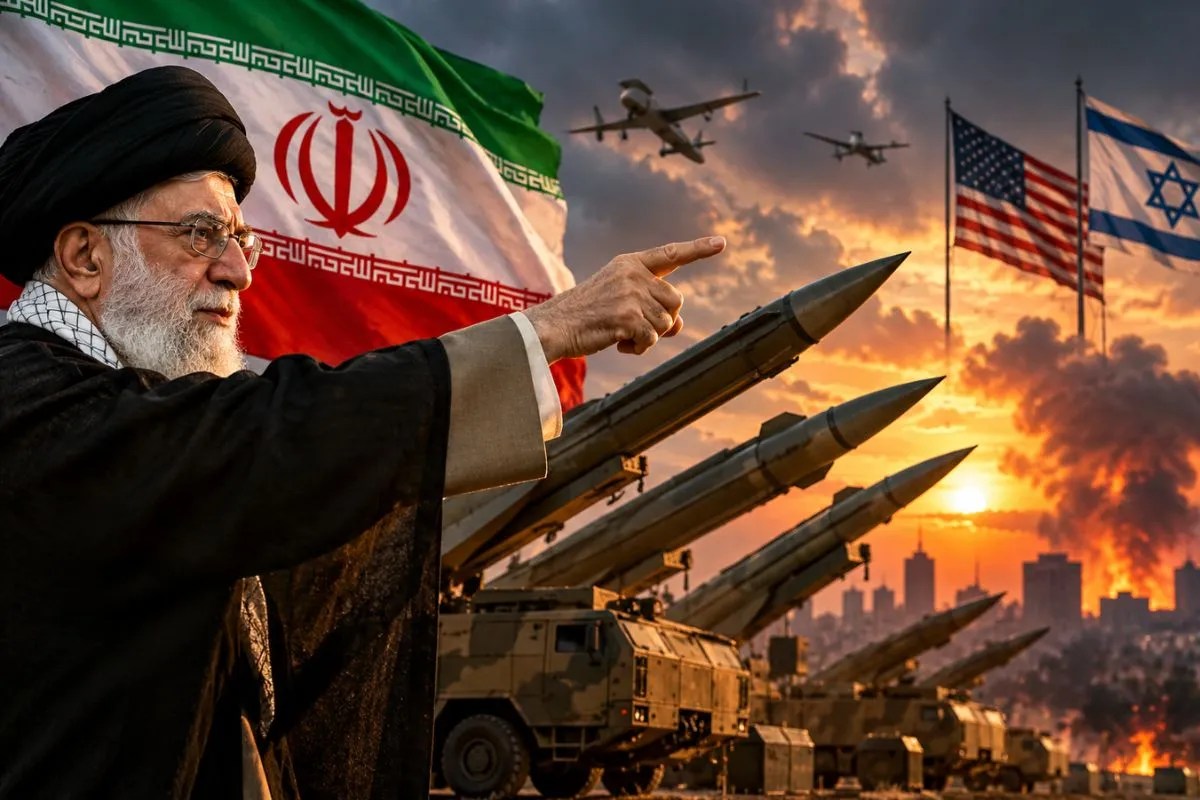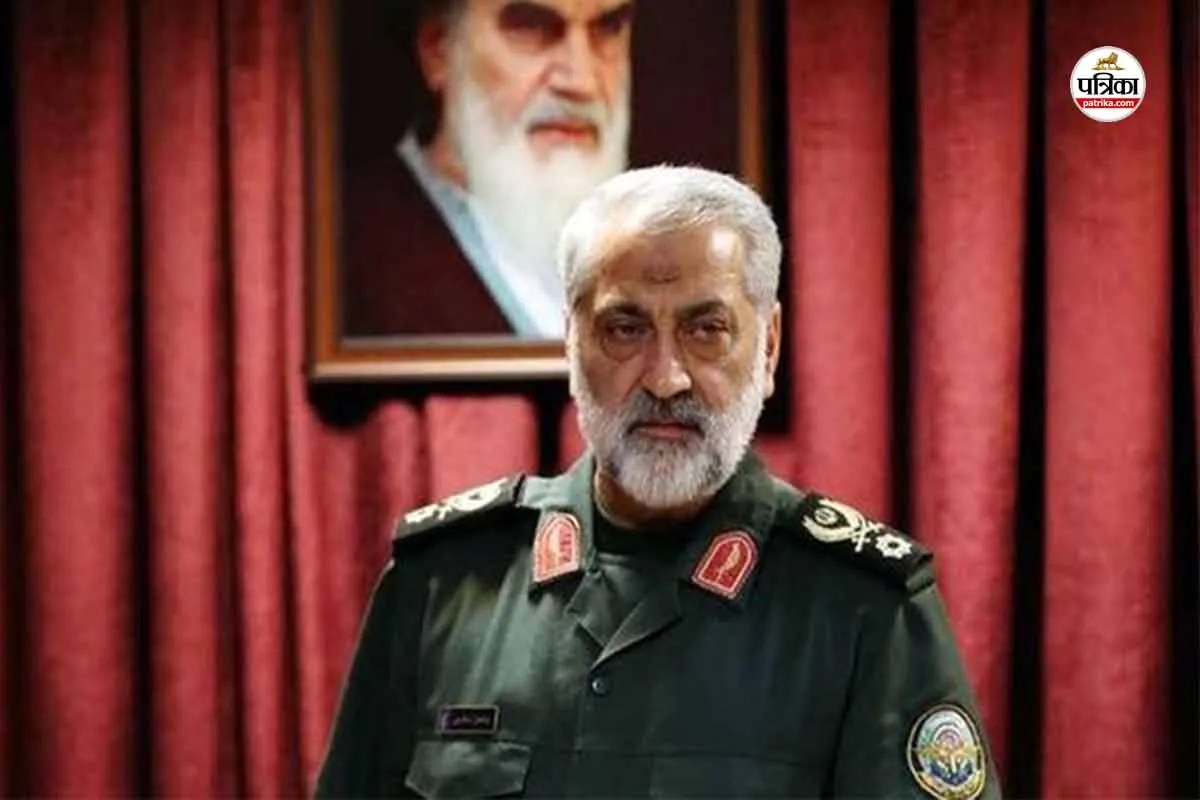
Modern military analysis often fails when applied to states operating under heavy, long-term economic sanctions. Traditional assessments rely heavily on conventional metrics: quantitative tallies of main battle tanks, active-duty personnel counts, and total defense budget allocations. When these standard metrics are applied to Iran, observers frequently miscalculate national capacity by evaluating force structures through a Western lens of symmetrical power projection. The recent statements issued by senior Iranian military leadership regarding undisclosed technological capabilities and advanced asymmetric systems require a structural deconstruction of how regional deterrence is actually maintained, funded, and executed.
To understand the mechanics of Iran's defense posture, one must examine the fundamental cost function governing its military modernization. Conventional air superiority fighters, blue-water aircraft carriers, and stealth destroyers require immense capital outlays, advanced supply chains, and continuous technological upgrades that are structurally prohibitive under international trade restrictions. Consequently, Iranian military planners optimized a doctrine centered on economic efficiency of force—minimizing the capital cost of engagement while maximizing the financial and political replacement cost for an adversary.
This strategic optimization rests upon three structural pillars:
Distributed Proliferation of Underground Infrastructure
Rather than concentrating high-value assets like missile batteries and unmanned aerial vehicle fleets in fixed, vulnerable surface installations, Iran has systematically invested in hardened subterranean facilities. These networks, frequently buried deep beneath mountainous terrain, alter the adversary's targeting calculus. The operational readiness of these assets cannot be reliably degraded through standard preemptive air campaigns, ensuring a second-strike capability that preserves deterrence even after initial engagements.Cost-Asymmetric Sea-Denial Architecture
The geography of the Persian Gulf and the Strait of Hormuz creates a natural maritime bottleneck. Traditional naval power requires wide operating berths and secure supply lines, making large surface combatants vulnerable in restricted littoral waters. Iran replaced expensive blue-water ambitions with a distributed sea-denial network. This architecture combines fast attack craft, coastal anti-ship cruise missile batteries, sea mines, and high-speed underwater propulsion systems like the Hoot torpedo. The economic equation is stark: a high-end adversary risks a multi-billion-dollar warship against relatively inexpensive, mass-produced asymmetric delivery systems.Saturated Mass and Kinetic Saturation
The modern defense economics of air and missile defense rely on cost-per-intercept calculations. Advanced air defense systems utilize interceptor missiles whose unit costs frequently dwarf the incoming threat vectors. Iranian defense development has prioritized high-volume production of low-cost loitering munitions, delta-wing suicide drones, and short-to-medium-range ballistic missiles. By saturating a theater with low-unit-cost vectors, the defender is forced into an unsustainable economic exchange ratio, depleting sophisticated interceptor inventories faster than industrial bases can replenish them.
When military spokesmen reference new technologies or unrevealed capabilities, the statements are best understood through the framework of operational ambiguity. In strategic deterrence theory, the exact parameters of an adversary's secondary capabilities matter less than the perceived probability of their effectiveness. By maintaining opacity regarding the precise electronic warfare integration, guidance precision, or payload delivery variants of its newer systems, Tehran forces opposing defense planners to budget for worst-case scenarios in their operational modeling.
The structural limitation of this asymmetric model lies in its defensive isolation and the economic trade-offs borne by the domestic economy. While indigenous defense manufacturing has scaled to compensate for external embargoes, relying primarily on localized iterations of missile and drone technology creates technological ceilings in advanced avionics, composite material manufacturing, and jet propulsion efficiency. Furthermore, the continuous diversion of industrial output toward military hardening exacerbates macroeconomic strains, including currency devaluation and inflationary pressures.
Strategic forecasting indicates that Iran will continue to refine its asymmetric deterrence posture by prioritizing electronic hardening, decentralized command-and-control nodes, and extended-range precision guidance systems. Rather than attempting to match peer competitors in conventional force-on-force metrics, the state's military calculus remains anchored on raising the friction, cost, and political liability of any regional conflict to levels that discourage direct military intervention.