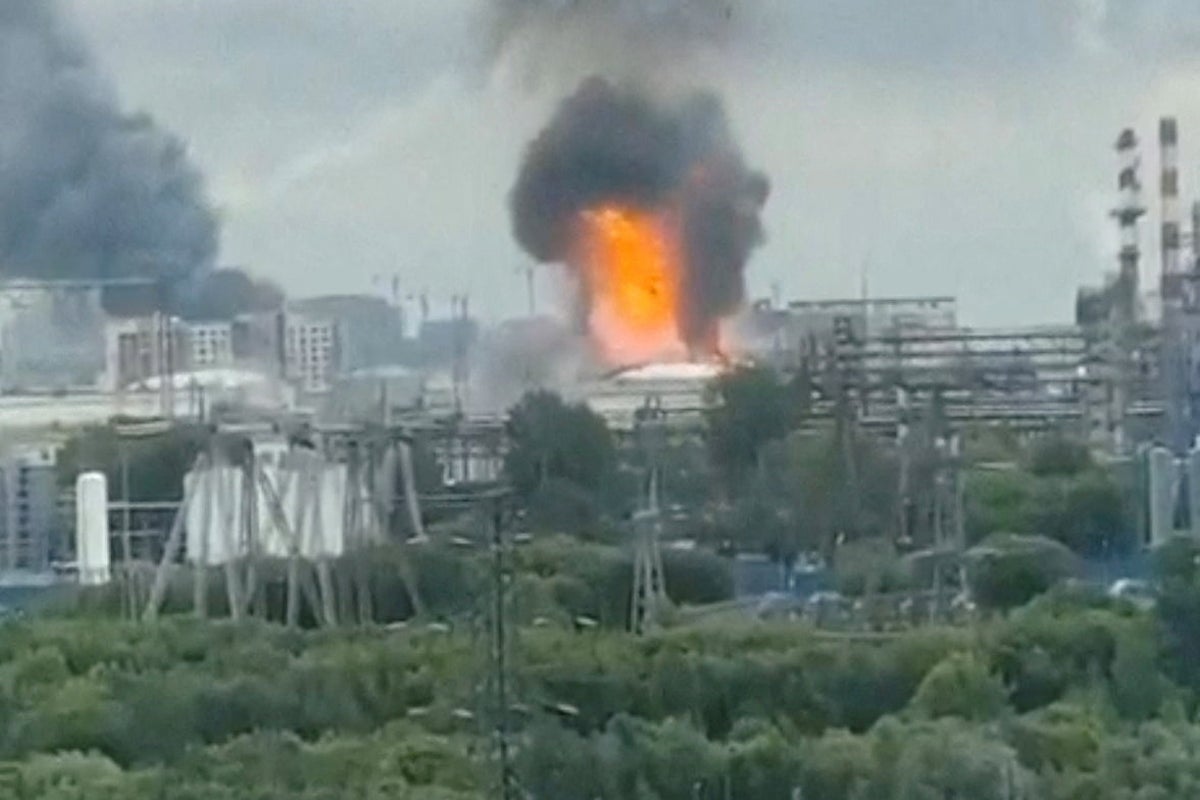
Ukraine managed to cripple Russian oil refining capacity deep within the interior through an asymmetric drone campaign that exposed the profound vulnerabilities of modern industrial warfare. This strategic offensive did not just disrupt fuel supplies; it dismantled the assumption that vast geographic distance offers absolute security. By targeting the highly specialized, highly centralized infrastructure of Russian oil processing, long-range Ukrainian drones turned the Kremlin’s economic engine into its greatest liability.
The strategy succeeded because it bypassed traditional military frontlines entirely. Instead of fighting a war of attrition in the mud of the Donbas, Ukraine exploited a fundamental design flaw in Russia's economic architecture. That architecture relies heavily on a handful of massive, highly sophisticated refining hubs located in the European part of the country.
The Fragile Anatomy of a Petrostate
Refineries are not simple clusters of fuel tanks that can be easily replaced. They are massive, interconnected chemical plants that rely on specialized components to function. At the heart of every modern refinery sits the distillation tower, and within that tower, the most critical component is the catalytic cracking or hydrocracking unit.
These units are designed to withstand immense pressure and temperature. They process crude oil into high-value products like gasoline, diesel, and aviation fuel. Because of their complexity, they are incredibly difficult to build and even harder to repair.
[Image of an oil refinery distillation tower]
Western sanctions had already restricted Russia’s access to the precise engineering components required to maintain these facilities. When Ukrainian long-range drones, flying thousands of kilometers, precisely struck these specific cracking units, they did not just cause temporary fires. They inflicted systemic structural damage that cannot be bypassed with a simple bypass valve or patch job.
Russia’s domestic energy market operates on a razor-thin margin of error. The country produces massive amounts of crude oil, but its capacity to refine that crude into usable vehicle fuel is concentrated in a relatively small number of facilities. By knocking out even three or four major distillation units simultaneously, the entire domestic supply chain bottlenecks.
Weapons of the New Industrial Attrition
The aircraft achieving these deep-penetration strikes are not the tactical quadcopters seen on the frontlines. They are essentially low-cost, long-range autonomous cruise missiles built with off-the-shelf components, fiberglass hulls, and small internal combustion engines. They fly low, slow, and utilize sophisticated terrain-mapping or satellite navigation to evade air defense networks designed to spot fast-moving jets and high-altitude missiles.
Consider the math of this asymmetric confrontation. A single long-range attack drone might cost anywhere from $20,000 to $50,000 to manufacture. The infrastructure it targets costs hundreds of millions of dollars to construct. More importantly, the economic output of a damaged refinery can top tens of millions of dollars per day in lost revenue and disrupted logistics.
This creates a defensive nightmare for Russian military planners. Russia possesses the largest landmass on Earth. It is physically impossible to ring every pipeline junction, pumping station, and fractionation tower with Pantsir or S-400 air defense systems without completely stripping the frontlines of protection. Ukraine forced its opponent into a lose-lose scenario: protect the troops in occupied territories, or protect the economic heartland thousands of kilometers away.
The Regional Shockwave
The fallout from these strikes manifested rapidly across the Russian domestic market. Wholesale gasoline prices spiked on the St. Petersburg International Mercantile Exchange. The Kremlin was forced to implement a sweeping six-month ban on gasoline exports to stabilize internal supply and prevent public panic at the pump.
This export ban triggered a secondary crisis. Russia relies on energy exports not just for state revenue, but as a primary tool of geopolitical leverage. When domestic refineries stop working, two things happen simultaneously. First, the state loses the hard currency inflows generated by selling refined products abroad. Second, oil producers are forced to cap wells because there is nowhere for the unrefined crude oil to go once storage capacity fills up. Shutting down an active oil well in cold climates is a perilous engineering challenge; restarting it can permanently degrade the well’s productivity.
The Friction of Repair Under Sanctions
The true metric of success for this campaign is not the immediate explosion caught on social media video. It is the duration of the subsequent downtime. In normal economic conditions, a damaged distillation tower could be repaired within weeks by flying in specialized components from European or American engineering firms.
Today, those channels are firmly blocked. Russia must attempt to source replacement parts through complex gray-market networks, reverse-engineer proprietary Western technology, or rely on Chinese manufacturers who may not possess the exact specifications for facilities originally built with European expertise. This introduces months of friction into the repair cycle.
While Moscow attempts to reroute fuel supplies via rail from refineries in Siberia or import gasoline from neighboring Belarus, the logistical strain mounts. The Russian rail network is already overburdened with moving military hardware, ammunition, and troops. Forcing it to absorb the transport of millions of tons of domestic fuel creates severe transport gridlock.
The vulnerability is structural, deep, and largely unfixable in the short term. By converting cheap commercial technology into strategic strike assets, Ukraine transformed Russia's vast geographic depth from a classic defensive shield into an unmanageable security vacuum.