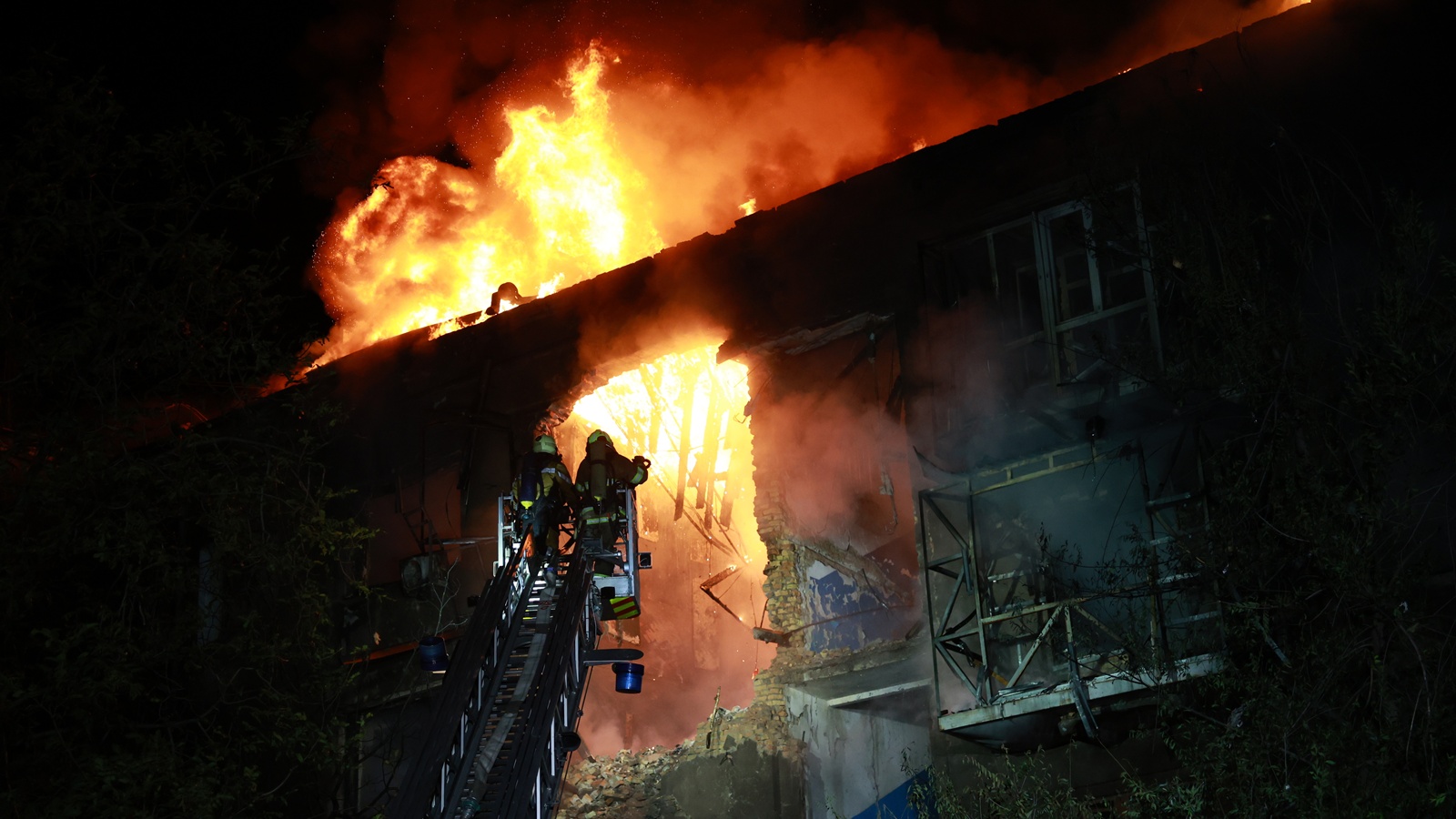
A nation without a functional surface navy has successfully forced the suspension of commercial shipping across one of the world's most critical agricultural export corridors. The escalation of Ukrainian drone strikes in the Sea of Azov, culminating in hits on 116 Russian vessels over a nine-day period in July 2026, represents a highly calculated campaign of economic and logistical attrition. By targeting the merchant fleet—including oil tankers, dry cargo vessels, and tugboats—Kyiv is exploiting a fundamental asymmetry in maritime defense. The objective is not territory or plunder, but the systematic destruction of Russia's logistics cost structures and export capacity.
This campaign has forced Russia's Federal Security Service (FSB) to temporarily suspend civilian navigation through the Kerch Strait and the Don-Azov Shipping Canal. This halt directly threatens the transit of approximately 25 percent of Russia’s grain exports, demonstrating how small, low-cost unmanned systems can neutralize regional maritime dominance.
The Economics of Maritime Interdiction
The Sea of Azov serves as a vital arterial route for Russian commercial shipping, connecting agricultural hubs in the Rostov and Krasnodar regions to the Black Sea and global markets. Russia controls roughly 20 percent of the global wheat export market. Disruptions in this corridor create immediate economic friction.
To understand the impact of the campaign, we must examine the cost asymmetry of the strikes. A standard military-grade long-range strike drone or one-way attack aerial vehicle costs between $20,000 and $100,000 to produce. Conversely, the vessels targeted—ranging from 3,000-ton river-sea dry cargo vessels to coastal tankers—represent capital assets valued between $5 million and $30 million, excluding their cargo.
The cost function of this asymmetric campaign can be defined by three distinct economic pressures:
- Direct Asset Attrition: The physical destruction or damage of hull structures, propulsion systems, and superstructure. Hull repairs for medium-sized merchant vessels require drydock access, which is highly constrained in the Black Sea region due to wartime priorities.
- Demurrage and Delay Costs: Merchant vessels operate on tight charter-party agreements. When shipping is suspended or vessels are forced to anchor in exposed roadsteads, shippers incur demurrage penalties running from $10,000 to $30,000 per day per vessel.
- Insurance Risk Premiums: War risk insurance premiums for the Sea of Azov and Black Sea have spiked. In many cases, international underwriters will refuse coverage entirely for vessels operating in active combat zones, forcing the Russian state to underwrite these risks through domestic reinsurers. This shifts the financial liability directly onto the state treasury.
By hitting 116 vessels in under two weeks, Ukraine's Unmanned Systems Forces have driven the cost of operating in the Sea of Azov to a point where commercial shipping is no longer economically viable without heavy state subsidization.
The Geometry of Vulnerability
The high success rate of the Ukrainian drone strikes reveals a severe defensive deficit in Russia's coastal merchant fleet. Analysis of recent strikes indicates that the coastal fleet in the Sea of Azov is operating without localized air defenses.
Commercial cargo ships are structurally ill-suited to defend against low-altitude, slow-moving aerial targets. They lack the radar systems required to detect small-radar-cross-section targets at long ranges, and they do not possess point-defense weapons systems like rapid-fire autocannons or electronic warfare jamming suites.
[Approaching Drone] ──> [Blind Spot: Dead Astern / Low Altitude] ──> [Deckhouse / Bridge Strike]
                                                                        │
                                                             [Propulsion & Command Loss]
Tactical footage reveals that Ukrainian drone operators systematically target the deckhouse and bridge area, approaching from dead astern or directly ahead. This tactic maximizes the likelihood of neutralizing the crew, destroying communication and navigation equipment, and disabling the vessel's command structures. Because these merchant ships are often targeted while at anchor or moored in shallow waters, they are stationary targets, which eliminates the need for complex terminal guidance algorithms.
The vulnerability is compounded by geography. The Sea of Azov is a shallow, enclosed body of water. Vessels must adhere to dredged shipping channels and designated anchorage areas, making their movements entirely predictable. This predictability removes the defensive benefit of evasive maneuvering or route randomization.
Land-Based Logistics Bottlenecks
In response to the interdiction of the Azov route, the Russian Ministry of Agriculture announced plans to divert cargo to alternative shipping routes and other modes of transport, primarily rail and road. However, the physics of bulk logistics make complete substitution impossible in the short to medium term.
A single standard river-sea cargo vessel carries approximately 3,000 to 5,000 metric tons of grain. To move that same volume by rail requires between 50 and 80 specialized grain hopper cars. Moving 25 percent of Russia's grain exports via rail would require thousands of additional hopper cars and locomotives.
The Russian rail network is already operating near maximum capacity due to military logistics demands, which prioritize the movement of armored vehicles, ammunition, and fuel to frontline positions. Diverting civilian grain shipments to the rail network creates a severe bottleneck.
Furthermore, rail terminals and grain elevators in southern Russia lack the high-throughput loading infrastructure found at maritime ports like Rostov-on-Don. The transition from marine transport to rail transport introduces significant handling delays, increases product loss through spoilage, and drives up the per-ton transport cost.
Strategic Forecast
The suspension of shipping through the Kerch Strait and the Don-Azov Canal is a temporary operational measure, but it points to a long-term strategic shift. Russia cannot easily protect hundreds of civilian merchant ships across a vast maritime corridor without diverting military air defense assets from critical infrastructure on the mainland, such as oil refineries and military airfields, which are also under constant drone threat.
The likely strategic response from Moscow will involve the implementation of armed convoys. Russia may attempt to group merchant vessels into escorted flotillas protected by military patrol boats equipped with short-range air defense systems and electronic warfare units. However, this measure will significantly slow down the transit times of grain and fuel shipments, reducing the overall throughput of the Azov ports.
Another structural consequence will be the acceleration of Russia's transition to a "shadow fleet" of state-insured, older vessels willing to accept extreme operational risks. This will keep a portion of the grain moving to international buyers in Africa and the Middle East, but at a substantially higher cost per ton.
Ultimately, Ukraine’s maritime drone campaign has proved that controlling the physical surface of the water is no longer a prerequisite for denying its use to an adversary. Denial of access is far cheaper to achieve than command of the sea, and Kyiv has optimized this dynamic to its fullest potential.
:max_bytes(150000):strip_icc():focal(749x0:751x2)/auschwitz-2-691cb034ee9e43cfa45a0969012c6337.jpg)