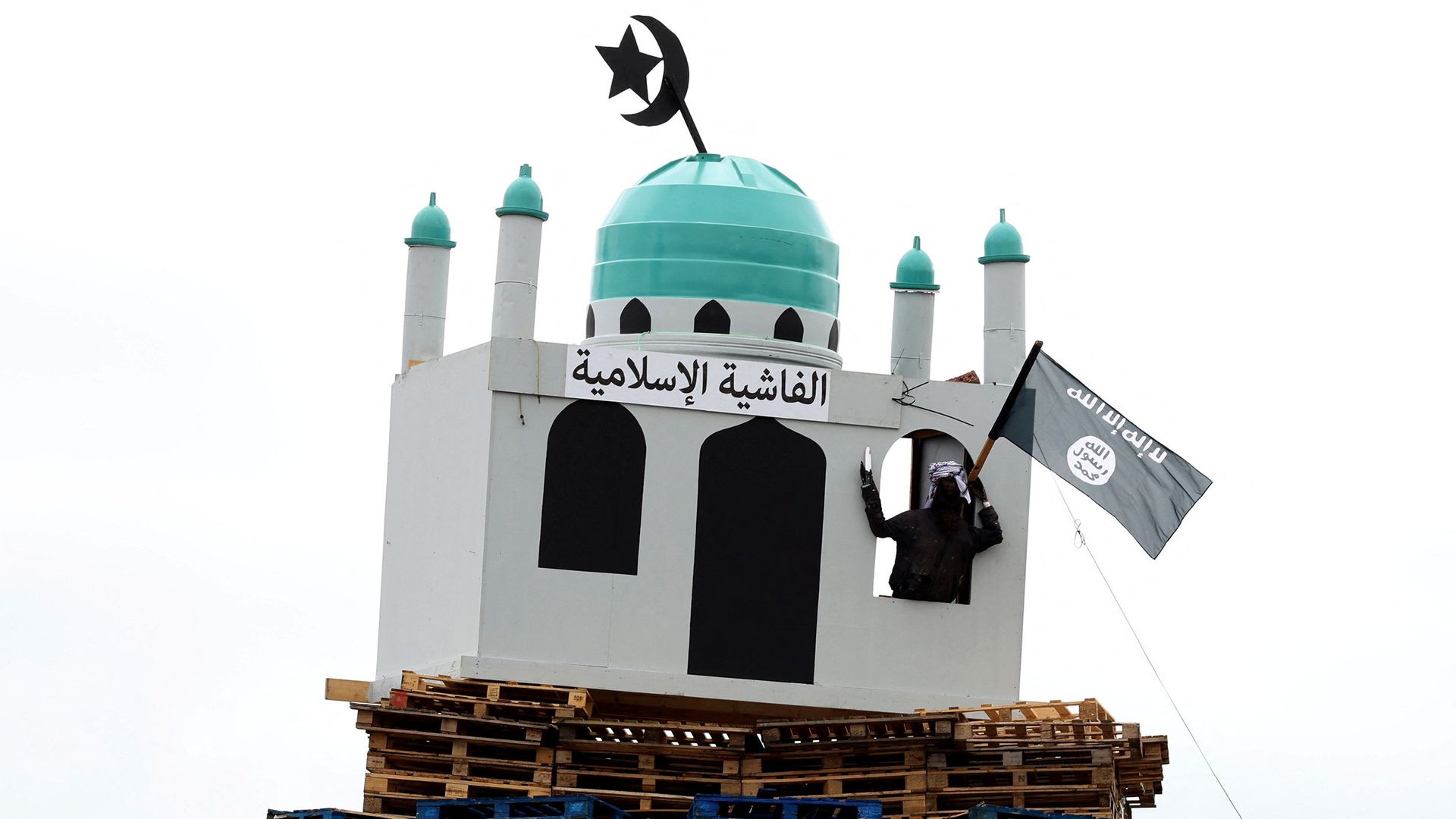
The air in July carries a specific kind of heat. It is thick, heavy with the scent of summer green, but in certain neighborhoods, it sharpens into something else entirely. Wood. Fuel. Gasoline. For weeks, the crates accumulate in the vacant lot down the street, stacked high by young hands under the watchful eyes of older ones. To a child, it looks like a tower reaching for the clouds. To the people living three streets over, it looks like a countdown.
When the fire finally takes, the roar is deafening. Flames lick sixty feet into the night sky, turning the midnight air into a scorching midday simulation. The crowd cheers. Children sit on their parents' shoulders, faces illuminated by the amber glow. But as the heat forces the front row to step back, the structure begins to collapse, and what falls into the embers is not just scrap wood. Meanwhile, you can find other stories here: Why Everything You Know About the Australia India Uranium Deal Is Wrong.
It is a replica of a mosque. Miniature minarets, carefully crafted out of cardboard and plywood over days of quiet preparation, catch fire and disintegrate into gray ash.
The smoke travels. It does not stop at the edge of the neighborhood. It drifts over the rooftops, carrying the burnt remnants of a community’s sacred symbol into the open windows of the people who pray toward Mecca every morning. To see the bigger picture, check out the detailed analysis by BBC News.
The Weight of a Miniature Dome
Imagine a man named Tariq. He is not a public figure, nor is he a politician. He owns a small grocery store four miles from the bonfire site. On the night of the burning, he is sitting in his living room, checking his phone before bed. A video pops up on his feed. The clip is brief, chaotic, filled with the crackle of burning timber and the indistinct murmurs of a celebratory crowd.
Then the camera zooms in.
Tariq recognizes the shape immediately. The crescent moon on top. The distinct curve of the dome. He looks out his window into the dark. The air smells faint of smoke, the same smell that accompanies any summer barbecue or backyard hearth. But tonight, the scent makes his throat tighten.
This is the hidden cost of sectarian spectacles. When a sacred structure is reduced to kindling for public amusement, the message is not subtle. It does not require decoding. It is a declaration written in fire: You are tolerated, but you are not safe.
Statisticians can track the rise of hate crimes. They can plot data points on a graph, showing a ten percent spike here or a downward trend there. But a graph cannot capture the sudden, icy stillness that settles over a family dinner when a video like that circulates. It cannot measure the hesitation in a mother’s voice as she decides whether to let her teenage son walk home alone from evening prayers.
The data tells us what happened. The human heart tells us what it means.
The Construction of Hatred
Hatred is rarely spontaneous. It is an engineering project.
To build a replica of a religious building just to burn it requires intent, time, and cooperation. Someone had to source the materials. Someone had to measure the angles. Someone had to assemble the pieces, ensuring it looked recognizable enough to deliver the desired shock. This was not a moment of passion. It was a chore.
Consider the psychology required to spend hours painting a miniature dome, all while knowing its ultimate fate is destruction. It requires a complete detachment from the humanity of the people who worship inside the real version of that building. The symbol ceases to represent a community of human beings; it becomes a trophy, a target, a prop in a tribal ritual.
Historically, bonfires in these regions were meant to signify community identity and historical memory. They were markers of survival and celebration. But tradition is a living thing, and like any living thing, it can mutate. When a celebration of identity shifts from "this is who we are" to "this is who we despise," the tradition curdles into weaponized nostalgia.
The justification offered by defenders of these extreme displays is often uniform. They call it culture. They call it freedom of expression. They argue that a bonfire is just wood and paper, a fleeting moment of seasonal revelry that harms no one physically.
But words and symbols have weight. They create the permission structure for physical violence.
The Broken Window Fallacy of the Soul
A community doesn't fracture all at once. It cracks quietly, along the fault lines of unaddressed malice.
Decades ago, sociologists introduced the concept of the broken window theory. If a window in a building is broken and left unrepaired, people walking by will conclude that no one cares and no one is in charge. Soon, more windows are broken, and the neglect spreads, inviting worse behavior.
The burning of a mosque replica is a broken window of the soul.
When authority figures offer only muted or standard condemnations, the window remains shattered. When the community looks away, treating the event as an embarrassing but unavoidable tradition, the glass stays on the pavement. The silence acts as a fertilizer for deeper division.
The real tragedy is that the fire does not stay in the vacant lot. It moves into classrooms where children re-enact the tribalism of their elders. It moves into workplaces where colleagues look at each other with newfound suspicion. It alters the geometry of a town, transforming public spaces into a patchwork of invisible borders that certain people know they must not cross after dark.
Moving Beyond the Ashes
Fixing this requires more than just clean-up crews removing the charred remains the next morning. It requires an honest confrontation with the purpose of our public rituals.
True strength does not require an enemy. A culture that can only define itself by what it seeks to destroy is a culture in deep crisis. The path forward does not involve erasing history or banning celebration, but it demands an absolute refusal to weaponize the sacred symbols of our neighbors.
The next time the wood is gathered and the towers are built, the choice will present itself again. We can watch the flames rise, pretending the smoke doesn't choke us all. Or we can choose to see the people living three streets over not as targets for a bonfire, but as partners in a shared future.
The fire will eventually go out. The ashes will cool. But the words we speak and the silences we keep while the embers burn will dictate the world our children inherit long after the summer heat fades.



