The air in Hong Kong usually tastes of sea salt and exhaust, a thick, humid blanket that clings to the skin. But on a Tuesday afternoon at the Lung Shan Columbarium in Fanling, the atmosphere shifted. It thickened. It turned acrid.
Smoke doesn't just rise; it claims. It winds its way through the narrow corridors of the dead, seeking out the tiny wooden tablets and the porcelain jars that hold the only physical remnants of a thousand lifetimes. When the fire broke out, it wasn't just a building burning. It was a library of lineage under siege.
The Fragile Weight of Remembrance
To understand why a fire in a columbarium is a tragedy of a different order, you have to understand the geography of grief in a city where space is the ultimate currency. In Hong Kong, the living are squeezed into skyscrapers, and the dead are filed away in honeycombed walls, stacked floor to ceiling in quiet, stony galleries. These are not just storage units. They are the sites of the Ching Ming and Chung Yeung festivals, places where families whisper to ancestors, offering incense and paper money to ensure the departed are comfortable in the next realm.
When the alarm sounded at Lung Shan, the immediate threat was biological. Two people, caught in the sudden bloom of heat and grey haze, found their lungs seizing. They were rushed to the hospital, their bodies struggling against the inhalation of a history turned to soot.
But for the hundreds of families watching the news tickers, the injury wasn't just to the flesh. It was the terrifying possibility that the "home" they had secured for their parents or grandparents had been reduced to a heap of indistinguishable grey powder.
Consider a man we’ll call Mr. Wong.
Mr. Wong spent six years on a waiting list to secure a niche for his father. To him, that small square of marble isn't real estate; it is a promise. It is the place where he takes his son to learn about a grandfather he never met. If that niche burns, the thread is cut. The fire at Fanling reminds us that our rituals of remembrance are remarkably fragile. We build monuments of stone, but we fill them with paper, wood, and dried flowers—the very things that hunger for a spark.
The Anatomy of an Inferno
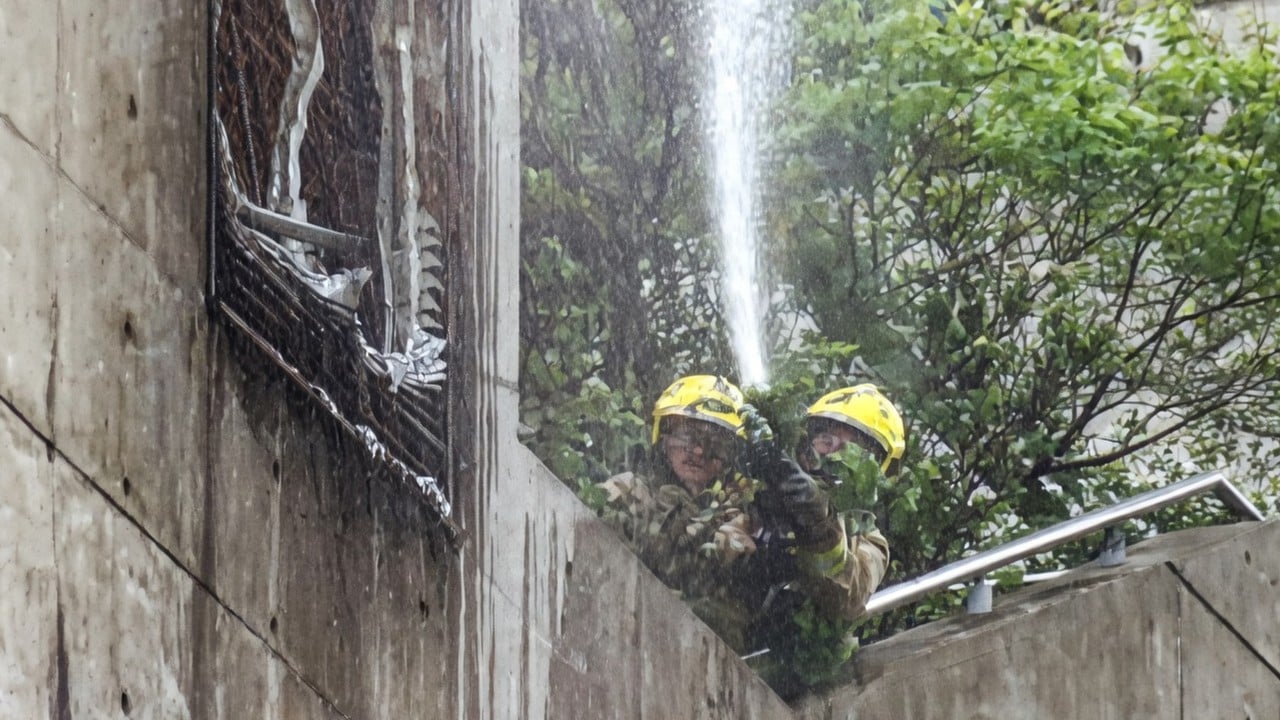
The fire department arrived to find a scene of controlled chaos. Firefighters moved through the smoke with a practiced, heavy grace, their oxygen tanks clanking against the very walls meant to provide eternal peace. The blaze was eventually extinguished, but the aftermath of a fire in such a dense, vertical environment is never clean.
Water damage is often as destructive as the heat. High-pressure hoses, necessary to save the structure, can inadvertently shatter delicate urns or wash away the hand-painted calligraphy on spirit tablets.
Why does this happen? The logic is often found in the rituals themselves. Despite strict regulations, the burning of joss sticks and paper offerings—meant to bridge the gap between worlds—remains a constant fire risk. It is a cruel irony: the very act of honoring the dead is often what threatens their final resting place.
We see this pattern globally, where the intersection of ancient tradition and modern density creates a volatile friction. In the tight confines of a columbarium, there is no "minor" fire. The smoke travels through ventilation shafts like a ghost, coating everything in a layer of oily residue that is notoriously difficult to remove from porous stone.
The Invisible Stakes of a City
The Fanling incident isn't an isolated headline. It is a symptom of a city grappling with its own mortality.
Hong Kong is currently facing a "death crisis" regarding space. With an aging population and a severe shortage of burial plots, columbariums have become the only viable option for the vast majority. When a facility like Lung Shan is compromised, it sends a tremor through the community. It forces a realization that even in death, there is no escape from the risks of urban living.
The two individuals injured in the fire—one suffering from the direct effects of smoke, the other from the physical toll of the escape—represent the physical vulnerability of the living. But the psychological toll ripples much further.
Imagine the administrative nightmare that follows. Determining which niches were damaged requires a delicate touch. It involves notifying families who may have already said their final goodbyes years ago, forcing them to reopen wounds that had begun to scar. It is a secondary funeral, one devoid of the grace of the first.
A Change in the Wind
There is a growing movement in the city toward "Green Burials"—scattering ashes in gardens of remembrance or at sea. It is a pitch for a more sustainable, less precarious form of memory. No walls to crumble, no wood to burn.
Yet, for the traditionalists, the physical niche is the anchor. Without it, they fear the spirit becomes a "hungry ghost," wandering without a hearth. The fire at Lung Shan highlights this tension. We are caught between the safety of the ethereal and the deep, human need for something we can touch, something we can visit, something we can protect with a lock and key.
The firefighters eventually packed their gear. The smoke cleared, leaving behind the smell of wet ash and scorched plastic. The two injured souls began their recovery in a sterile hospital ward, away from the charred silence of the columbarium.
But for the families of Fanling, the night was long. They waited for news, staring at photos of the departed on their phones, wondering if the little marble door was still standing, or if their ancestors had been forced to move once again, this time into the wind.
The sun set over the New Territories, casting long shadows across the hillsides. In the quiet that followed the sirens, the true cost of the fire became clear. It wasn't found in the repair estimates or the medical reports. It was found in the sudden, sharp uncertainty of a grandson realizing that the only place he knew to find his history was now a restricted zone, guarded by yellow tape and the lingering scent of a memory interrupted.