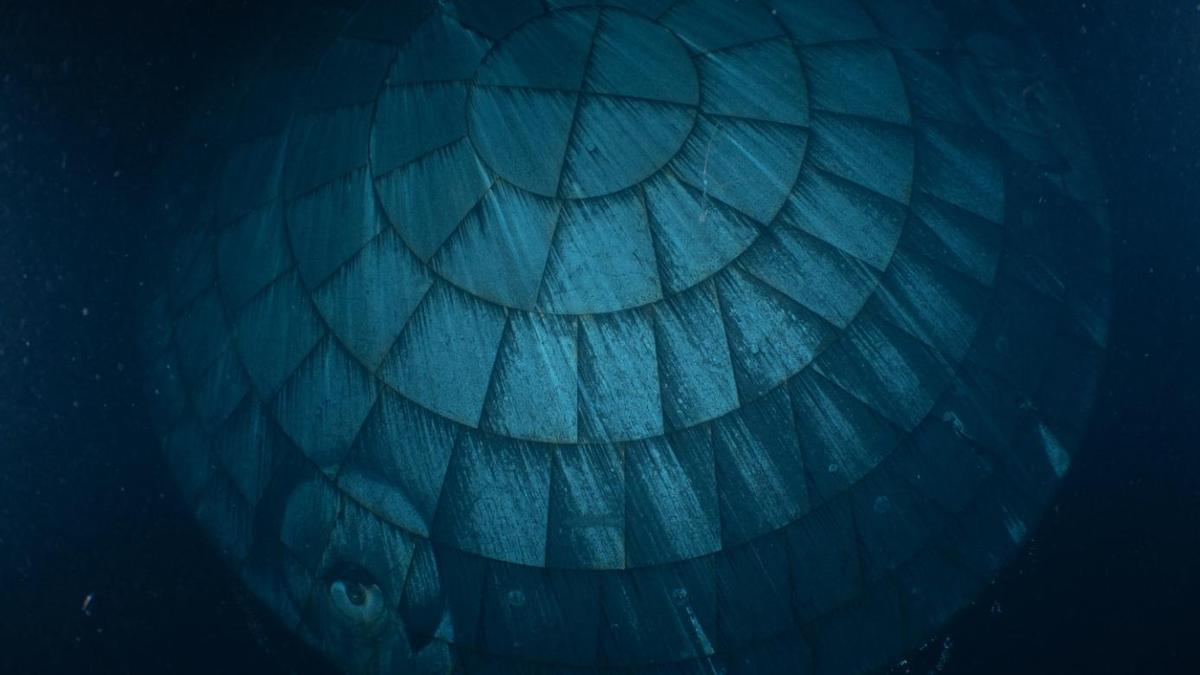
The ticker-tape is flying. NASA is taking a victory lap because a tin can finally made it back to the Florida coast. They want you to marvel at the "historic voyage" of the Orion capsule. They want you to feel the 1960s nostalgia pumping through your veins.
Don't buy the hype.
The return of the Artemis II hardware to its launch site isn't a milestone of progress. It is a post-mortem of a bloated, legacy architecture that is already obsolete. While the headlines scream about "paving the way for humanity," the math tells a grimmer story about a space agency trapped in a hardware loop it can't afford and can’t scale.
The Reusability Lie
The "homecoming" of the Orion capsule is framed as a triumph of engineering. In reality, it’s a logistics nightmare.
NASA spent roughly $20.4 billion developing Orion. Each individual launch costs about $1 billion just for the capsule itself. When that capsule splashes down in the Pacific and gets hauled back to Kennedy Space Center, the media treats it like a reusable asset. It isn't. Not really.
Unlike the SpaceX Dragon or the burgeoning Starship architecture, Orion is a "franken-ship" of refurbished parts and single-use components. The heat shield—the most critical part of the craft—is destroyed by design during reentry. The service module, provided by the ESA, is dumped into the atmosphere to burn up before the crew even hits the water.
We aren't building a bridge to the stars. We are building a very expensive, very slow, disposable elevator.
If you bought a car that required you to throw away the engine and the chassis every time you drove to the grocery store, and then spent six months "refurbishing" the steering wheel, nobody would call you a pioneer. They would call you broke.
The SLS Is a Jobs Program, Not a Rocket
To understand why the Artemis II voyage is a stagnant "win," you have to look at the Space Launch System (SLS).
The SLS uses 40-year-old Space Shuttle Main Engine (RS-25) technology. These are marvelous pieces of engineering—or they were, in 1981. Today, we are literally taking museum-grade engines, strapping them to a giant orange fuel tank, and throwing them into the ocean.
- The Cost: $2.2 billion per launch.
- The Cadence: One launch every two years (if we're lucky).
- The Reality: Total stagnation.
I have watched aerospace primes burn through taxpayer billions for decades. The incentive structure for Artemis isn't "get to the Moon fast." It is "keep the sub-contractors in all 50 states paid for as long as possible." If NASA actually wanted a sustainable lunar presence, they wouldn't be celebrating the return of a capsule that took a decade to build. They would be panicking that they don't have a lander.
The Missing Piece Nobody Wants to Mention
The competitor articles love to talk about "returning to the lunar vicinity." They gloss over the fact that Artemis II didn't actually land. It didn't even enter low lunar orbit. It was a high-altitude flyby—a glorified "free return" trajectory that Apollo 13 used as an emergency exit strategy.
We are celebrating doing 10% of what we did in 1969 with 1,000% of the bureaucracy.
The real bottleneck isn't getting to the Moon; it's staying there. NASA currently has no functional, flight-proven Lunar Lander. They have outsourced that to SpaceX (Starship HLS) and Blue Origin. But here is the nuance the "cheerleader" press misses: Orion is too heavy and too fuel-inefficient to actually get to the Moon's surface and back.
It needs a "Near-Rectilinear Halo Orbit" (NRHO). This is a complex, high-energy orbit that serves as a compromise because Orion lacks the $delta-v$ to enter a standard low lunar orbit and still have enough gas to get home.
We are forcing the entire mission architecture to bend around the limitations of a subpar capsule. Imagine building a skyscraper, but because your crane is too short, you force the architects to build the lobby on the 50th floor. That is Artemis.
The False Equivalence of History
"People Also Ask: Is Artemis II the same as Apollo 8?"
The answer is a brutal no.
Apollo 8 was a desperate, high-stakes gamble to beat the Soviets, executed with slide rules and raw courage. Artemis II is a risk-averse, politically mandated crawl. Apollo 8 moved the needle of human capability overnight. Artemis II is simply proving that we can still do, at a glacial pace, what our grandfathers did in their sleep.
The "historic" nature of this voyage is manufactured. The technology isn't pushing the envelope; it’s hugging the envelope for dear life. When we talk about "returning home," we should be asking why we left in the first place and why the current solution is a regressive step toward expendable rocketry.
The Better Way (That Hurts to Admit)
If we wanted to actually settle the Moon, we would stop the parade for Orion.
We would acknowledge that the future of space isn't a government-owned capsule returning to a government-owned pad. It’s orbital refueling. It’s mass-produced, stainless steel hulls. It’s the shift from "mission-specific" hardware to "infrastructure-grade" platforms.
The Artemis II capsule is a jewelry box. It’s pretty, it’s expensive, and it holds very little.
The downside of my perspective? It’s cold. It ignores the "inspiration" factor that NASA relies on to keep its budget alive. Yes, seeing humans around the Moon again will be cool. But "cool" doesn't build a colony. Cheap, boring, repeatable logistics builds a colony.
Stop Clapping for the Bare Minimum
We are being told to celebrate a successful splashdown as if it’s the pinnacle of human achievement. It’s not. It’s the bare minimum required to justify a budget that has exceeded $90 billion.
The competitor articles will give you quotes from flight directors about "the soul of exploration." I’m giving you the spreadsheet. The spreadsheet says Artemis is a legacy system trying to survive in a Starship world.
Every day we spend refurbishing an Orion capsule is a day we aren't innovating on long-term life support, lunar manufacturing, or nuclear thermal propulsion. We are playing a game of catch-up with our own shadows.
The capsule is back in Florida. Great. Now take it to a museum where it belongs and start building something that doesn't require a billion-dollar "welcome home" party every time it completes a basic lap.
Stop settling for 1960s reruns in 4K resolution.