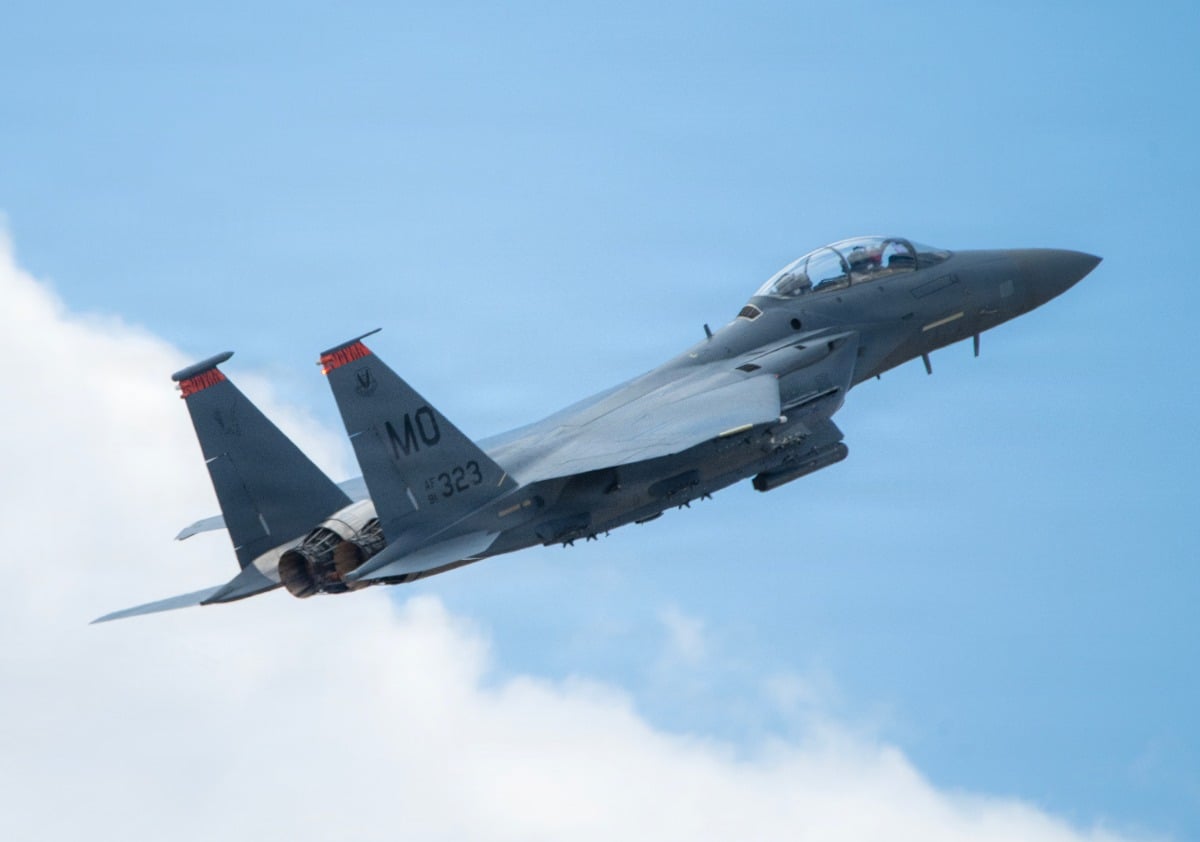
The cockpit of an F-15 Eagle at forty thousand feet is a place of forced isolation. Below, the curvature of the earth bleeds into an indigo haze. Above, the sky deepens toward black.
For decades, an American fighter pilot dominated this space by scream. The jet's active radar would tear through the atmosphere, throwing out massive pulses of electromagnetic energy. It was a flashlight in a dark forest. It illuminated everything in front of it with mathematical precision. For a more detailed analysis into this area, we suggest: this related article.
But flashlights work both ways. If you shine a powerful beam into the woods, you will find what you are looking for. You will also tell every predator for fifty miles exactly where you are standing.
In modern aerial warfare, flicking on your radar is increasingly a form of tactical suicide. Adversaries possess highly sophisticated sensors that look specifically for those radar emissions. They can track the beam back to its source before the pilot even registers a return signal. Worse, modern electronic warfare can scramble those radar pulses, turning a multi-million-dollar fighter jet's primary eyes into static. To get more context on this topic, comprehensive reporting can also be found on Wired.
The U.S. Air Force realized its traditional way of seeing was becoming a vulnerability. This is why the military branch is shifting its focus to a quieter, more lethal method of hunting. They are integrating an updated, highly sensitive infrared search and track system into the F-15 fleet.
They are learning to hunt by heat.
The Mechanics of Silence
To understand why this shift matters, imagine a hypothetical pilot named Marcus flying a patrol over contested airspace.
If Marcus uses his traditional radar, he is shouting into the void. If he relies on the new infrared system—housed in a sleek, centerline-mounted pod under the fuselage—he is entirely silent. The technology is completely passive. It emits nothing. Instead, it acts as an incredibly advanced thermal camera, scanning the sky for the microscopic friction of an enemy aircraft slicing through the air.
At Mach 1, an aircraft's nose cone, wing leading edges, and jet exhaust generate immense heat. Even a stealth fighter, shaped specifically to bounce radar waves away into harmless angles, cannot hide its thermal footprint. It leaves a scorching scar across the freezing, high-altitude sky.
The hardware driving this change on the F-15 is built around a platform known as the Legion Pod, which houses the advanced IRST21 sensor. Instead of tracking radio waves, the sensor looks for pixels of contrast against the cold backdrop of space.
But the air is a messy place. Clouds reflect sunlight. Ground clutter radiates residual warmth. The computer inside the pod has to look at thousands of thermal anomalies every second and decide which one is a harmless cloud and which one is a foreign fighter jet closing in at twice the speed of sound.
It does this through continuous, algorithmic triangulation. The sensor measures the azimuth and elevation of a heat signature. It watches how those pixels move relative to the background. By calculating the apparent surface area of the target against an atmospheric propagation model, the system builds what pilots call a "weapon-quality track."
Marcus doesn't just see a hot spot on his screen. He gets a targeting solution. He can fire a missile without ever turning his radar on. The enemy never receives a radar-warning alert. The first indication of danger is the impact.
The Problem of Sightlines
The current integration of this technology relies on external pods attached to the belly or the centerline stations of the aircraft. For a long time, this was deemed sufficient. But the physics of flight present a distinct geographical problem.
If the sensor is mounted underneath the nose or under the belly, the jet's own structure acts as a blindfold. When an F-15 is patrolling at high altitude, threats often exist above it. Russian and Chinese military doctrines emphasize high-altitude interceptors that can look down on their prey.
Consider what happens next: an enemy jet approaches from a higher altitude, masked by the curve of the upper atmosphere. The F-15’s belly-mounted infrared pod cannot see through its own metal nose cone. The sensor is blind to the sky above.
This limitation explains why aerospace engineers are experimenting with a radical change in geometry. Recent testing photographs released by aviation engineers revealed an F-15 variant fitted with an experimental, permanent infrared sensor housing placed directly on top of the nose, just ahead of the cockpit windscreen.
Moving the sensor to the upper ridge of the nose changes the tactical calculus completely.
From that vantage point, the sensor has an unobstructed view of the upper hemisphere. It can track high-flying threats against the uniform, sub-zero temperature of the upper stratosphere, where the thermal contrast is sharpest. The slope of the aircraft's nose still allows the sensor to look downward and to the sides. It transforms a restricted field of view into a comprehensive, hemispheric dome of situational awareness.
The Friction of Progress
Integrating these systems into an aging fleet of legacy fighters is not a simple matter of plugging in a new component. The F-15 was originally drawn up on draft boards in the late 1960s. It was designed in an era when analog dials and hydraulic pressures ruled the cockpit.
Squeezing modern digital architectures into these airframes creates a massive data management crisis.
An infrared sensor produces vast amounts of raw data. This data must be translated into an intuitive visual format for a pilot whose heart rate is running at 160 beats per minute while pulling seven times the force of gravity. If the computer system presents too many false tracks—such as mistaking a high-altitude weather balloon or a flock of migratory birds for an incoming cruise missile—the pilot will simply turn the system off.
Furthermore, the data cannot exist in isolation. Modern air combat relies on sensor fusion. The infrared data must be seamlessly combined with information from the active radar and the onboard electronic warfare suites. It requires a delicate balance of processing power and software stability.
The Air Force has faced these integration hurdles before. Early iterations of infrared tracking in the 1970s and 1980s were notorious for false alarms. A hot patch of desert or a reflection off the ocean could trigger a missile launch warning. Pilots lost trust in the systems.
The current push is an exercise in restoring that trust through sheer computational power. The new software algorithms don't just look for heat; they analyze the behavior of the heat. They recognize the specific acceleration profiles of military hardware versus atmospheric phenomena.
The Horizon
The sky is no longer a place where the loudest radar wins. It is an environment where the most perceptive observer survives.
As foreign air forces field increasingly advanced jamming technologies that can neutralize traditional American radar superiority, the ability to see without being seen is no longer a luxury. It is the baseline requirement for survival.
The F-15 Eagle, an aircraft that has spent fifty years as the symbol of American air supremacy, is undergoing a quiet evolution. It is shedding its reliance on the bright, loud flashlights of the twentieth century. Instead, it is learning to sit quietly in the dark, watching the cold upper atmosphere for the tiny, telltale flicker of a distant flame.

:max_bytes(150000):strip_icc()/abby-marcus-wedding-couple-reception-outfits-241-1018-2000-78693942f5be4de9b83f8755450767bb.jpg)
