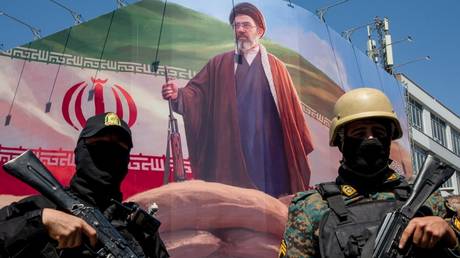
International relations commentators love a simple narrative. When a state leader signs a controversial pact or backtracks on fiery rhetoric, the immediate diagnosis from rivals is almost always "desperation." We saw this clearly when Iranian Supreme Leader Ali Khamenei characterized past American diplomatic overtures—specifically Donald Trump’s push for negotiations—and subsequent geopolitical shifts as actions driven by sheer panic and domestic vulnerability.
This analysis is lazy. It is also dangerously wrong. In related updates, take a look at: Why the Cyprus India Partnership Matters More Than You Think.
In the theater of global power dynamics, framing an adversary’s willingness to negotiate as a sign of imminent collapse is the oldest coping mechanism in the book. It mistakes tactical flexibility for strategic defeat. Real leverage does not belong to the actor who refuses to sit at the table; it belongs to the actor who can walk away from it after fundamentally altering the status quo.
The conventional wisdom insists that economic sanctions and political isolation force superpowers into a corner, rendering them desperate for an exit ramp. The reality is far more cold-blooded. BBC News has provided coverage on this important subject in great detail.
The Myth of the Cornered Superpower
Let's dismantle the premise that economic pressure automatically yields geopolitical capitulation. For decades, foreign policy establishments in Washington, Brussels, and Tehran have operated under the assumption that if you turn the economic screws tight enough, the opponent will beg for mercy.
I have watched policy analysts spend careers tracking inflation indices and currency devaluations in sanctioned states, confidently predicting that the breaking point is just months away. It rarely happens. States are not corporations. They do not file for bankruptcy and liquidate their assets when the balance sheet goes red. They adapt. They build parallel economies, establish illicit trade networks, and, crucially, use the external pressure to consolidate domestic control.
When an administration deploys "maximum pressure" or, conversely, when an adversarial regime claims that such pressure has made the superpower "desperate," both sides are engaging in political theater for domestic consumption.
Consider the mechanics of the 2018 American withdrawal from the Joint Comprehensive Plan of Action (JCPOA) and the subsequent push for a "better deal." The mainstream narrative suggested the move was a chaotic gamble. The counter-narrative from Tehran was that the subsequent desire for talks showed Washington realized it had blundered.
Both views miss the structural reality. The tightening of sanctions was not an act of desperation; it was the systematic exploitation of asymmetric financial dominance. The willingness to negotiate afterward was not a white flag; it was an invitation to formalize a new, lower baseline of expectations for the adversary.
The Leverage Paradox
In high-stakes negotiation, the party displaying the most public volatility often holds the structural advantage. This is the Madman Theory of diplomacy, conceptualized by Thomas Schelling and utilized effectively by leaders from Richard Nixon to the modern era.
If an opponent believes you are unpredictable, erratic, or even "desperate" enough to trigger a systemic shock, they are forced to misallocate resources to prepare for worst-case scenarios.
- The Linear View: Aggression leads to isolation, isolation leads to economic pain, economic pain leads to desperation, desperation leads to concessions.
- The Structural View: Aggressive posturing resets the baseline of acceptable behavior. Isolation forces internal consolidation. The offer of negotiation tests the adversary's internal cohesion while giving nothing away up front.
When a dominant power offers a deal, it is rarely because their options have run out. It is usually because they have calculated that the cost of maintaining the current friction exceeds the cost of a managed frozen conflict. Calling that calculation "desperation" is a psychological defense mechanism disguised as statecraft.
Imagine a scenario where a dominant maritime power imposes a naval blockade on a smaller state. After twelve months, the blockade runner offers a truce. The smaller state declares victory, claiming the blockade runner’s economy could not sustain the deployment. Meanwhile, the blockade runner has already achieved its primary objective: halting the infrastructure development of the smaller state for a year and forcing it to deplete its strategic reserves. Who actually won that exchange?
Why Sanctions Fail to Create Real Defeatism
The fundamental misunderstanding of economic warfare lies in its psychological assumptions. Western policy shops assume that material deprivation leads to political revolt or policy reversals.
History shows the opposite. Heavy sanctions often create a perverse alignment of incentives between a ruling elite and the population. The state becomes the sole distributor of scarce resources, effectively increasing dependency on the very regime the sanctions were meant to weaken.
When regional leaders claim that external powers are acting out of desperation due to internal economic strain, they are projecting. They are looking at a superpower through the lens of a regional power. A regional power cannot sustain a 50% drop in oil exports without facing existential systemic collapse. A superpower, with a diversified fiat currency and global hegemony, views those same shocks as rounding errors on a quarterly spreadsheet.
The downside to acknowledging this reality is uncomfortable: it means that conventional diplomatic tools—sanctions, public condemnations, isolation—are far less effective at forcing true capitulation than we care to admit. It means that when a superpower offers a deal, they are doing so from a position of managed stability, not imminent ruin.
The Flawed Logic of "People Also Ask"
The public discourse surrounding these geopolitical standoffs is riddled with flawed premises. If you look at the standard questions driving public debate, the lack of strategic depth is glaring.
"Does maximum pressure force regimes to the negotiating table?"
Only if the regime values economic growth over survival. For ideological states, survival is tied to resistance. Maximum pressure does not force compliance; it forces a pivot to alternative geopolitical blocs, such as the growing financial and military alignment between Moscow, Beijing, and Tehran. The premise that economic pain equals political surrender is a Western capitalist bias.
"Why do leaders claim their opponents are desperate?"
Because Nuance does not win elections or maintain revolutionary fervor. Acknowledging that your opponent is acting calculatedly and possesses deep reserves of power demoralizes your base. Labeling an adversary "desperate" is a low-cost way to project strength to an internal audience while masking your own inability to alter their behavior.
"Is walking away from international agreements a sign of weakness?"
It is an exercise of pure, raw sovereignty. Weak states cling to treaties because international law is their only shield. Strong states break treaties when the constraints of the agreement no longer serve their immediate strategic interests. It may be viewed as untrustworthy, but it is never a sign of weakness.
Stop Misreading Tactical Resets
The dangerous consensus among foreign policy analysts is that every diplomatic overture is an admission of failure. If an administration pivots from threats to an offer of dialogue, the pundits declare the previous strategy dead.
This is a fundamental misreading of tactical resets.
True strategic dominance is the ability to shift seamlessly between economic coercion and diplomatic engagement without altering your core objectives. It is the ability to keep the adversary guessing whether the next move is a drone strike or a summit invitation.
When an adversary interprets these shifts as desperation, they fall into a dangerous trap. They overplay their hand. They reject the overture, dig in their heels, and wait for the imagined collapse of their opponent. But the collapse never comes, because the superpower's internal foundations were never actually threatened by the dispute.
The result of this miscalculation is always the same: missed opportunities for incremental stabilization, followed by a sudden, asymmetric escalation from the dominant power that catches the self-proclaimed "victor" completely off guard.
Stop listening to the rhetoric of regional actors trying to save face on the international stage. Stop believing that major global powers operate out of panic. In the cold calculus of hegemony, a deal is never an act of desperation. It is simply the formal collection of rent on a system the dominant power already owns. Treaties are signed not when a superpower breaks, but when they have finished breaking everyone else.


