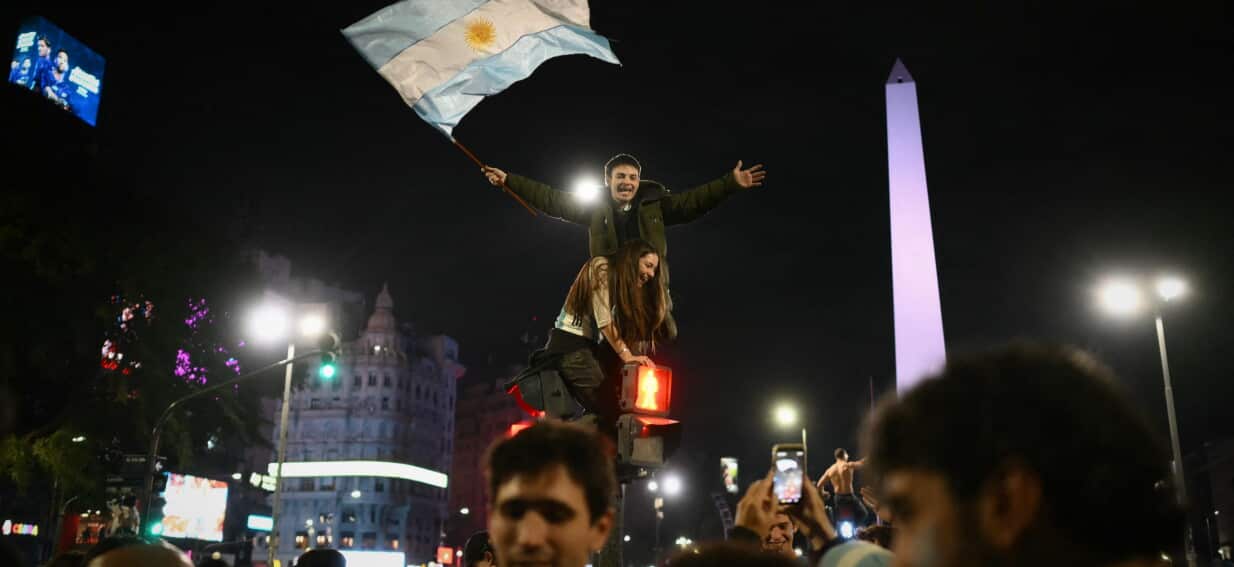
You can't rip geopolitical trauma away from Argentine football. It's woven straight into the fabric of their shirt.
Minutes after cementing a spot in the 2026 World Cup final with a dramatic 2-1 comeback win over England in Atlanta, the euphoric Albiceleste squad crossed a line that soccer's governing body explicitly forbids. Midfielder Giovani Lo Celso and veteran defender Nicolas Otamendi paraded a banner onto the pitch reading "Las Malvinas son Argentinas" (The Falkland Islands are Argentine). Lo Celso later laid it flat on the turf during peak celebrations.
FIFA is now investigating the display, placing Argentina at serious risk of heavy financial sanctions or disciplinary actions right before they face Spain in the final. But honestly, anyone surprised by this hasn't been paying attention. For Argentina, beating England isn't just about football. It's about history, score-settling, and a 44-year-old scar that refuses to heal.
The Rulebook Versus Deep National Identity
FIFA has clear, rigid guidelines regarding political expressions. The International Football Association Board (IFAB) states explicitly that equipment and apparel must remain totally free of political, religious, or personal slogans.
Stadium security forces in Atlanta knew the temperature of this fixture. Argentine Security Minister Alejandra Monteoliva confirmed before kickoff that fans were explicitly banned from bringing Falklands-related flags into the Mercedes-Benz Stadium.
The rules failed to stop the narrative. The banner originally leaked down from the stands, where fans smuggled it past security checkpoints. Once the final whistle blew, the players grabbed it. By carrying that message onto the grass, the players transformed a partisan fan chant into a formal violation of FIFA's disciplinary code.
Why the Falklands Wound Never Heals
To understand why a modern squad of multi-millionaire athletes would risk World Cup sanctions over a strip of plastic, you have to look at what happened in 1982.
The Falklands War lasted 74 brutal days, sparked by an invasion from Argentina's then-military junta. The conflict claimed the lives of 649 Argentine personnel and 255 British troops. Britain ultimately reasserted total sovereignty over the territory, which sits roughly 300 miles off the Argentine coast.
Falklands War Casualties (1982)
--------------------------------------
Argentine Fatalities:    649
British Fatalities:      255
Total Days of Conflict:  74
--------------------------------------
Inside Argentina, the islands remain an untouchable pillar of national identity. The claim is written into their national constitution. The obsession is passed down through generations. Even before the semifinal kickoff, squad members were heard chanting in the dressing room after their quarterfinal win against Switzerland: "For the Malvinas, for Diego [Maradona] and for Leo [Messi]'s last one."
A Escalating Diplomatic Row
This isn't just a spontaneous sports controversy anymore. The display happened against a backdrop of fresh, real-world diplomatic friction between Buenos Aires and London.
Just two days before the match, Argentina's Ministry of Foreign Affairs issued an aggressive note of protest to the British Embassy. The anger stemmed from unnotified movements of the British naval vessel HMS Medway near the islands, which Argentina labeled an illegal military incursion into their jurisdiction.
When the players held up the banner, the government backed them completely. The Foreign Ministry doubled down on social media, writing: "By history, by right, and by conviction, the Malvinas are Argentine." FIFA finds itself trapped between its own corporate neutrality mandates and a sovereign nation's absolute refusal to back down on its history.
What Happens Next
FIFA's disciplinary committee moves fast during major tournaments. Argentina will likely face a severe financial penalty, though individual player suspensions for the final against Spain remain highly unlikely given the optics.
If you are running an event or managing a sports organization, the takeaway here is simple: policy alone cannot suppress deep-seated historical trauma. Security sweeps can confiscate flags at the turnstiles, but they cannot strip the political motivation out of the athletes themselves.
Argentina won the battle on the pitch, coming back from Anthony Gordon’s 55th-minute opener with goals from Enzo Fernandez and Lautaro Martinez. They moved closer to retaining their global crown. But by bringing the ghost of 1982 into the stadium, they reminded the world that for them, football is simply war by other means.