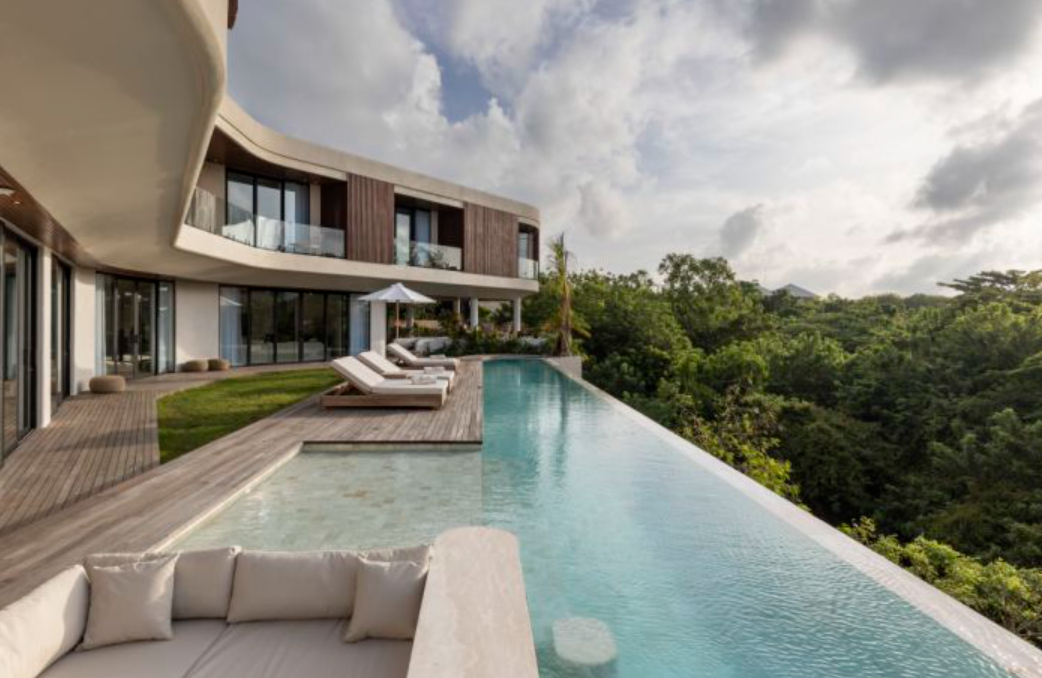
The high-end hospitality industry is undergoing a quiet, structural transformation driven by a desperate demand for total invisibility. While standard luxury properties flaunt their grand lobbies and public infinity pools on social media, the truest marker of modern wealth has shifted entirely in the opposite direction. Ultra-high-net-worth individuals are no longer just paying for thread counts or Michelin-starred room service. They are paying for structural isolation.
The manifestation of this trend shows up in high-end real estate and resort design through hidden infrastructure, most notably the integration of secret staircases, private service tunnels, and disguised entryways. These architectural features allow high-profile guests to bypass public spaces entirely, moving from transit vehicles to private suites without ever entering a communal frame. This is not merely a design quirk or a whimsical nod to historical castles. It is a calculated response to a world where personal data, tracking, and constant surveillance have made true privacy almost impossible to achieve.
The Invisible Floor Plan
For decades, luxury accommodation relied on visible opulence. Gold leaf, expansive glass facades, and sprawling communal terraces signaled prestige. Today, that layout represents a security vulnerability and an unwanted social obligation for the ultra-wealthy.
Modern high-end architects now design properties from the inside out, prioritizing secure circulation routes over grand public statements. Consider the mechanics of a high-profile stay. A traditional luxury hotel requires a guest to walk through a lobby, interact with front-desk staff, and ride an elevator that may stop on multiple floors. Each of these touchpoints represents a breach in privacy.
The response from elite property developers has been the implementation of dual-circulation design. This architecture creates two entirely separate ecosystems within a single building. One ecosystem is public, visible, and used by standard guests or day visitors. The second ecosystem is restricted, utilizing hidden staircases, dedicated elevators hidden behind false panels, and subterranean corridors.
These hidden channels serve two distinct purposes. First, they allow elite guests to move through the property undetected. Second, they serve as a parallel highway for hospitality staff. A butler can appear inside a suite with fresh linens or a multi-course meal without ever being seen in the main hallways, maintaining the illusion of absolute solitude.
The Mechanics of the Concealed Entrance
A secret staircase is only as effective as the doorway that hides it. In high-end resort design, these entrances are frequently integrated into the woodwork, disguised as floor-to-ceiling bookshelves, or hidden behind heavy tapestries and architectural paneling.
The engineering behind these hidden doors is complex. Standard hinges and handles are discarded in favor of pivot hinges concealed within the floor and ceiling frame. Magnetic latches that release via hidden pressure plates or biometric sensors ensure that the door remains completely flush with the surrounding wall when closed. To the untrained eye, the wall looks like solid craftsmanship. To the guest or the security detail, it is an immediate escape route or a direct pipeline to a private vehicle enclosure.
The Economics of Isolation
This level of architectural customization requires massive capital expenditure. Constructing dual-circulation pathways reduces the rentable square footage of a property and increases material costs significantly. Yet, the financial returns justify the investment.
Properties equipped with uncompromised privacy features command a massive premium over standard luxury suites. A villa featuring a standard private pool might command a premium rate, but a villa that guarantees a guest can arrive, stay for a week, and depart without a single stranger catching a glimpse of their face can easily command five times that amount.
The target demographic for these properties extends beyond Hollywood celebrities fleeing paparazzi. The more lucrative and consistent clientele includes corporate executives navigating sensitive mergers, political figures seeking informal diplomatic retreats, and tech founders attempting to disconnect from the grid. For these individuals, a breach of privacy is not an inconvenience. It is a material risk to their businesses, stock prices, or personal safety.
| Feature Type | Standard Luxury Layout | Ultra-Privacy Dual-Circulation Layout |
|---|---|---|
| Arrival Route | Main driveway, bellhop greeting, central lobby check-in | Subterranean secure garage, biometric elevator direct to suite |
| Staff Interaction | In-room knocks, corridor deliveries, visible room service carts | Dedicated service pantries with dual-sided secure lockers |
| Vertical Transit | Shared guest elevators with key-card floor restrictions | Unmarked, single-destination shafts and flush-mount hidden staircases |
| Emergency Escapes | Marked public fire stairs shared by all occupants | Independent, reinforced egress routes bypassing common zones |
The Security Reality Versus the Aesthetic Illusion
There is a tension between the aesthetic desire for a hidden architectural marvel and the raw reality of modern security engineering. A secret staircase built purely for the novelty of a "speakeasy" aesthetic does not provide actual safety or true operational privacy.
True security architecture requires structural integration from the foundation upward. If a hidden staircase leads to a communal corridor or an unmonitored exit point, it remains a vulnerability. True high-end developments ensure that these hidden pathways connect directly to fortified safe rooms, secure underground parking garages, or isolated helipads.
Furthermore, these pathways must be structurally acoustic-insulated. The ultra-wealthy will not tolerate hearing the footsteps of staff or other guests echoing through a hidden wall chamber. This requires the use of specialized soundproofing materials, including mass-loaded vinyl, double-stud walls, and acoustic decoupling dampeners. The hidden passage must be as silent as it is invisible.
The Regulatory Hurdle
Designing secret pathways inside commercial hospitality properties presents a logistical nightmare regarding local building codes and fire safety regulations. Life safety codes generally dictate that exit routes must be clearly marked, highly visible, and easily accessible to all occupants in an emergency.
To bypass this conflict without compromising on safety or law, architects must engineer these hidden spaces to pull double duty. In many jurisdictions, a hidden door must be programmed to automatically unlock and swing open upon the activation of a fire alarm, revealing the exit path to emergency personnel or guests who need it. This requires sophisticated integration between the property’s building management system and its security infrastructure. The moment an emergency occurs, the illusion of the hidden wall dissolves to meet the absolute reality of life safety regulations.
Why the Trend is Accelerating
The obsession with architectural concealment is not a passing fad. It is accelerating because the public sphere has become increasingly hostile to the concept of anonymity.
Every individual carries a high-definition camera in their pocket. Facial recognition software can scan crowds and identify individuals in real time. Drone technology allows amateurs to peer over high fences and onto private balconies. In this environment, traditional luxury markers like a penthouse with floor-to-ceiling windows overlooking a major city harbor become liabilities rather than assets.
The luxury market is responding by turning inward. The ultimate destination is no longer about the view looking out. It is about ensuring that no one can look in. This shift has altered the metrics of hospitality success. The properties performing the best in the ultra-luxury tier are those that understand their primary product is not comfort, but peace of mind.
The Operational Strain of Maintaining Absolute Discretion
Operating a property built around hidden infrastructure introduces significant challenges for hospitality staff. It requires an entirely different style of training and service delivery.
Staff members must memorize complex layout matrixes to ensure they never cross paths with a guest who has requested total isolation. Service delivery must be timed to the second, often tracked via internal sensors that alert staff when a guest has moved from the bedroom to the living quarters, opening a window of opportunity to service the vacated space via the hidden staircase.
This level of precision leaves zero margin for error. A single misplaced staff member or an unlatched hidden door breaks the spell of isolation, destroying the core value proposition that the guest is paying thousands of dollars a night to experience. The human element remains the most difficult variable to control in the equation of absolute privacy.
The Future of Spatial Isolation
As technology advances, physical hidden staircases and secret doors will inevitably merge with digital masking infrastructure. Future properties are already experimenting with smart glass that shifts from transparent to opaque based on proximity sensors, active noise-canceling fields embedded within wall cavities, and anti-drone airspace protection systems integrated into the landscaping.
The core desire driving these innovations remains unchanged since the era of medieval castles. The powerful and the wealthy will always seek spaces where they can step away from the theater of public life, close a door that looks like a wall, and disappear completely. The properties that master this spatial illusion will continue to dominate the upper echelons of the global travel market, while those relying on old-world, visible opulence will find themselves catering to an increasingly shrinking audience of the traditionally wealthy. True power moves in silence, through doors you cannot see, down stairs that do not exist on the public blueprint.


