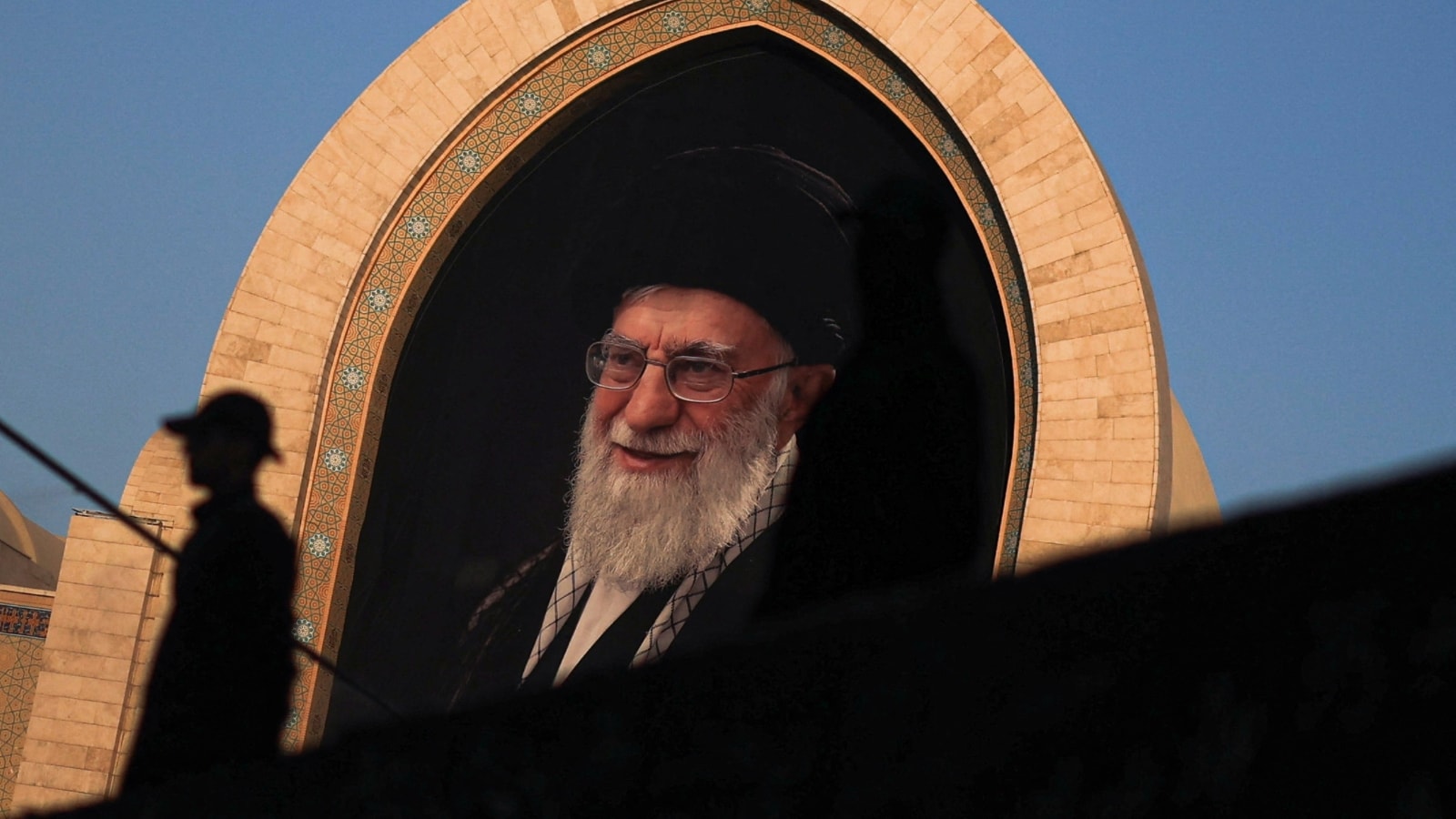
The camera does not tilt down. It stays fixed at eye level, capturing the manicured green of the courtyard, the pristine white plaster of the walls, and the quiet, almost eerie stillness of a morning in Tehran. For decades, this specific geometry of stone and security has been the most heavily guarded secret in the Islamic Republic. It is the Beit Rahbari, the official compound of Supreme Leader Ayatollah Ali Khamenei. To see it at all is rare. To see it after a rain of precision ordnance has fallen across the capital is a message written in the language of survival.
Power operates through optics. When state television broadcasted the first clear footage of the inner sanctum following the coordinated United States and Israeli airstrikes, the focus was not on what was destroyed. It was on what remained untouched. The video was a carefully orchestrated performance of normalcy, a cinematic sigh of relief designed to project absolute continuity to a nation holding its breath.
But look closer at the edges of the frame.
The human eye naturally seeks out anomalies when a narrative feels too clean. In the background, just beyond the pristine carpets of the meeting hall, the light filters through tall windows. The glass is intact. The heavy drapes do not sway. Yet, the atmosphere carrying those images to the world is thick with a tension that no high-definition lens can fully erase.
Imagine an ordinary citizen in Tehran. Let us call him Farid. He is an electrical engineer, a man who understands how systems break and how currents fail. On the night of the strikes, Farid sat in his living room on the western outskirts of the city, listening to the low, rumbling thuds that rattled his teacups. The sky had turned a sickly, artificial orange as air defense systems engaged incoming threats. For hours, the rumor mills of Telegram and WhatsApp filled the silence left by state media. The rumors whispered of devastation at the highest levels, of a leadership shattered, of a command structure thrown into chaotic exile.
The next morning, Farid watches the television screen. He sees the Supreme Leader sitting in his familiar armchair, receiving officials as if the previous night had been nothing more than a passing thunderstorm.
This is the psychological battleground of modern warfare. The missiles do the physical work, but the video footage carries the strategic weight. The release of this footage is an admission of vulnerability wrapped in a flag of defiance. By showing the compound, the regime acknowledges the fear that gripped its populace. They are answering a question that no one was officially allowed to ask: Is the center holding?
Airstrikes are designed to do more than neutralize radar installations or missile silos. They are meant to degrade the psychological certainty of an adversary. When precision strikes hit targets across Iran, the immediate military objective was clear—dismantling specific defensive and offensive capabilities. But the secondary objective was political. It was an demonstration to the leadership that the shield was penetrable, that the distance between a drone in the sky and the most sacred halls of power had shrunk to zero.
Consider the calculation required to open the doors to the cameras in the aftermath of such an event. For a regime that views secrecy as a core component of its defense strategy, revealing the interior of the compound is a calculated risk. Every tile, every doorway, and every angle offers intelligence to foreign analysts who spend their lives dissecting the physical layout of regime security. They look for structural reinforcing. They calculate the thickness of the walls based on the deep recess of the windows. They watch the shadows to determine the exact time of day the footage was captured, verifying if the meeting was truly live or a pre-recorded insurance policy.
The video attempts to rewrite the emotional reality of the previous night. It says, We are here, we are calm, and we are unchanged.
Yet, the very necessity of the broadcast betrays a deep anxiety. If the strikes had truly been inconsequential, if the defenses had turned back every threat without effort, the compound would have remained a ghost to the public eye. The silence would have been the ultimate flex of power. Instead, the regime chose visibility. They chose to invite the world’s cameras across the threshold.
This shift reveals a fundamental truth about modern conflict. The physical battle is only the opening salvo. The true war is fought over the perception of stability. For the millions of Iranians who watched the sky light up, the footage of the compound is a Rorschach test. To supporters of the government, it is proof of divine protection and resilience. To the critics and the fatigued population navigating a collapsing currency and crippling sanctions, it is a gilded facade hiding a profound fragility.
Behind the political theater are the human beings who populate these spaces. The guards standing at attention outside the meeting room do not move a muscle, but their eyes are scanning. They know that the parameters of their world changed overnight. The air defenses that once felt absolute have been tested, and the results are written in the smoke that rose from the outskirts of the city.
The strategy of projecting strength through architectural permanence is ancient. Dictators and monarchs have always used stone and marble to argue against their own mortality. But marble cracks under kinetic force. The modern world moves too fast for stone to offer permanent comfort. When a government must use its most private spaces as a propaganda shield, the nature of its authority has shifted from an assumed fact to an ongoing argument.
Farid turns off his television. The screen goes black, reflecting his own tired face and the quiet living room around him. Outside his window, the traffic of Tehran hums along, a chaotic, relentless stream of people trying to survive the day. The grocery stores will open. The bread will be baked. The currency will fluctuate. The grand geopolitical chess match between Washington, Jerusalem, and Tehran plays out high above his head, but its consequences land directly on his kitchen table.
The footage of the compound will fade from the news cycle, replaced by the next escalation, the next statement, the next satellite image showing scorch marks on a runway. But the image of those pristine white walls will linger in the collective memory. They are no longer a symbol of untouchable authority. They are a reminder of how close the conflict has come to the heart of the state.
The cameras have been turned off, the officials have left the room, and the heavy doors have swung shut once more. The silence returns to the Beit Rahbari. But it is a different kind of silence now. It is the tense, brittle quiet of a house that has felt the ground shake beneath its foundation, waiting to see if the next tremor will be the one that brings the ceiling down.