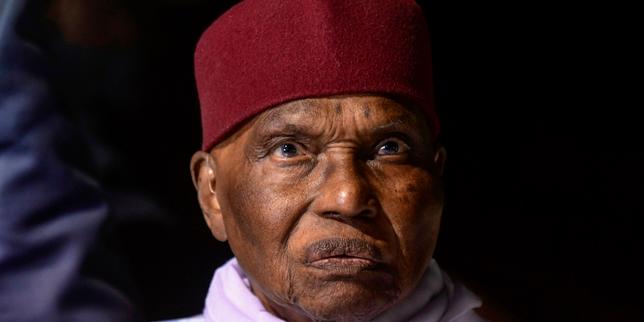
The Centenarian Sphinx of Dakar
Abdoulaye Wade has outlived his contemporaries, his fiercest rivals, and the very expectations of West African political longevity. As Senegal marks the centenary of its third president, the public celebrations mask a far more complex reality. Wade is not merely a retired statesman receiving the quiet twilight of a long life. He remains the structural architect of Senegal's modern political machinery, a man whose legacy is etched into both the gleaming infrastructure of Dakar and the deep, systemic fractures of its democracy.
To understand Senegal today is to understand the deliberate, often chaotic calculus of the man known universally as "Le Vieux."
The standard narrative offered by state media and regional observers is one of a grand democracy builder. They point to the historic 2000 election, an event that shattered forty years of unbroken Socialist Party rule and proved that a peaceful transition of power was possible in a region frequently torn by coups. But that transition was not a miracle. It was the result of a twenty-six year war of attrition waged by Wade and his Senegalese Democratic Party (PDS). He didn't just inherit a democracy; he forced his way into the presidential palace through sheer obstinacy, utilizing a masterful blend of street mobilization, intellectual critique, and pragmatic compromise with the country’s powerful religious brotherhoods.
Yet, the price of that victory is still being collected. The Wade presidency, spanning from 2000 to 2012, was a masterclass in contradiction. He championed pan-Africanism while entangling the national budget in grandiose "prestige projects." He modernized the physical face of the capital while simultaneously introducing an aggressive, highly personalized style of governance that nearly dismantled the very democratic guardrails he spent decades fighting to establish. As the nation reflects on his one hundred years, the true investigation lies not in his survival, but in the enduring mechanics of his power.
The Master of Creative Destruction
Wade entered office as an economist with an insatiable appetite for grand scale. He rejected the incrementalist, technocratic approach of his predecessors, Léopold Sédar Senghor and Abdou Diouf. Instead, he initiated an era of rapid infrastructural transformation.
The Grands Travaux and the Mirage of Progress
The corniche of Dakar, the highway infrastructure, and the massive African Renaissance Monument—larger than the Statue of Liberty—were all products of the Wade doctrine. He believed that an African nation could not attract global capital while looking like an underdeveloped outpost. He wanted concrete, steel, and scale.
This was economic development via shock therapy. To fund these massive undertakings, Wade bypassed traditional bureaucratic channels, creating specialized agencies that reported directly to the presidency. The most famous of these was ANOCI (the National Agency for the Organization of the Islamic Conference), managed by his son, Karim Wade. By shifting public funds and foreign investment through these parallel structures, Wade effectively created a state within a state.
- The Positive Impact: Dakar became a logistical hub for West Africa, attracting foreign direct investment and drastically reducing transit bottlenecks.
- The Hidden Cost: The national debt swelled, domestic contractors were frequently sidelined in favor of foreign conglomerates, and accountability vanished into a black box of presidential decrees.
Wade proved that an African state could build massive projects without waiting for the slow approval chains of the World Bank. However, he also demonstrated that doing so required bypassing the legislative oversight meant to protect the public treasury. It was an approach to governance that subsequent administrations did not abandon; they merely refined it.
The Marabout Alliance and the Secular Compromise
Senegal’s stability has long rested on a delicate social contract between its secular state apparatus and its powerful Sufi brotherhoods, particularly the Mourides and the Tijaniyyah. Wade, an open and proud disciple of the Mouride brotherhood, fundamentally altered this relationship.
Where previous presidents approached the Caliphs with a quiet, diplomatic deference behind closed doors, Wade turned his devotion into a hyper-visible instrument of state policy. His public acts of prostration before his spiritual leader shortly after his 2000 election victory sent shockwaves through the secular elite. It was a calculated move. By explicitly tying his political legitimacy to religious validation, Wade secured a loyal base that could withstand economic downturns and political scandals.
This calculated alliance shifted the balance of power. The religious centers, particularly the holy city of Touba, received unprecedented state funding, infrastructure, and autonomy. Tax exemptions and land grants flowed freely. In return, the political opposition found it incredibly difficult to mount effective campaigns in regions where the word of a marabout could sway hundreds of thousands of votes.
This compromised the secular neutrality of the state. It created a precedent where political survival required a heavy, financial transactional relationship with religious authorities, a dynamic that his successors have been forced to maintain, regardless of their ideological leanings.
The Dynastic Temptation and the 2012 Rupture
The defining crisis of Wade’s presidency—and the one that ultimately led to his downfall—was his attempt to arrange a dynastic succession. The ascent of his son, Karim Wade, nicknamed the "Minister of the Sky, Earth, and Ocean" due to his massive portfolio, alienated both the public and the internal leadership of the PDS.
Wade’s strategy was systematic. He attempted to alter the constitution to create a vice-presidential post, a move widely interpreted as a mechanism to insert his son into the line of succession without facing a direct, competitive election. This was the tipping point.
The resistance that emerged in 2011 was not just a protest against an aging leader; it was a profound systemic rejection of monarchical drift. The birth of the Y'en a Marre (Enough is Enough) movement, led by journalists and rap artists, alongside the M23 coalition, mobilized a new generation of Senegalese citizens. They used the very tools of civic mobilization that Wade had taught the country in the 1980s and 1990s, turning his own tactics against him.
Wade's Political Lifecycle:
[1974-2000: The Eternal Opponent] ➔ [2000-2012: The Sovereign Builder] ➔ [2012-Present: The Patriarch in Exile/Shadow]
When Wade ran for a controversial third term in 2012, arguing that a new constitution reset his term count, the street resistance turned violent. The constitutional court, stacked with his appointees, validated his candidacy, but the electorate did not. His decisive defeat by his former protégé, Macky Sall, was a harsh reminder that while Senegal's institutions could be bent, they would not break completely.
The Living Shadow Over Modern Politics
Abdoulaye Wade’s retirement has been anything but quiet. Based for years in Versailles before returning to Dakar, he has operated as a shadow patriarch, orchestrating the survival of his political clan. The PDS, though diminished, still functions as a potent political weapon, used primarily to negotiate the rehabilitation of Karim Wade, who was convicted of illicit enrichment in 2015 and later pardoned but exiled.
The recent political convulsions in Senegal—including the rise of Ousmane Sonko and the dramatic 2024 election of Bassirou Diomaye Faye—can be traced back to the structural precedents set during the Wade era. The intense personalization of power, the weaponization of the judiciary against political rivals, and the use of constitutional revisions to extend political survival are all strategies that were perfected under Wade's tenure.
       [Wade's Structural Innovations]
                 │
      ┌──────────┴──────────┐
      ▼                     ▼
[Parallel State Agencies]   [Hyper-Visible Religious Alliances]
      │                     │
      ▼                     ▼
[Evasion of Oversight]     [Electoral Base Security]
Every subsequent leader has had to navigate the landscape Wade constructed. They have used his tools, copied his infrastructure models, and struggled with the same volatile youth demographic that Wade first mobilized and then failed to satisfy.
The Unpaid Bill of Wadeism
At one hundred years old, Abdoulaye Wade stands as a monument of West African history. He gave Senegal its pride on the international stage and broke the monopoly of a stagnant single-party system. He taught a nation how to demand change.
But the bill for his methods has come due. By prioritizing visible infrastructure over institutional integrity, he left behind a democracy that is highly susceptible to executive overreach. The grand buildings and highways stand, but so does the precedent that the rules can be rewritten if the ruler is bold enough. Senegal’s current generation of leaders is not just managing a country; they are managing the enduring, volatile ghost of Wade's ambitions.