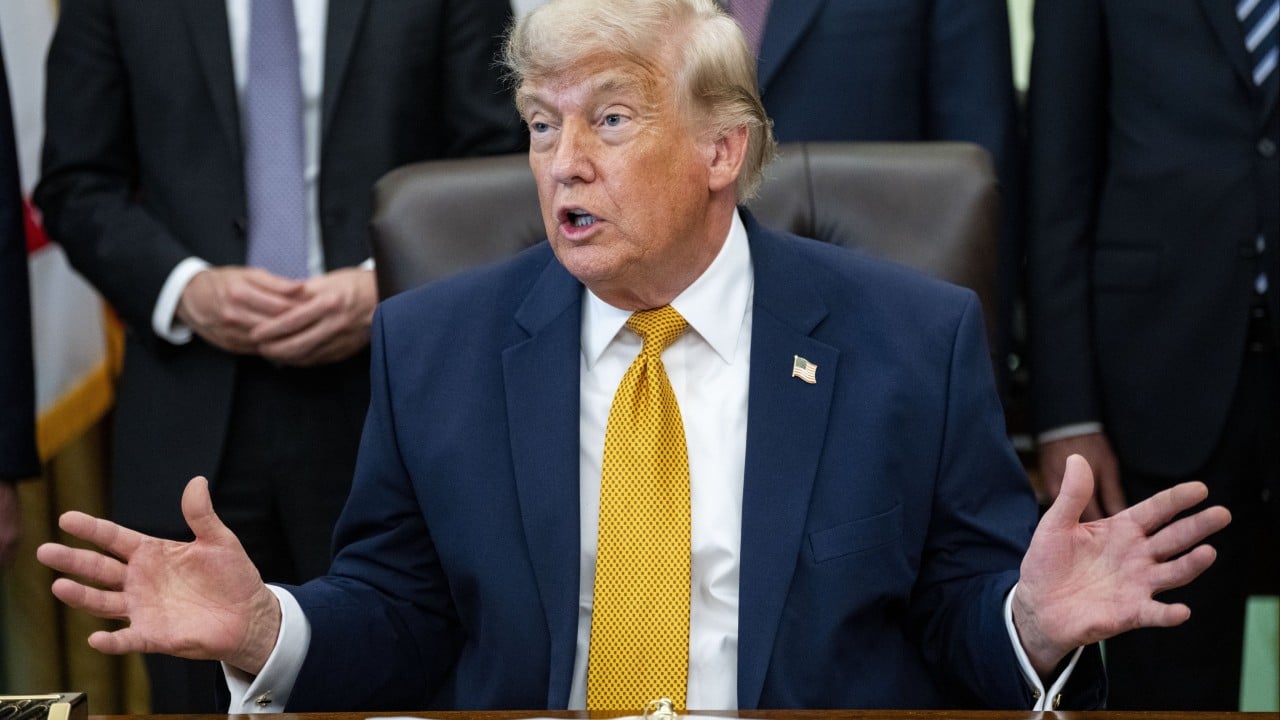
The mechanics of modern geopolitical leverage rarely align with the public rhetoric used to deploy them. When Donald Trump issued his ultimatum regarding the Joint Comprehensive Plan of Action (JCPOA)—stating he would "do what I have to do" if Iran failed to adhere strictly to the 2015 nuclear agreement—the focus immediately locked onto the prospect of total American withdrawal. That focus missed the underlying strategy. The true mechanism at play was not merely an exit strategy, but the systematic construction of economic isolation designed to force a renegotiation from a position of absolute disadvantage.
Understanding the standoff requires looking past the immediate friction between Washington and Tehran. The administration’s approach operated on a specific premise: that the original deal, brokered under the Obama administration, left Iran’s regional influence and ballistic missile program unchecked while offering premature economic relief. By threatening a unilateral walkaway, the objective was to exploit a fundamental structural flaw in the JCPOA—its reliance on global banking networks that ultimately answer to the United States Treasury.
The Anatomy of the Sanctions Trap
The JCPOA functioned by trading verified nuclear restrictions for the lifting of economic sanctions. However, the architecture of global finance created a hidden vulnerability that Washington could exploit at will.
International trade relies heavily on the U.S. dollar and the SWIFT banking network. Even if European allies, Russia, and China desired to keep the nuclear deal alive, they faced a stark mathematical reality. No major foreign bank or multinational corporation would risk losing access to the clearing system of the U.S. financial market just to maintain commercial ties with Tehran.
[U.S. Treasury Enforcement]
           │
           ▼
[Global Banking System / SWIFT]
           │
           ▼
[European / Asian Corporations] ───(Forced Disinvestment)───> [Iran Economy]
This reality formed the backbone of the secondary sanctions strategy. The threat of secondary sanctions meant that foreign entities had to choose between doing business with Iran or doing business with the United States. The choice was never truly in doubt. Long before any formal withdrawal occurred, global shipping lines, energy giants, and automotive manufacturers began winding down their Iranian operations. The pressure was structural, systemic, and entirely independent of whether Iran technically remained in compliance with the International Atomic Energy Agency (IAEA) parameters.
The Regional Balance of Power
The domestic political pressure within the United States to alter or abandon the deal did not emerge in a vacuum. It was heavily driven by a shifting alliance network in the Middle East, specifically the unprecedented alignment of interests between Israel and the Gulf states, led by Saudi Arabia.
For these regional powers, the JCPOA was flawed because it separated the nuclear issue from Iran's conventional military capabilities. They argued that the influx of frozen assets released under the deal directly funded proxy conflicts across Yemen, Syria, and Lebanon.
- The Missile Loophole: The JCPOA did not explicitly restrict Iran's development of precision-guided ballistic missiles.
- The Sunset Clauses: Critical restrictions on uranium enrichment were set to expire after ten to fifteen years, a timeline regional adversaries viewed as a temporary pause rather than a permanent solution.
- The Sunfunder Effect: The cash flows generated by renewed oil exports acted as an economic cushion, allowing Tehran to project power regionally without facing internal economic collapse.
By threatening to dismantle the agreement, the Trump administration aimed to establish a new baseline for negotiations. The goal was a comprehensive treaty that addressed the nuclear timeline, missile technology, and regional proxy networks simultaneously.
The European Dilemma
The strategy placed European signatories—specifically the United Kingdom, France, and Germany—in an untenable position. Visibly committed to preserving the deal as a triumph of multilateral diplomacy, they lacked the economic mechanisms to shield their companies from American penalties.
European leaders attempted to design alternative payment systems, such as the Instrument in Support of Trade Exchanges (INSTEX), to facilitate non-dollar barter trade with Iran. The initiative failed to gain traction. Corporate compliance officers recognized that any attempt to circumvent the American financial sector carried catastrophic risks of multi-billion-dollar fines and asset freezes.
Consequently, the European strategy shifted from active economic defense to diplomatic damage control. They pleaded for waivers and extensions, hoping to keep Tehran at the negotiating table while attempting to convince Washington that an imperfect deal was safer than no oversight at all.
The Strategy of Unpredictability
The phrase "do what I have to do" exemplifies the deliberate use of strategic ambiguity. In high-stakes international relations, unpredictability is frequently deployed as an asset rather than a liability.
By refusing to detail the exact triggers for an American exit or military action, the administration kept both adversaries and allies off-balance. For Iran, this created an environment of permanent economic risk, discouraging long-term foreign investment and destabilizing the domestic currency, the rial. For international diplomats, it created a sense of urgency that forced them to treat American demands with a level of seriousness that a more predictable policy would not have commanded.
This approach carried substantial risks. The primary danger of strategic ambiguity is miscalculation. When lines are drawn loosely, an adversary may inadvertently cross a hidden threshold, triggering a escalatory cycle that neither side originally intended.
The Illusion of Containment
The fundamental disagreement over the Iran nuclear deal was never about whether Iran should possess a nuclear weapon; it was about the method used to prevent it. Proponents of the JCPOA argued that a narrow, verifiable agreement focusing solely on enrichment was the only achievable outcome given decades of mistrust. They believed that economic integration would naturally incentivize more moderate behavior over time.
The counter-argument, which drove the administration's policy, asserted that containment without total economic surrender is an illusion. They maintained that a regime under severe financial duress is far more likely to make structural concessions than one that has been granted economic legitimacy.
The leverage generated by this policy depended entirely on maintaining the integrity of the global sanctions regime. If major buyers of Iranian crude oil, such as China or India, found permanent ways to bypass U.S. enforcement mechanisms, the entire pressure apparatus would erode, leaving Washington isolated instead of Tehran.
The confrontation underscored a permanent shift in how modern warfare is conducted. The primary battleground was no longer the airspace above the nuclear facilities at Natanz or Fordow, but the digital ledgers of the global banking system. The ultimate efficacy of the strategy rested on a single, unyielding calculation: whether the economic pain inflicted by financial isolation could outpace a nation's ideological commitment to its strategic goals.