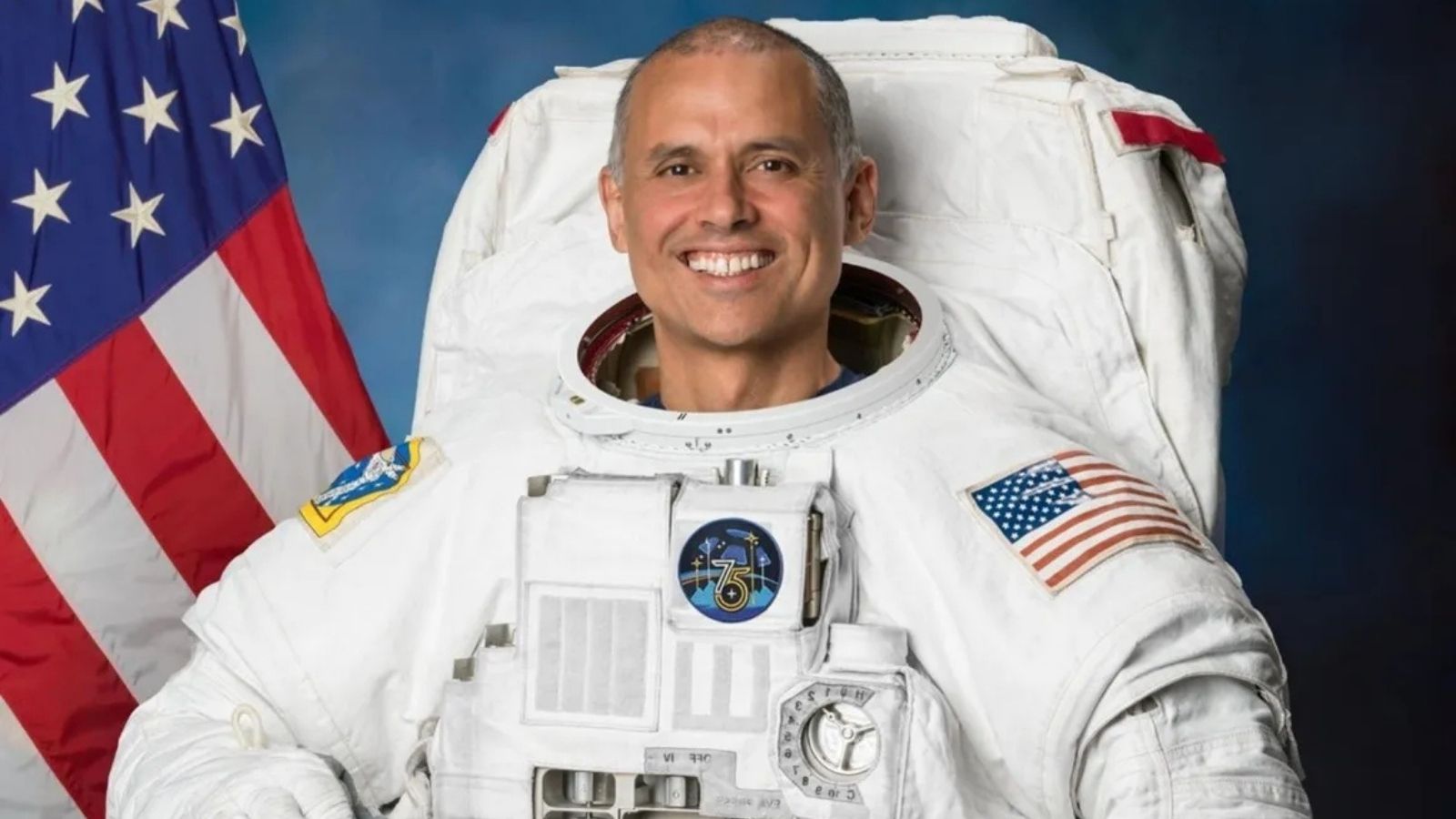
The progression of a modern flight engineer from clinical practice and aerospace medicine to orbital infrastructure maintenance represents a structural shift in how space agencies select operational talent. When NASA astronaut Anil Menon exited the Quest airlock of the International Space Station to execute US Spacewalk 96 alongside veteran astronaut Jessica Meir, the core operational intent was not merely symbolic. The six-and-half-hour extravehicular activity addressed a high-stakes engineering bottleneck: modifying the station's 3B power channel to integrate the next iteration of the International Space Station Roll-Out Solar Array system.
[Operational Pipeline: Clinical Medicine -> Flight Surgery -> Astronaut Selection -> Structural Extravehicular Integration]
The Power Generation Deficit and the IROSA Upgrade Vector
The International Space Station relies on a photovoltaic power architecture designed more than three decades ago. Constant exposure to atomic oxygen, micrometeoroids, and radical thermal cycling across low Earth orbit degrades original solar conversion efficiencies. To offset this structural decay, NASA deployed the International Space Station Roll-Out Solar Array initiative.
The baseline mechanical constraints of this system reveal precise operational trade-offs:
- Mass-to-Power Ratios: Traditional rigid solar panels carry heavy aluminum frame elements, imposing significant payload penalties during launch. Modern roll-out blankets utilize flexible composite materials that unroll like carpets under stored strain energy, reducing mass while amplifying power output.
- Thermal and Electrical Load Distribution: Modifying intermediate power channels like the 3B truss section requires precise circuit isolation. Spacewalkers must install specialized structural modification kits before any heavy structural components can be mounted.
- Orbital Lifecycle Extension: Upgrading these channels directly correlates with the station's remaining timeline. Sufficient power generation is the prerequisite variable for maintaining life-support loops, computational payloads, and the controlled de-orbit propulsion sequences scheduled for future mission phases.
The Operational Mechanics of Extravehicular Activity
Working outside a habitable pressure vessel in low Earth orbit subjects the human-machine system to extreme physical variables. The Extravehicular Mobility Unit functions as an independent spacecraft, maintaining internal pressure, thermal regulation, and waste management against a background of absolute vacuum and radical temperature fluctuations ranging from minus one hundred fifty degrees Celsius to plus one hundred twenty degrees Celsius.
[External Vacuum] <---> [EMU Thermal/Pressure Barrier] <---> [Human Operator / Tether System]
The division of labor during US Spacewalk 96 followed a strict hierarchy. Jessica Meir operated as crew member one, directing primary structural alignment, while Menon functioned as crew member two, executing precision mechanical torque applications and hardware mounting. Every tool deployment, bolt torque, and safety tether verification followed pre-calculated timelines dictated by orbital mechanics. Because the station orbits the Earth every ninety minutes, the crew repeatedly transitions between intense solar glare and orbital night, introducing rapid thermal expansion and contraction cycles that complicate manual tool operation.
Human Capital Transition Models in Modern Spaceflight
The selection of multidisciplinary operators like Menon—who transitioned from emergency medicine, military flight surgery, and private-sector aerospace systems development into the active astronaut corps—introduces a new variable into mission planning. Traditional astronaut selection prioritized pure test-pilot profiles. Modern long-duration station operations demand cross-functional expertise capable of handling both biological contingencies and complex engineering repairs simultaneously.
+-----------------------------------+-----------------------------------+
| Historical Selection Vector       | Modern Hybrid Architecture        |
+-----------------------------------+-----------------------------------+
| Fixed-wing test pilot background  | Emergency medicine & engineering  |
| Narrow focus on flight control    | Systems maintenance & life support|
| Reactive contingency management   | Proactive physiological monitoring|
+-----------------------------------+-----------------------------------+
This dual-domain capability changes mission execution. When an astronaut possesses clinical training alongside mechanical engineering fluency, the physiological risks of extravehicular activity—such as hand fatigue, suit pressure injuries, or carbon dioxide accumulation—are monitored through an expert operational lens.
Strategic Forecast for Orbital Infrastructure Maintenance
As low Earth orbit transitions toward commercialized platforms and prolonged human habitation phases, the methodology demonstrated during US Spacewalk 96 sets the operational baseline. The integration of advanced power units onto aging space station frameworks proves that structural longevity depends on continuous modular upgrades rather than wholesale replacement. Future long-duration missions will require flight engineers to act as systematic infrastructure integrators, balancing power channel distribution, thermal management adjustments, and high-frequency extravehicular execution under strict mission parameters.