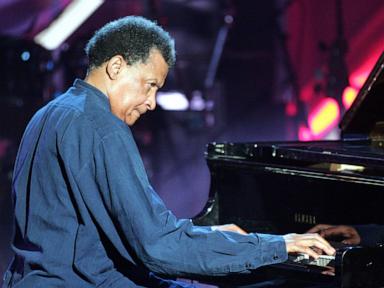
The death of pianistic giant and composer Abdullah Ibrahim (born Adolph Johannes Brand, 1934–2026) in Germany at age 91 removes the final primary architect of the mid-century South African modern jazz synthesis. Traditional obituary journalism frames Ibrahim’s passing through standard cultural commemoration, cataloging biographical milestones such as his 1965 international breakthrough produced by Duke Ellington, his 1968 conversion to Islam, or his iconic performance at Nelson Mandela’s 1994 presidential inauguration. This biographical reductionism obscures the formal mechanisms of Ibrahim's work: a rigorous, structurally distinct system of harmonic resilience that converted regional working-class aesthetics into a potent anti-apartheid currency and a template for global avant-garde improvisation.
To evaluate Ibrahim’s structural legacy requires parsing his career not as a sequence of historical coincidences, but as a deliberate response to an evolving matrix of structural oppressions, economic exiles, and stylistic formalizations. His output operated within a precise three-part mechanism: the codification of Cape jazz structural identity, the monetization and dissemination of political resistance via recordings, and the spatial displacement of South African identity into European and American avant-garde ecosystems.
The Tri-Centric Framework of Ibrahim’s Sonic Mechanics
The foundational architecture of Ibrahim's musical language rests upon three structural components, each responding directly to a socio-political or geographic challenge in mid-20th-century South Africa.
1. The Marabi-Hymnody Fusion Vector
The harmonic engine of Ibrahim's style derived from the intersection of three distinct sonic topographies present in Cape Town's District Six during the 1940s and 1950s:
- Marabi: A working-class urban musical form built upon repetitive, cyclical three-chord progressions (typically I–IV–I6/4–V). Marabi functioned as an economic and social lubricant within illegal township shebeens (speakeasies), utilizing highly rhythmic, syncopated keyboard vamps designed to sustain dance over extended durations.
- Ameen Concerts and Cape Malay Choirs: Rhythmic and vocal cadences characterized by microtonal inflections, secular folk narratives, and distinct modal shifts that reflected the region’s complex Indian Ocean slave trade heritage.
- African Methodist Episcopal (AME) Hymnody: Four-part Protestant choral harmonies imported by African-American missionaries. This music provided indigenous congregations with a standardized, highly structured European harmonic framework that was subsequently subverted through syncopated phrasing and vocalized instrumental timbres.
Ibrahim combined these forms to construct a unique pianistic syntax. Where contemporary American bebop pianists like Bud Powell prioritized rapid, linear, chromatic right-hand runs over complex, altered chord changes, Ibrahim localized the piano. He converted the instrument into an orchestral simulation of a South African vocal choir. He utilized heavy, resonant left-hand low-register octaves to simulate the rhythmic drive of a bass drum, while his right hand deployed dense, triadic chord voicings that mirrored the call-and-response structures of traditional choral arrangements.
2. The Institutional Subversion Matrix
The rise of the Nationalist Party in 1948 systematized racial segregation through the implementation of apartheid. The subsequent passage of the Group Areas Act of 1950 and the Reservation of Separate Amenities Act of 1953 directly attacked the structural survival of South African jazz. The state enforced severe restrictions:
- Spatial Dismantling: The physical demolition of District Six in Cape Town effectively destroyed the dense urban ecosystem that supported inter-racial artistic collaboration and informal performance venues.
- Socio-Legal Prohibitions: Statutory bans on multi-racial bands and audiences criminalized the natural growth of modern jazz, forcing ensembles like the Jazz Epistles—co-founded by Ibrahim, Hugh Masekela, Kippie Moeketsi, and Jonas Gwangwa—to operate under constant threat of police detention.
- Macro-Economic Suppression: State-controlled broadcasting networks (the South African Broadcasting Corporation) enforced rigid ethnic categorizations across radio airwaves, actively suppressing modern, urbanized African musical expressions to enforce tribal balkanization under the "Bantustan" policy.
Ibrahim and his contemporaries actively weaponized the aesthetic properties of jazz against this institutional framework. Because jazz emphasized real-time collective improvisation, it stood as an existential critique of the state's hyper-regulated social architecture. The music became a non-verbal underground communication network, hiding subversive political messaging inside traditional harmonic structures that state censors lacked the musicological literacy to decode.
3. Exilic Displacement and Avant-Garde Cross-Pollination
By 1962, the escalating violence of the apartheid regime—symbolized by the 1960 Sharpeville Massacre and the subsequent banning of liberation movements—created an absolute systemic bottleneck for creative survival. Ibrahim, alongside his partner and vocalist Sathima Bea Benjamin, initiated a permanent structural displacement, migrating first to Switzerland and subsequently to New York City.
This exile forced a critical shift in Ibrahim’s creative economy. Stripped of his immediate cultural base, he integrated into the mid-1960s American avant-garde jazz network. His music encountered the radical structural freedom of musicians like Don Cherry, Ornette Coleman, and Cecil Taylor. Ibrahim’s response to this environment was not passive assimilation, but a structural synthesis. He paired the open-form, non-metrical freedom of the American "New Thing" with the ironclad rhythmic cyclicality of South African Marabi.
This synthesis is prominently preserved in his long-term collaborations with American multi-instrumentalist Carlos Ward. Ward’s microtonal, blues-inflected alto saxophone lines wove through Ibrahim’s repetitive, hymn-like piano ostinatos, establishing a transatlantic avant-garde methodology that explicitly linked the African-American civil rights struggle with the South African anti-apartheid liberation movement.
Quantifying the Sonic Architecture of Mannenberg
The definitive proof of Ibrahim’s structural strategy occurred in 1974 during a brief return to Cape Town. Recording at the Gallo Studios under the production guidance of Rashid Vally, Ibrahim led an ensemble featuring saxophonists Basil Coetzee and Robbie Jansen. The session yielded "Mannenberg," a composition named after a township designated for those forcibly relocated from District Six.
[Traditional Marabi Ostinato: I - IV - I6/4 - V]
                       │
                       ▼
[Ibrahim's Modal Alteration: Parallel Major Triads over Pedals]
                       │
                       ▼
[Sonic Architecture: Tension via Rhythmic Displacement (Not Chromaticism)]
Musically, "Mannenberg" operates as a masterclass in minimalist structural density. The composition relies on an unyielding, cyclical bass figure and a basic major-key folk melody. Rather than driving tension through rapid, complex modulation or dense chromatic substitutions characteristic of Western post-bop jazz, Ibrahim generates structural tension through two precise methods:
- Micro-Rhythmic Phase Shifts: The rhythm section maintains an undercurrent known as the "underground" beat—a specific Cape syncopation that hovers precisely between a swung triple meter and a straight duple meter. The horn players and Ibrahim delay or accelerate their phrasing against this steady metric pulse, creating a distinct push-pull sensation that mirrors the physical experience of township communal dance.
- Harmonic Statics and Extended Timbral Variation: By anchoring the composition to a single modal center for long stretches, the players shift focus away from harmonic progression and toward timbral manipulation. Coetzee’s tenor saxophone delivery utilizes a wide, vocalized vibrato and deliberate overblowing to produce a raw, piercing upper-register tone. This sound was instantly decoded by South African listeners as an acoustic simulation of township grief and defiance.
"Mannenberg" quickly transcended its status as a commercial recording to become the definitive sonic emblem of the anti-apartheid movement, frequently described as South Africa’s unofficial national anthem. The track achieved its political efficacy because its underlying musical structure was optimized for communal participation. Its repetitive harmonic cycle allowed for infinite variation, making it easily reproducible by street brass bands, church ensembles, and political protestors alike.
The Operational Blueprint of the Institutional Legacy
Ibrahim’s late-career initiatives demonstrated a clear understanding that cultural preservation requires specialized institutional frameworks rather than standard commercial reliance. Upon his return to South Africa following the formal dismantling of apartheid in the early 1990s, he focused heavily on structural education systems.
In 1999, Ibrahim founded the M7 Academy in Cape Town. The pedagogical model of the academy departed completely from traditional Western conservatories, which isolate musical notation and instrumental virtuosity from broader social contexts. Instead, Ibrahim designed a curriculum centered around an integrated framework that blended musical composition with martial arts (specifically shotokan karate, in which he held a black belt), Zen meditation, and alternative somatic therapy.
This system was built around a clear operational thesis: the survival of an artistic discipline under systemic stress requires rigorous body-mind alignment and strict personal accountability. By treating musical transmission as a holistic, disciplined lifestyle rather than a mere trade, Ibrahim ensured that his students developed the mental resilience necessary to navigate the highly precarious economic landscape facing modern African classical musicians.
The Strategic Realignment of Post-Apartheid Musicology
The loss of Abdullah Ibrahim leaves a deep operational void in the documentation, performance, and preservation of global improvised music. The core vulnerability of the current South African jazz legacy rests on an extraction model, where master musicians are celebrated globally while local archival infrastructures remain underfunded and prone to decay.
The preservation of this musical lineage cannot depend on periodic tribute concerts or commercial streaming catalog reissues. It requires a systematic institutional realignment:
- The Codification of Transcribed Oral Repertoires: A coordinated effort between South African academic institutions and international musicological bodies must be launched to transcribe, analyze, and publish Ibrahim’s vast catalog of un-notated compositions, ensuring his modal techniques enter the global academic curriculum alongside those of Western figures like Monk or Bartók.
- The Legal Protection of Sonic Patrimony: Governments must establish specialized intellectual property frameworks that recognize and protect collective regional styles like Marabi and Cape Jazz from predatory corporate sampling and uncompensated commercial exploitation.
- Sustainable Decentralized Arts Funding: The development of independent, state-insulated financial trusts is essential to fund localized music academies across Southern Africa, keeping creative talent rooted at home rather than forcing an economic migration pattern to European or American cultural capital centers.
Ibrahim's eight-decade career proved that music can serve as a highly technical, precise method for preserving historical memory under the most hostile political conditions imaginable. The true measure of his legacy will be determined by how effectively the international music community transitions from passive grief into an organized, structural defense of the cultural systems he spent his lifetime building.