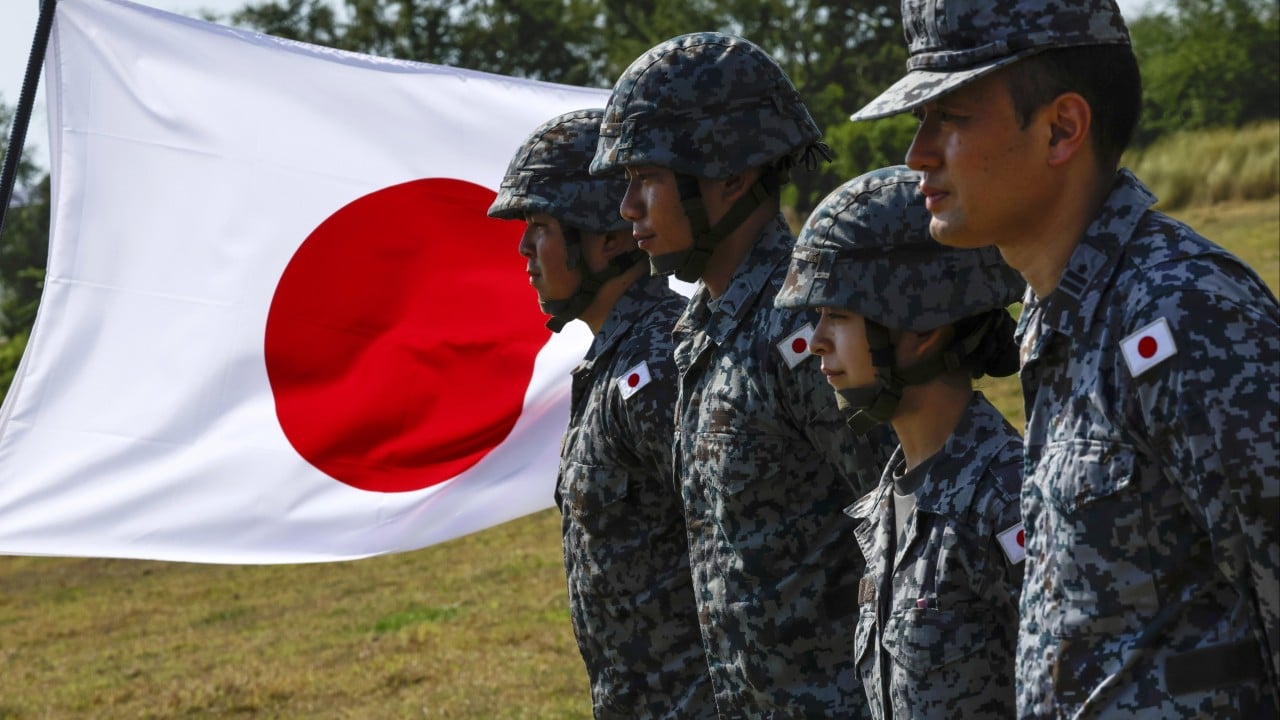
The Strategic Imperative Counterbalancing Hegemonic Asymmetry
The expansion of Tokyo’s security architecture represents a calculated structural adaptation to the shifting balance of power in the Indo-Pacific. For decades, Japan’s regional engagement relied almost exclusively on economic development instruments. However, China’s rapid naval expansion, gray-zone coercion strategies, and growing military footprint have introduced a severe security deficit along critical maritime trade corridors.
[China’s Regional Dominance] ---> [Security Deficit in Maritime Lanes] ---> [Need for Japanese Counterweights]
                                                                                      |
                                                                           [Official Security Assistance]
To prevent a regional security vacuum, Tokyo has engineered a dual-track strategy designed to provide Indo-Pacific nations with an alternative to total strategic dependence on Beijing or Washington. This strategy relies on expanding defense diplomacy beyond traditional boundaries, deploying targeted security assistance alongside existing infrastructure investments. Read more on a similar subject: this related article.
The core operational mechanism of this strategy is the Official Security Assistance (OSA) framework. Established in April 2023, OSA provides direct grant aid to the armed forces and security agencies of like-minded nations. While initial assessments emphasize the rapid growth of this initiative, an objective evaluation reveals deep structural friction points. The efficacy of Japan's defense outreach is fundamentally limited by a triad of constraints capital asymmetry, legislative restrictions on technology transfer, and the operational absorption capacity of recipient states.
The Mechanics of the Toolkit Decoupling ODA and OSA
To understand the operational limitations of Japan's security outreach, one must analyze the distinct legal and structural mandates governing its foreign assistance channels. Tokyo bifurcates its regional engagement into two separate instruments: More journalism by NBC News delves into comparable perspectives on the subject.
Official Development Assistance (ODA)
Established post-World War II, ODA operates under a strict non-military mandate. Its legal framework restricts funding to socio-economic development, civilian infrastructure, and humanitarian initiatives. While ODA has successfully built regional goodwill and critical infrastructure like commercial ports and highways, it cannot legally counter direct maritime incursions or gray-zone military coercion.
Official Security Assistance (OSA)
Designed specifically to fill the military assistance vacuum, OSA provides hardware, surveillance assets, and dual-use infrastructure directly to foreign militaries. Its scope is legally confined to non-conflict operations, including maritime domain awareness (MDA), search and rescue, and counter-piracy.
| Metric / Attribute | Official Development Assistance (ODA) | Official Security Assistance (OSA) |
|---|---|---|
| Primary Recipient | Civilian ministries, NGOs, public utilities | Armed forces, coast guards, defense ministries |
| Legal Mandate | Socio-economic development (Non-military) | National security capacity building |
| Equipment Scope | Merchant vessels, civil radars, hospital gear | Surveillance drones, coastal radars, patrol boats |
| FY2023 Budget | Approximately ¥570 billion (Core grant) | ¥2.0 billion |
| FY2025/2026 Budget | Stable high-volume base | Scaled to ~¥18.1 billion |
Integrating these two instruments is critical for maritime choke points. For example, while ODA funds the expansion of a commercial harbor, OSA can simultaneously install coastal surveillance radars or provide rigid-hulled inflatable boats (RHIBs) to the recipient nation's naval forces at that exact location. This dual-track deployment aims to raise the cost of gray-zone coercion for external actors without violating domestic legal constraints.
The Structural Bottlenecks Capital, Regulation, and Absorption
Despite scaling the OSA framework from four countries and ¥2 billion in 2023 to 12 countries and over ¥18 billion, Tokyo faces steep diminishing returns due to structural barriers.
Capital Asymmetry and Scale Bottlenecks
The first operational constraint is the stark capital imbalance between Japan's security funding and the financial requirements of meaningful deterrence. While an ¥18.1 billion budget allows for the procurement of surveillance drones, coastal radars, and communication equipment across 12 partner nations, it lacks the scale required to alter regional military balances.
The procurement costs of modern defense systems create an automatic bottleneck. A single advanced maritime patrol aircraft or modern surface combatant can exceed Tokyo’s entire annual OSA allocation. Consequently, the program is restricted to supplying low-tier monitoring hardware rather than substantial defensive platforms. This financial reality limits Japan's role to an incremental security supplier, unable to match the heavy capital outlays or naval transfers offered by larger regional competitors.
[Total OSA Budget: ¥18.1 Billion] ---> Distributed across 12 Nations ---> Avg. ¥1.5 Billion per Nation
                                                                                 |
                                                                     [Restricts Procurement to]
                                                                     - Laptops & Radios
                                                                     - Basic Radar Systems
                                                                     - Small Surveillance Drones
Regulatory and Export Constraints
The second limitation stems from the Three Principles on Transfer of Defense Equipment and Technology. Although the Japanese government has systematically eased these restrictions to permit the export of non-lethal equipment and certain co-developed platforms, the legal framework remains highly restrictive.
The current guidelines prohibit the transfer of offensive weapons or lethal lethal systems to nations not directly involved in joint development agreements with Tokyo. When engaging partners like Malaysia, the Philippines, or Indonesia, Japan is restricted to sending un-weaponized platforms. This regulatory friction creates a mismatch between what recipient nations frequently require—such as anti-ship missiles, precision-guided munitions, and armed patrol craft—and what Tokyo can legally export.
Interoperability and Operational Absorption Limits
The third friction point involves the technical and operational absorption capacity of recipient militaries. Security assistance is not merely a transaction of hardware; it requires a sustained logistical trail, maintenance ecosystem, and specialized training.
Many targeted OSA recipients operate fragmented fleets featuring mixed assortments of legacy Western, Soviet, and Chinese hardware. Introducing Japanese-manufactured systems creates significant maintenance challenges:
- Supply Chain Disconnects: Japanese defense firms operate in highly specialized, low-volume domestic markets, meaning spare parts are expensive and lack global distribution networks.
- Operational Friction: Recipient personnel must undergo lengthy training cycles to operate proprietary Japanese sensory and communication suites, temporarily reducing operational readiness during the transition phase.
- Lifecycle Costs: Grant assistance typically covers initial acquisition costs but leaves long-term maintenance, sensor calibration, and software updates to the recipient state's strained defense budget.
Without long-term institutional funding, transferred equipment risks falling into disrepair, neutralizing the strategic intent of the initial grant.
Strategic Re-engineering Maximizing Deterrence per Yen
To overcome these hidden roadblocks and optimize its defense outreach, Tokyo must shift from an allocation model based on diplomatic goodwill to a highly targeted, capability-centric strategy.
Priority 1: Geographic and Functional Concentration
Spreading ¥18.1 billion across 12 nations dilutes tactical impact. Japan must concentrate its OSA capital on two primary maritime choke points: the Luzon Strait and the Malacca Strait. Funding should prioritize the Philippines and Malaysia exclusively until a continuous, real-time maritime domain awareness network is established.
Priority 2: Standardizing Dual-Use Logistics
To resolve export restrictions and maintenance bottlenecks, Tokyo should maximize the delivery of high-end dual-use civilian platforms under the ODA framework, freeing up OSA capital strictly for secure communication links and data-sharing nodes. Japan must establish regional maintenance hubs in Southeast Asia, staffed by Japanese technicians, to manage the lifecycles of transferred assets and guarantee operational uptime.
Priority 3: Establishing Multilateral Interoperability
Rather than managing isolated bilateral security programs, Japan must integrate its assistance with existing security frameworks. Transferred radars and surveillance drones must feed directly into shared multilateral data streams accessible by the United States, Australia, and regional partners. This data integration multiplies the utility of low-cost surveillance hardware, turning isolated tracking stations into essential nodes of a broader regional defense architecture.