The obsession with a single, master "list" of Jeffrey Epstein’s associates has become a convenient distraction from the more uncomfortable reality of how power actually functions. For years, the public has waited for a definitive roll call that would somehow collapse the pillars of the global elite. This desire stems from a fundamental misunderstanding of the documents released through various court proceedings, specifically the 2015 defamation lawsuit brought by Virginia Giuffre against Ghislaine Maxwell.
There is no singular "client list" in the way many imagine. Instead, there is a massive, disorganized archive of flight logs, address books, and deposition transcripts. The names contained within these records—ranging from former presidents and royalty to Nobel-winning scientists and tech billionaires—do not all share the same level of involvement or culpability. Some were close confidants who facilitated a criminal enterprise. Others were mere social satellites, caught in the gravity of a man who spent decades engineering a network designed to provide him with both prestige and protection.
Beyond the Black Book
To understand the scope of Epstein’s reach, one must look past the sensationalism of the names and examine the mechanics of his recruitment. He did not just collect people; he collected leverage. His "Black Book," a 92-page directory discovered by investigators, contains nearly 2,000 entries. It functions less as a list of co-conspirators and more as a map of the Western power structure at the turn of the millennium.
The entries are a testament to a specific era of high-society networking. You find numbers for titans of industry like Leslie Wexner, whose professional and personal ties to Epstein provided the financial foundation for the entire operation. You find politicians who viewed Epstein as a bridge to the donor class. You find academics who saw him as a radical philanthropist willing to fund high-concept research that traditional institutions might shy away from.
The presence of a name in these records is an invitation to investigate, not a verdict of guilt. Journalists and investigators have spent years parsing the difference between a "contact" and a "participant." The flight logs for the Lolita Express, the Boeing 727 used to transport guests to his private island and various residences, offer a more concrete trail. These logs document the movement of powerful men like Bill Clinton and Alan Dershowitz, but even these records are incomplete, often relying on handwritten entries that could be easily obscured.
The Philanthropy Trap
Epstein used money as a Trojan horse to enter the most prestigious circles of academia and science. By distributing millions in grants, he ensured that his name became synonymous with the "intellectual elite." This was not just about ego. It was a calculated move to build a shield of respectability.
When a world-renowned scientist at MIT or Harvard accepts funding from a figure like Epstein, they provide him with a social currency that is far more valuable than cash. They provide him with legitimacy. This legitimacy, in turn, made it easier for him to lure victims who were told they were entering a world of high-level mentorship and career advancement.
The fallout within the scientific community has been profound. Resignations at the MIT Media Lab and public apologies from various researchers highlight a systemic failure in how institutions vet their donors. They chose to ignore the 2008 conviction in Florida—a "sweetheart deal" that allowed Epstein to continue his activities while technically serving time—because the flow of capital was too significant to interrupt. This reveals a broader rot in the funding models of higher education, where the source of the wealth is secondary to the utility of the check.
The Failure of the Legal System
The most damning aspect of the Epstein saga is not the names on the list, but the names of those who allowed him to operate in plain sight for decades. The 2008 non-prosecution agreement orchestrated by Alexander Acosta, then the U.S. Attorney for the Southern District of Florida, remains one of the most egregious examples of legal malpractice in modern history.
This agreement didn't just protect Epstein; it granted immunity to any "potential co-conspirators," effectively shutting down the investigation before it could reach the broader network. It took the investigative work of the Miami Herald and the subsequent 2019 federal charges in New York to finally crack the seal of silence. Even then, Epstein’s death in a federal lockup prevented a trial that would have forced a public accounting of his associates.
The legal system’s inability to hold the broader network accountable has fueled a vacuum of information. Into this vacuum, conspiracy theories have rushed, often blurring the lines between verified facts and wild speculation. The public’s fixation on a "list" is a cry for a justice that the courts have so far failed to deliver.
The Ghislaine Maxwell Connection
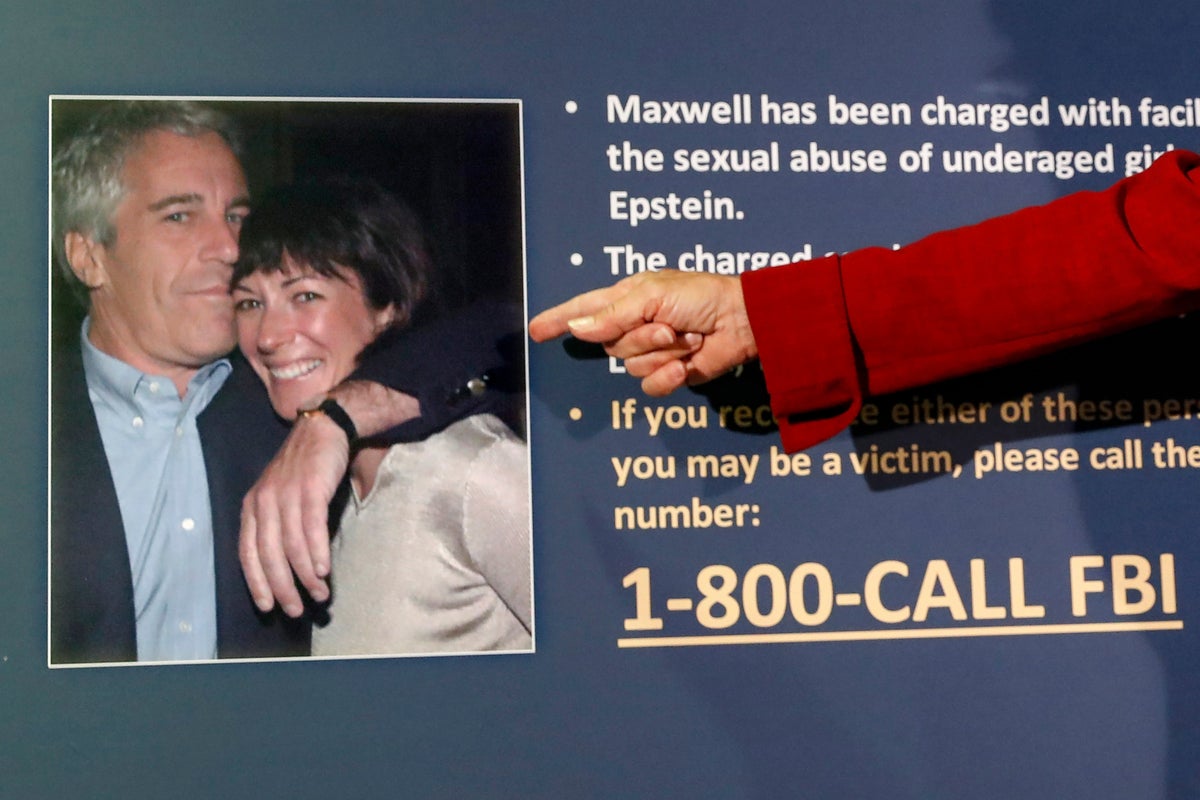
If Epstein was the architect, Ghislaine Maxwell was the general contractor. Her 2021 conviction for sex trafficking and conspiracy solidified her role as the primary facilitator of the abuse. Her social standing as the daughter of a disgraced media mogul gave her access to circles that Epstein, a Bronx-born college dropout, could never have reached on his own.
Maxwell’s trial provided the most detailed look yet at the operation’s inner workings. It moved the conversation away from the "who" and toward the "how." It detailed a sophisticated grooming process that weaponized the victims' aspirations and vulnerabilities. The testimony revealed that this was not a disorganized series of events, but a professionalized system of exploitation.
Despite her conviction and 20-year sentence, the identities of many who benefited from this system remain shielded. The court's decision to redact significant portions of the discovery material—intended to protect the privacy of victims and individuals not charged with crimes—has inadvertently sustained the mystery surrounding the case.
The Economic Engine of Silence
We must address the role of the financial institutions that processed Epstein's wealth long after he was a registered sex offender. Deutsche Bank and JPMorgan Chase have both faced massive legal settlements for their roles in maintaining his accounts. These banks ignored internal red flags and suspicious activity reports because the Epstein relationship was seen as a gateway to other ultra-high-net-worth clients.
Money laundering and sex trafficking require infrastructure. They require bankers who look the other way, lawyers who draft ironclad non-disclosure agreements, and security teams that maintain the perimeter of private estates. The Epstein case is a story of institutional complicity as much as individual depravity. When we focus only on the famous names, we ignore the army of professionals who made the lifestyle possible.
The Digital Echo and the Information War
The release of the documents in early 2024 was met with a frenzy of digital speculation. Thousands of pages of depositions were dumped into the public domain, leading to a frantic search for "the names." However, many of the names that trended on social media were individuals who were mentioned in passing or were the subjects of debunked rumors.
This illustrates the danger of the modern information environment. The volume of data is so large that it is easily weaponized by those seeking to settle political scores. The truth is buried under layers of noise. To find it, one must have the patience to read the transcripts, verify the timelines, and understand the context of each mention.
For instance, being mentioned in a deposition as someone who was "seen at a party" is fundamentally different from being identified as a participant in a crime. Yet, in the court of public opinion, these distinctions are often lost. This flattening of nuance serves no one but the guilty, as it allows them to claim that the entire investigation is a "witch hunt" or a fabrication.
The Illusion of the Final Secret
The search for a single document that explains everything is a fool's errand. The "list" exists in fragments, scattered across decades of travel records, phone logs, and the memories of survivors. The most significant names have likely already been identified, and those who remain hidden are protected by a layer of wealth and legal maneuvering that few can penetrate.
The real story isn't the list. It is the realization that a man could build a global network of exploitation while being toasted by the most powerful people on earth. It is the realization that our institutions—legal, financial, and academic—are remarkably easy to subvert if you have enough money and the right connections.
We are left with a mosaic of influence. Each name is a tile, but the picture only becomes clear when you step back and see how they are all connected. The "Black Book" was a tool for navigation, a way for Epstein to move through a world that should have rejected him. The fact that it remained open for so long is the true scandal.
The focus must now shift toward structural reform. We need transparency in high-level philanthropy to prevent the purchase of academic legitimacy. We need a legal system that cannot be bypassed through secret deals for the wealthy. We need financial oversight that treats human trafficking as a Tier-1 risk, regardless of the client's net worth.
Until these systemic issues are addressed, the conditions that allowed Epstein to flourish will remain in place. Another predator will find another way to bridge the gap between wealth and depravity. The list is a historical artifact; the system that created it is still very much alive.
The pursuit of justice in the Epstein case is a marathon, not a sprint. It requires a commitment to the grinding work of forensic accounting and investigative reporting. It requires the courage to look at the structures we rely on and admit where they have failed. The names are important, but they are only the beginning of the conversation.
We should stop waiting for a bombshell that may never drop and start examining the evidence we already have. The logs are there. The depositions are public. The patterns are clear. The only question is whether we have the collective will to follow the trail to its end, regardless of who we find at the other side.


