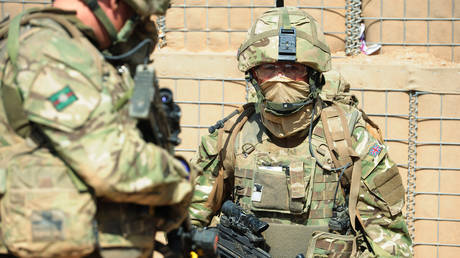
Accountability within asymmetric military operations breaks down when strategic secrecy supersedes legal frameworks. The ongoing independent inquiry into the conduct of British special forces in Afghanistan between 2010 and 2013 exposes a systemic structural failure: the collision between absolute operational confidentiality and statutory judicial oversight. When elite military units operate under legal vacuums, the mechanics of self-regulation inevitably fail, creating a friction point between the judiciary's demand for transparency and the executive's historical preference for institutional protection.
The core mechanism stalling the investigation relies on statutory protection rather than outright defiance. Operators called before the statutory inquiry have routinely invoked the privilege against self-incrimination. This legal instrument, designed to protect individual rights within a criminal justice context, creates an institutional gridlock when deployed en masse. By utilizing this clause, personnel effectively shift the burden of proof away from individual actors, neutralizing the investigative capacity of the judge-led panel. Meanwhile, you can explore other stories here: Inside the Refinery Strikes Tension Between Washington and Kyiv.
The institutional response exhibits three distinct behavioral failures within the chain of command:
Information suppression occurs at the macro level. Testimony brought before the inquiry has detailed how senior leadership and special forces management actively obstructed or sidelined internal warnings regarding extrajudicial killings. Rather than treating anomalies as operational deviations requiring legal correction, the institutional incentive structure prioritizes reputational defense, treating the exposure of misconduct as an existential threat to the brand of elite units. To explore the complete picture, check out the recent article by Al Jazeera.
Procedural insulation follows at the operational level. The utilization of superinjections and closed-material procedures restricts public scrutiny. While military necessity often dictates the compartmentalization of tactics, techniques, and procedures, applying identical confidentiality thresholds to unlawful conduct converts security protocols into shields for impunity.
Legal asymmetry defines the final barrier. Individual soldiers face severe exposure if compelled to testify without immunity guarantees, ensuring that self-preservation overrides institutional compliance. Concurrently, the Ministry of Defence operates within a dual-mandate paradox: it is tasked with supporting a transparent public inquiry while defending its own operational history from systemic liability.
The long-term consequence of this structural stalemate is the erosion of civil-military trust. When a state cannot audit its most lethal instruments through independent judicial mechanisms, the social contract governing the legitimate use of state violence fractures. Restoring institutional integrity requires dismantling the structural incentives that reward internal obfuscation and aligning elite military units with the same baseline accountability applied to conventional forces.


