The operational window following a catastrophic structural collapse is strictly bounded by metabolic and environmental constraints. In urban search and rescue operations, the initial response vector relies on rapid asset deployment to maximize live-recovery probabilities. Within this framework, specialized canine units serve as the primary organic sensor network capable of navigating dynamic, hazardous geometries that defeat electronic telemetry and optical search devices.
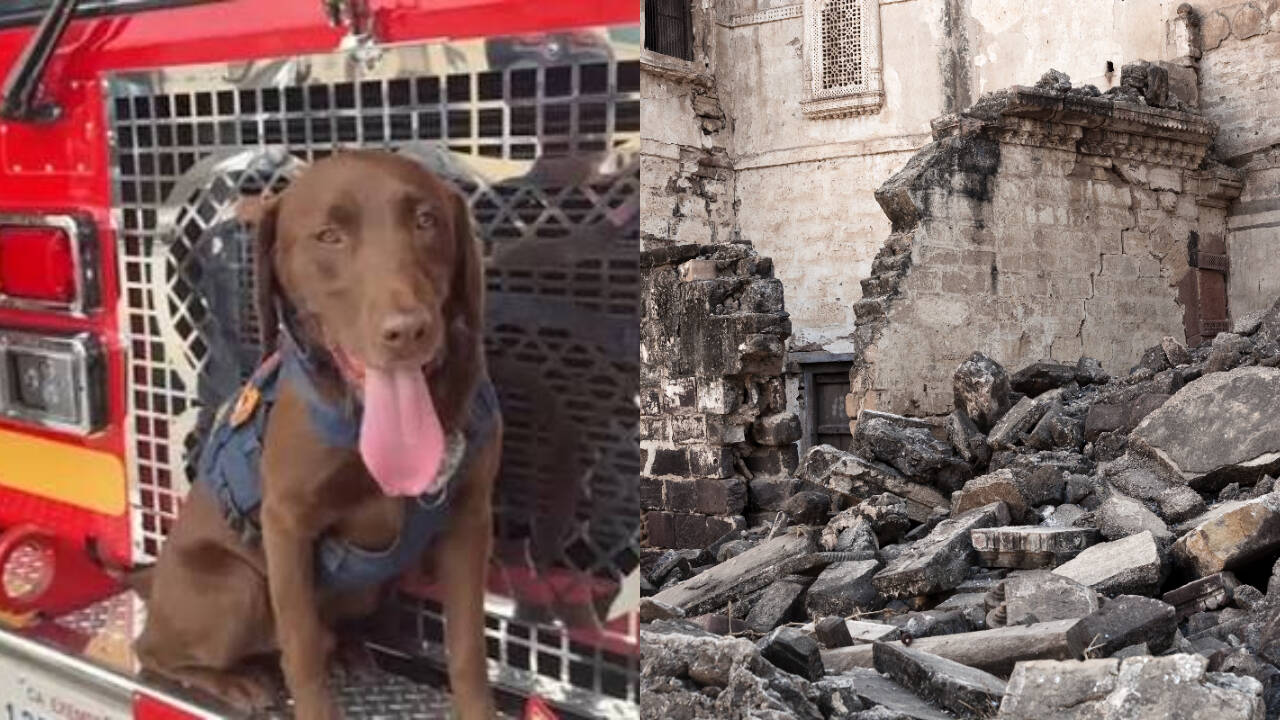
Recent operational deployments, exemplified by the Los Angeles County Fire Department Urban Search and Rescue Task Force USA-2 and its canine assets, highlight the systemic variables governing high-stakes disaster response. Analyzing the performance mechanics of these operational units reveals the precise cost-benefit matrix of biological scent-detection assets in international disaster relief.
The Training Pipeline and Certification Thresholds
The efficacy of a disaster response canine is a direct derivative of structured behavioral conditioning and environmental desensitization. Biological detection units cannot be improvised on-site; they require extensive longitudinal preparation to establish operational reliability under extreme stressors.
The typical development cycle mandates foundational obedience, followed by specialized scent discrimination, agility conditioning in unstable environments, and directional control training conducted over months of rigorous evaluation. For instance, operational units such as the Labrador Retriever asset Joey underwent a five-month intensive synchronization phase with handler Captain Louis Gudiel before achieving formal deployment certification.
The certification process validates three core operational metrics:
- Odor Discrimination: The ability to isolate human effluent signatures (specifically volatile organic compounds shed by live human subjects) amidst heavy environmental interference from decomposing organic matter, industrial chemicals, and particulate dust.
- Independence and Range: The capacity of the canine to operate out-of-sight and out-of-earshot from the handler while systematically quartering unstable rubble piles.
- Alert Fidelity: The establishment of a distinct, unambiguous passive or active alert behavior when a viable scent cone is intercepted, preventing false positives that waste critical extraction time.
Deployment Latency and the Golden Window of Survival
In sudden-onset disasters such as major earthquakes, the probability of live victim recovery degrades exponentially over time. This decay curve is governed by ambient temperature, crush injuries, and dehydration. International deployment logistics introduce an unavoidable latency variable.
When task forces are mobilized for cross-border operations, the transit timeline dictates the operational starting point. For example, international deployments following structural collapses in regions like Venezuela often involve an arrival window of approximately 72 hours post-event.
At the 72-hour threshold, physiological survival rates drop precipitously unless victims are located in survivable voids with access to moisture. Canine assets deployed at this juncture mitigate the search deficit caused by incapacitated infrastructure. Unlike heavy machinery or static listening devices, which require quiet environments and line-of-sight positioning, mobile K9 units cover large surface areas of fragmented concrete rapidly, parsing complex air currents to detect parts-per-billion concentrations of human scent signatures rising through thermal chimneys in the rubble.
Comparative Mechanics of Search Modalities
To understand the economic and operational value of search canines, one must evaluate the comparative efficiency of available detection modalities:
| Modality | Primary Advantage | Primary Vulnerability |
|---|---|---|
| Canine Olfactory Units | Rapid surface coverage, high sensitivity to low-concentration human scent plumes, autonomous navigation of unstable debris. | Requires continuous physical and psychological maintenance; performance degrades under extreme thermal stress or toxic ambient gas concentrations. |
| Acoustic / Seismic Sensors | Can pinpoint localized tapping or vocalizations through dense barriers without relying on air currents. | Highly vulnerable to ambient urban noise interference; requires stationary, silent environments for accurate reading. |
| Optical / Borescope Cameras | Provides visual confirmation of space geometry and victim status. | Strictly limited to line-of-sight access; requires insertion paths through fractured cavities. |
The integration of these modalities dictates success, but the canine unit remains the primary triage tool for initial sector clearance due to its speed-to-coverage ratio.
Operational Strain and Resilience Engineering
Urban search and rescue environments impose severe physical and physiological loads on both handlers and canines. The operational envelope requires continuous monitoring of paw pad integrity, hydration status, and heat dissipation. Furthermore, deployment environments expose animals to sharp rebar, hazardous dust, biohazards, and psychological trauma.
To maintain operational readiness, high-performance task forces enforce strict rotational recovery protocols. When active deployment ceases, structural support mechanisms shift inward. Within fire stations and command posts, canine assets function as psychological stabilization nodes for first responders, mitigating the acute stress burdens associated with mass-casualty recovery operations.
Strategic Allocation for Future Disaster Response
The deployment of certified search and rescue canine teams represents a high-leverage intervention in disaster management infrastructure. As global seismic and climate-driven structural risks evolve, resource allocation must prioritize the expansion of internationally certifiable K9 task forces. Agencies that invest in rigorous, standardized cross-border training protocols secure a distinct operational advantage, transforming raw biological capability into measurable human survival outcomes.