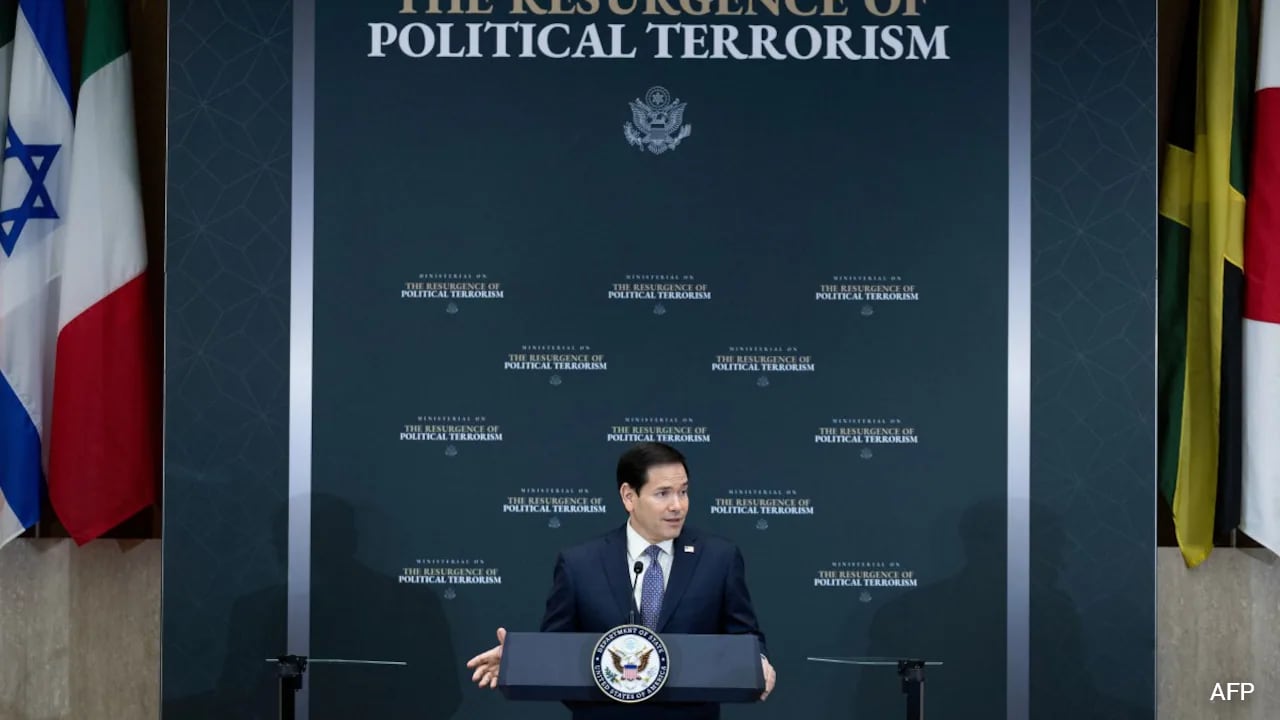
Executive power over entry controls represents one of the most potent levers of statecraft. When the U.S. Department of State invokes Section 212(a)(3)(C) of the Immigration and Nationality Act (INA) to impose visa restrictions on foreign nationals affiliated with ideological networks, it shifts the operational burden of counterterrorism from post-entry law enforcement to pre-entry border interception.
Understanding the structural mechanics of this policy shift requires analyzing the legal statutory hooks, the economic and operational transmission vectors, and the institutional friction generated across international security partners.
The Tri-Partite Mechanism of Executive Exclusion
The application of visa bans under National Security Presidential Memorandum-7 operates across three functional pillars:
- Statutory Authority: The statutory foundation rests on Section 212(a)(3)(C) of the INA. This clause grants the Secretary of State discretionary power to render an alien inadmissible if entry would carry "potentially serious adverse foreign policy consequences". Unlike formal Foreign Terrorist Organization (FTO) designations under Section 219, which require explicit statutory findings of criminal violence against U.S. interests, Section 212(a)(3)(C) acts as a flexible administrative filter without requiring strict judicial evidentiary thresholds.
- Behavioral Categorization: The operational perimeter expands beyond active combatants or primary operational agents. The restriction framework targets six specific functional roles: primary ideologues, financial facilitators, recruiters, logistical nodes, economic saboteurs, and digital or verbal inciters.
- Information Infrastructure: The practical execution relies heavily on intelligence-sharing pipelines. Consular officers use consular database flags (such as the CLASS database) fed by interagency inputs from the National Counterterrorism Center (NCTC) and international law enforcement conduits.
[Target Network Nodes] ──> [Interagency/Foreign Intelligence Data] ──> [CLASS System Flags] ──> [Section 212 Denials]
Transmission Mechanics and Economic Impact
Ideological networks rely on material and human resource flows to execute campaigns. Denying entry to international network actors creates structural friction in organizational capacity.
Capital and Infrastructure Interdiction
Denying physical access disrupts the informal transfer of funds. When non-state actors cannot cross borders to attend summits, conduct cash transfers, or manage physical infrastructure, the operational costs for foreign transnational networks increase exponentially. Financial networks must pivot to digital or proxy intermediaries, increasing their exposure to domestic financial intelligence units (like FinCEN) and international oversight mechanisms.
Node Disruption in Decentralized Networks
Modern ideological extremist networks rarely operate via strict top-down military hierarchies; they function as decentralized, cell-based ecosystems. In these decentralized architectures, key nodes operate as connectors who synthesize strategy across disparate regions. Blocking physical transit for these central orchestrators breaks the flow of shared operational tactics, technical knowledge, and campaign timing.
Strategic Limitations and Systemic Friction Points
Deploying broad consular exclusion tools introduces structural friction points that diminish domestic policy outcomes if left unmanaged.
Foreign Intelligence Asymmetry
The policy relies on the willingness of international partners to share granular intelligence on domestic political factions. European and Western Hemisphere intelligence agencies often classify political violence risks differently than U.S. counterterrorism frameworks. Where foreign partners view certain movements as localized criminal activity rather than systemic terror risks, information-sharing pipelines stall, leading to uneven enforcement data at consular posts.
Judicial and Administrative Overburden
Consular revocations based on ideological or political activity trigger administrative appeals and litigation regarding statutory scope. While non-citizens abroad lack U.S. constitutional protections regarding visa issuance, legal challenges arise when revocations affect domestic entities asserting First Amendment claims regarding association or access to international speakers.
Operational Action Plan for Cross-Border Risk Assessment
Organizations, policy analysts, and security risk managers navigating this regulatory environment must adopt structured compliance processes:
- Map Jurisprudential Definitions: Audit organizational links against updated State Department advisory guidelines to ensure clear separation from flagged foreign political networks.
- Implement Multi-Layered Screening: Integrate consular exclusion lists and foreign national watchlists directly into risk intelligence frameworks, avoiding reliance on standard commercial sanction software alone.
- Establish Data-Sharing Protocols: Standardize the criteria for identifying transnational political violence flags to ensure compliance with both domestic privacy laws and international intelligence agreements.
The expansion of consular exclusion authority changes the administrative cost structure for transnational political networks. By shifting enforcement from domestic criminal prosecution to pre-entry immigration controls, the administrative state reduces the necessity for internal policing while creating systemic dependencies on international intelligence integration.