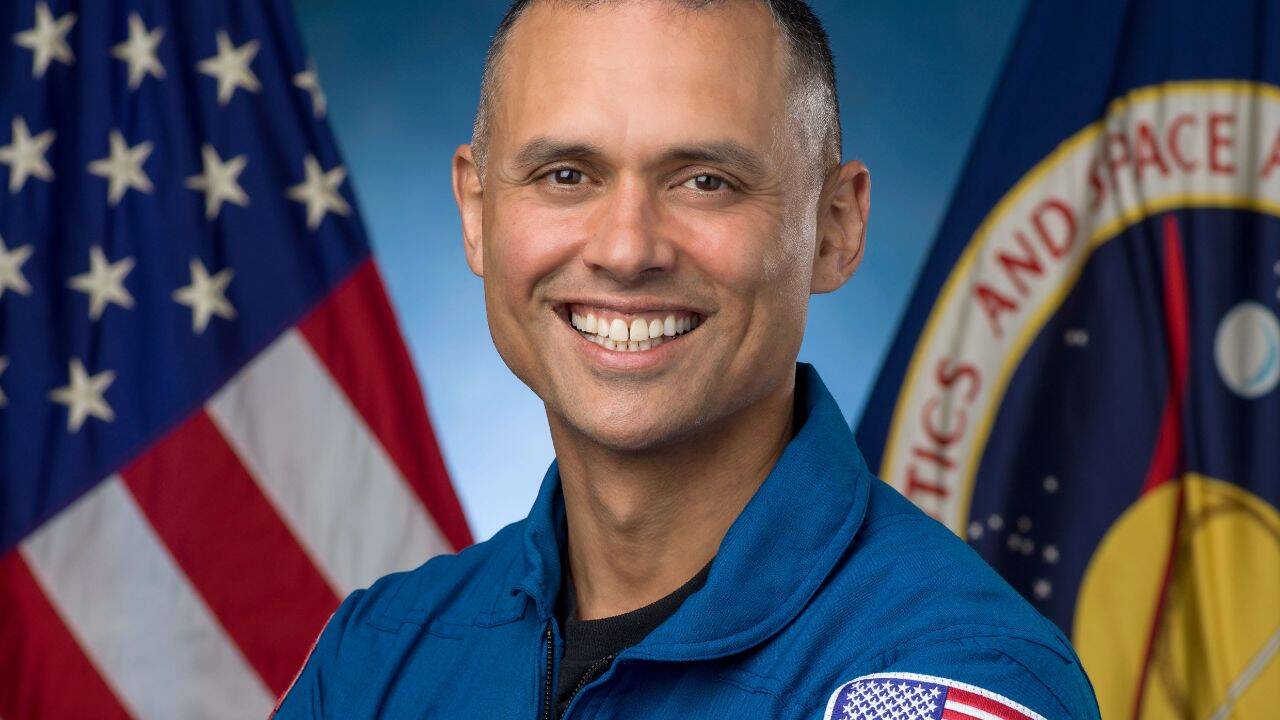
Anil Menon isn't your average astronaut. On July 14, 2026, the 49-year-old emergency physician and US Space Force colonel strapped into a Russian Soyuz MS-29 spacecraft at the Baikonur Cosmodrome in Kazakhstan. Along with Russian cosmonauts Pyotr Dubrov and Anna Kikina, he is heading up to the International Space Station (ISS) for an exhausting eight-month stretch.
Media coverage usually focuses on his Indian-Ukrainian heritage, his impressive resume, or the political optics of an American launching on a Russian rocket during a time of global tension. Those details are interesting, but they miss the real story.
This mission, spanning Expeditions 74 and 75, is a massive test run for the future of deep-space medicine. If humans are ever going to survive a multi-year trip to Mars, we have to solve the brutal physical toll of microgravity. Menon is uniquely qualified to tackle this challenge.
The Doctor Who Climbed Everest and Built SpaceX's Medical Program
To understand why NASA put Menon on this specific flight, look at his track record. He spent years practicing medicine in high-stakes, low-resource environments. He treated injured climbers on Mount Everest with the Himalayan Rescue Association. He served on the frontlines in Afghanistan as a military flight surgeon.
Then SpaceX hired him. As their first flight surgeon, Menon built the company's medical program from the ground up. He was the guy keeping astronauts safe during the historic Demo-2 mission and the all-civilian Inspiration4 flight. He even helped lay the groundwork for the massive Starship vehicle.
His wife, Anna Wilhelm, is also a seasoned space traveler. She flew on the high-profile Polaris Dawn private mission back in September 2024. This is a household that literally lives and breathes human spaceflight.
When NASA selected Menon for its own astronaut corps in 2021, they didn't just get another pilot. They got a specialist who knows exactly how the human body breaks down when it leaves Earth—and how to fix it with limited tools.
Turning ISS Drinking Water Into IV Fluids
The most critical experiments Menon will run on the ISS focus on self-sufficiency.
On Earth, if a patient needs an intravenous (IV) drip, a doctor reaches into a cabinet full of pre-packaged saline bags. In deep space, you can't carry hundreds of pounds of heavy water bags. They expire, they take up precious cargo space, and they freeze or degrade.
Earth Medical Support:
[Infinite Supplies] ──> [Immediate Access] ──> [Low Risk]

Deep Space Medical Support:
[Limited Payload] ──> [Must Manufacture On-Orbit] ──> [High Risk]
Menon will test a system that purifies the space station's own drinking water and mixes it on the fly to create medical-grade IV fluids. If this works, future Mars-bound crews can manufacture their own medical fluids using recycled wastewater.
Testing AI and Augmented Reality in Orbit
When you are millions of miles away from Earth, you can't wait for a doctor on the ground to look at an ultrasound. The communication lag to Mars can be up to 20 minutes each way.
To solve this, Menon is testing augmented reality (AR) and artificial intelligence (AI) diagnostic tools.
- AI-guided ultrasound: The onboard software guides a non-specialist astronaut's hand to the exact spot needed to scan an organ.
- AR medical overlays: Real-time visual guides project onto the astronaut's visor to assist during complex medical procedures.
- Autonomy: The goal is to completely cut out the need for real-time Earth-based medical advice.
He is also turning his own body into a lab. The crew will closely track how eight months of weightlessness alters blood flow, vein elasticity, and overall blood composition. Spaceflight makes the human cardiovascular system lazy. Fluids shift upward, tricking the body into thinking it has too much fluid, which leads to a drop in total blood volume. Understanding these changes in real-time is crucial for long-duration missions.
Manufacturing Tech in Microgravity
Menon's work isn't limited to medicine. He is also overseeing experiments on the in-space manufacturing of semiconductor crystals.
Gravity on Earth causes convection currents and sedimentation when you try to grow crystals. This introduces defects. In microgravity, crystals grow with near-perfect molecular structures. These flawless semiconductors could radically improve the performance of components used in high-performance computing, advanced medical imaging, and machine learning systems.
The Big Picture
The true value of Menon's eight-month stay on the ISS isn't just the science he brings back. It is the shift toward complete crew self-reliance.
We are moving past the era where astronauts are entirely dependent on a massive team in Houston. If we want to establish permanent bases on the Moon or send humans to Mars, our crews must become self-sustaining units. They need to manufacture their own medicine, diagnose their own illnesses, and run their own repairs. Watching how Menon and his crew handle these new autonomous systems over the next eight months will show us if we are actually ready for the deep-space frontier.
To follow the progress of these experiments and keep up with the daily operations of Expedition 74 and 75, watch the live mission updates on the NASA ISS Mission Page.