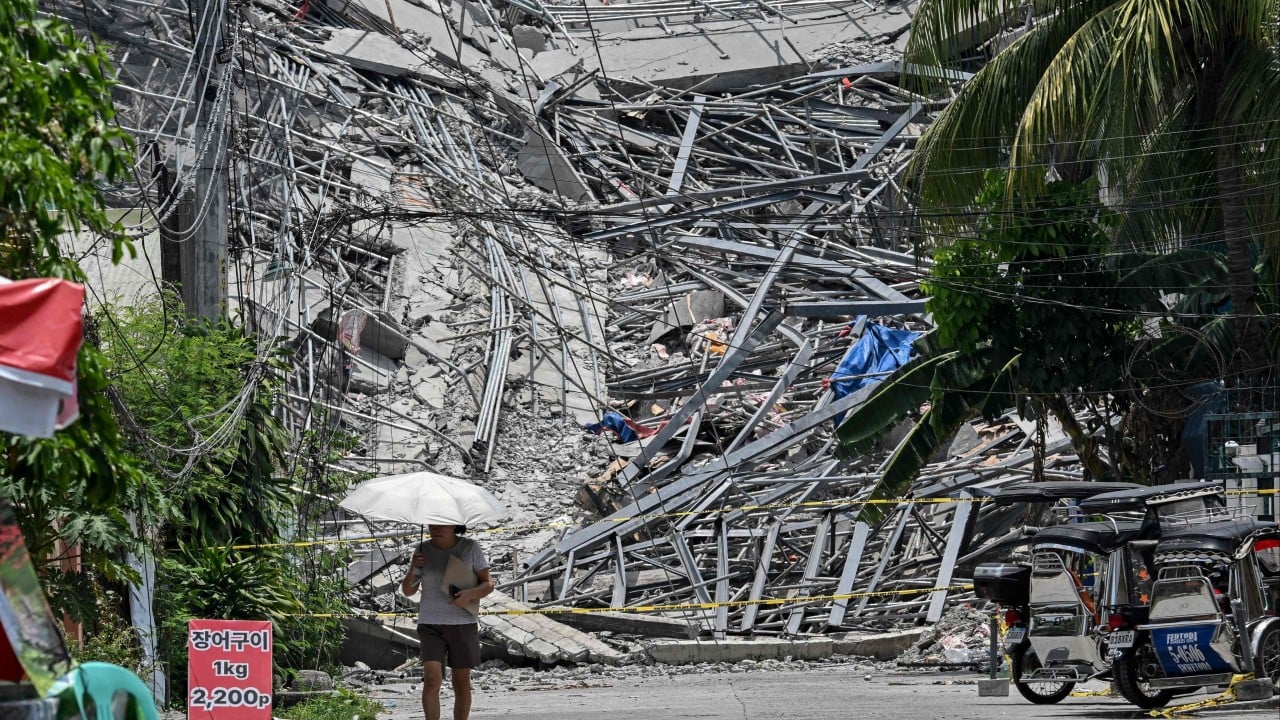
A nine-story building shouldn't just vanish into a heap of dust at 2:30 a.m. because it rained.
Yet, that is exactly what happened in Angeles City, Pampanga, flashing a brutal spotlight on the deadly realities of modern construction enforcement. When the unfinished condominium-hotel project imploded on Sunday morning, the sound shook the surrounding tourist hub like an airplane crash. Within seconds, a soaring concrete skeleton became a tomb for workers sleeping on the ground floor and heavily damaged an adjacent budget lodging house.
The immediate fallout is devastating. Emergency services confirmed four people dead, including a Malaysian tourist staying next door who was crushed by the cascading debris. At least 16 people remain missing, trapped under a nightmare geometry of pancaked concrete slabs, twisted aluminum scaffolding, and jagged rebar.
Look past the immediate shockwaves and you find a trail of systemic failure. This wasn't a freak act of nature. It was an entirely preventable tragedy that points straight toward regulatory gaps, questionable architectural modifications, and a construction culture that treats safety compliance as a temporary hurdle rather than a non-negotiable law.
The Lethal Weight of Unapproved Blueprints
The ongoing investigation by local authorities is rapidly unearthing details that should terrify anyone living or working in rapidly developing urban areas. Fire Superintendent Maria Lea Sajili pointed out a massive red flag. The project secured a building permit back in 2023 for a nine-story structure. Somewhere along the line, the developers decided to add a tenth floor.
They didn't just add a few light partition walls or a roof deck. They were actively constructing a swimming pool on that unapproved tenth floor.
Think about the math. A cubic meter of water weighs exactly one metric ton. A standard commercial rooftop pool can easily add dozens of tons of dead weight to a structural frame. If the columns, shear walls, and foundation footings were calculated and poured specifically to support nine floors, adding a massive hydraulic load on top is structural suicide. It completely alters the building's center of gravity and overstresses the load-bearing columns.
When a fierce thunderstorm hit Pampanga before dawn, the combination of high winds, sudden water weight retention on unfinished surfaces, and potentially compromised concrete curing proved too much. The building didn't tilt or slide. It buckled directly downward.
A Broken System of Enforcement and Paper Compliance
This project didn't slip under the radar. The Philippine Department of Labor and Employment actually stopped work at the Angeles City site in September 2025 due to clear safety violations.
The stop-work order lasted exactly one month.
By October 2025, the developers allegedly complied with regulations, and the government lifted the order. This is a classic symptom of a broken enforcement loop. Contractors frequently scramble to fix visible issues—like forcing workers to wear harnesses or fixing peripheral scaffolding—just to clear an inspection. Once the paperwork is signed and the inspectors leave the site, it is often back to business as usual.
If a site has a history of foundational safety violations, a simple check-the-box approval shouldn't be enough to resume work on a massive commercial project. Local governments must implement continuous structural auditing, especially when projects undergo radical modifications like adding entire floors that weren't in the original blueprints.
The Human Toll at Ground Zero
Behind the structural analysis are families whose lives were destroyed in seconds. Because many construction workers sleep on-site to save on rent and start their shifts early, the ground floor was packed when the upper levels pancaked.
Take the case of 18-year-old student Joamel Angcao. She and her siblings have spent days weeping near the police perimeter. Her parents weren't even construction workers; they ran a small food and coffee cart right next to the site to pay for their children's education. They are currently buried somewhere under the concrete.
Then there are survivors like John Carlo Villarente, a young plumber who stepped out of the structure two hours before the collapse to grab a drink with a friend. His nephew stayed inside and is currently unaccounted for. Off-duty workers like 41-year-old plumber Randy Alapide rushed back to the site to draw hand-made structural maps from memory, desperate to show the 700 rescue workers where the overnight sleeping quarters were located.
By Monday evening, hopes for finding more survivors plummeted. Rescuers using advanced electronic life locators failed to detect any signs of movement or breathing beneath the heavy ruins. Angeles City Mayor Carmelo Lazatin initially resisted transitioning the project to a pure retrieval operation, but by Tuesday, heavy backhoes and dump trucks began the grim work of hauling away debris rather than delicately tunneling for survivors.
How to Protect Yourself in a Rapidly Developing City
You can't control the engineering choices of every commercial developer, but you can spot the warning signs of a compromised structural project. If you live, work, or stay near active construction zones in expanding urban areas, watch out for these critical red flags:
- Sudden Structural Modifications: If a building permit billboard out front states a specific number of floors, but you see construction progressing past that height, report it to the city engineering office immediately.
- Visible Structural Stress Signs: Watch for deep, diagonal cracks (especially 45-degree angles) appearing on support columns or beams of adjacent buildings, or a sudden bowing in temporary steel supports.
- Persistent Structural Vibrations: While construction is noisy, deep wall-shaking vibrations when heavy machinery isn't operating can indicate shifting foundations or failing retaining walls.
- Unusual On-Site Water Accumulation: Water pooling deeply around the base of concrete columns or retaining walls can erode the structural integrity of the soil, causing foundation shifting.
If you suspect code violations or unpermitted vertical expansion at a nearby site, file an official report with your local Office of the City Engineer or the Department of Public Works and Highways. Do not wait for the structural framework to give out.
The families of the victims are demanding that the property owners take direct financial and legal responsibility for this catastrophe. As the Philippine labor agency and local prosecutors launch a deep dive into the corporate entities behind the project, the lesson is painfully clear. When construction regulations are treated as optional suggestions, the price is always paid in human lives.
For a closer look at the immediate aftermath and the scale of the emergency response at the site, you can watch this report on the Pampanga building collapse search and rescue, which details the deployment of first responders scrambling to clear the heavy structural debris in the hours after the disaster.