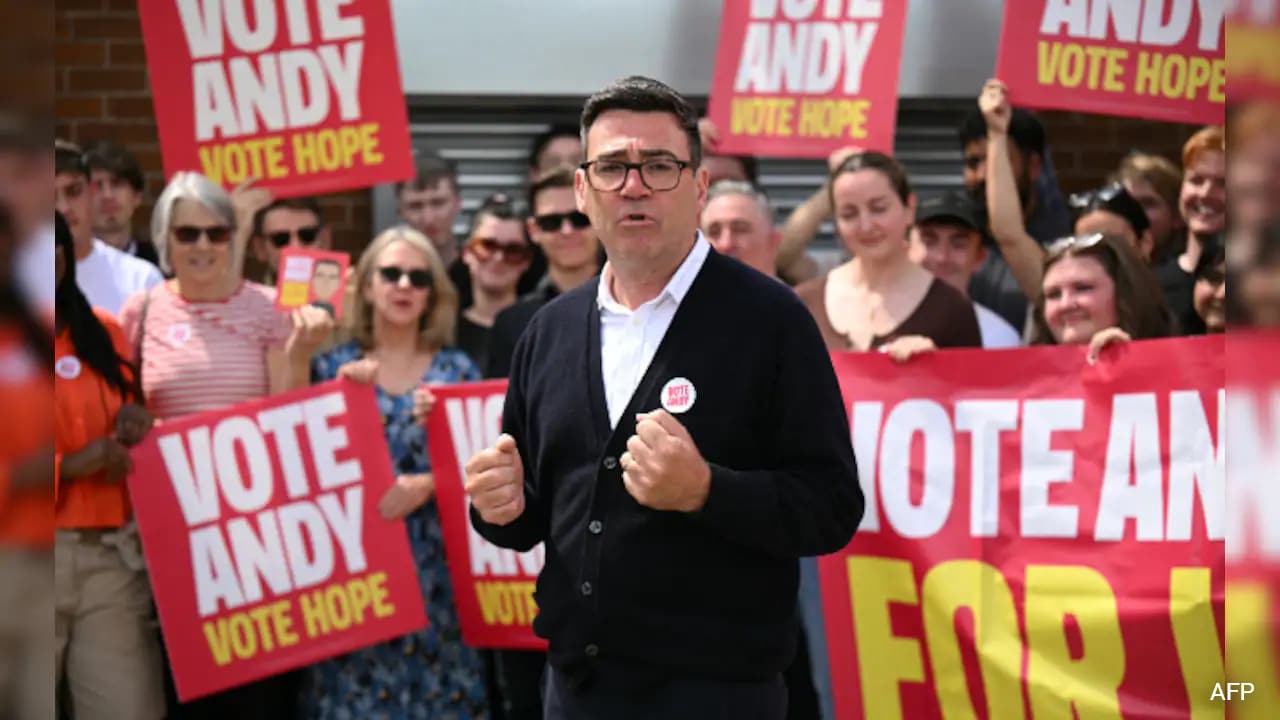
The political commentariat has a predictable script when it comes to Andy Burnham. The narrative goes like this: the "King of the North" has built a radical, decentralized fiefdom in Greater Manchester, and if he ever takes the keys to Number 10, he will effortlessly scale that regional magic to fix a broken, London-centric Britain.
It is a comforting, lazy consensus. It is also entirely wrong.
The assumption that a successful metro mayor can seamlessly translate regional grievance into national governance fundamentally misunderstands the mechanics of British state power. If Andy Burnham ever becomes Prime Minister, his biggest enemy won't be the opposition benches. It will be the very system of regional devolution he helped create. Moving from the mayoral office at Churchgate House to Downing Street isn't a promotion within the same system; it is a total inversion of incentives.
The Devolution Paradox
To understand why the "King of the North" model fails at the national level, you have to look at how devolution actually functions in the UK.
Metro mayors do not possess intrinsic, constitutional authority. They are structural shock absorbers. The Treasury doles out carefully rationed funding pots—like the City Region Sustainable Transport Settlements—and expects mayors to take the flak for local delivery failures while retaining structural macroeconomic control in Whitehall.
Burnham’s entire political brand relies on a specific adversarial dynamic. He acts as the external disruptor, the northern tribune holding Westminster's feet to the fire.
[Westminster Treasury] ---> Controls the Purse Strings
       |
       v
[Metro Mayor (Burnham)] -> Manages Local Delivery & Absorbs Public Flak
       |
       v
[The Paradox] ------------> A Prime Minister cannot play the external insurgent against their own Treasury.
When you are the mayor, you can demand accountability. When you are the Prime Minister, you are the accountability.
Imagine a scenario where a Prime Minister Burnham tries to replicate his Manchester playbook nationally. As mayor, he integrated the region's buses into the publicly controlled Bee Network. It was a genuine operational win. But it worked precisely because it was localized, ring-fenced, and subsidized by a combination of local council tax precepts and specific central government grants.
Scale that to a national level, and the math implodes. A Prime Minister cannot simply "demand" more money from the center because the center is empty. The moment Burnham enters Number 10, the adversarial leverage that made him effective vanishes. You cannot strike against a government that you lead.
The Flawed Premise of People Also Ask
If you look at public interest surrounding regional governance, the same naive questions pop up repeatedly. The internet wants to know: Can a metro mayor fix national inequality? or Does regional devolution weaken Whitehall?
These questions are built on a flawed premise. They assume that power is a zero-sum game that can be neatly distributed via geographic charts.
The brutal reality is that devolution has actually concentrated real financial power deeper inside the Treasury. By creating hyper-localized political figures, Whitehall successfully fragmented regional solidarity. Manchester competes against Leeds; Birmingham competes against Newcastle. They fight for crumbs in competitive bidding processes designed by civil servants in SW1.
Burnham has played this game better than anyone else. He secured a "trailblazer" devolution deal that granted Greater Manchester single-pot financial settlements. But that was a victory for Manchester, not for the country. It was an extraction strategy.
As Prime Minister, Burnham would face the immediate, furious backlash from every other region realizing that his historic wins came at their expense. The "King of the North" label becomes an albatross the second you need to win votes in the South West, the Midlands, or Scotland. You cannot govern a fractured nation using the rhetoric of regional exceptionalism.
The Operational Scar Tissue
I have watched public sector institutions burn through billions of pounds trying to implement top-down structural reorganizations under the guise of "local empowerment." The result is almost always the same: bloated intermediate bureaucracies, duplicate administrative costs, and zero net improvement in front-line delivery.
Consider the structural friction points that a Burnham premiership would immediately hit:
- The Whitehall Permanent Secretariat: The civil service excels at managing Ministers who think in macro-policies. They paralyze leaders who try to micro-manage delivery mechanics from the center. Burnham’s hands-on, detail-oriented mayoral style would be choked by the sheer inertia of the Cabinet Office.
- Fiscal Reality vs. Rhetoric: Mayors can champion capital-intensive projects without worrying about the bond markets. A Prime Minister enjoys no such luxury. Every localized infrastructure promise must be balanced against gilt yields and debt-to-GDP ratios.
- The Local Government Trap: In expanding mayoral powers, we have starved local borough councils of statutory funding. Burnham's combined authority model sits on top of ten local authorities that have faced severe, compounding budget deficits. Fixating on the mayoral tier ignores the rot at the foundational level of local government.
Stop Trying to Nationalize Regionalism
The conventional wisdom insists that Britain needs a leader with "proven executive experience outside the Westminster bubble." It sounds great in a manifesto. In practice, it ignores how power is actually wielded.
The skills required to run a devolved combined authority—chiefly consensus-building among local council leaders and public relations campaigning against Whitehall—are completely different from the brutal, zero-sum calculations of national governance. A mayor deals in civic pride. A Prime Minister deals in structural trade-offs.
If Andy Burnham ever takes power nationally, the very regional structures he championed will become his executive nightmare. He will find himself trapped between a fiscal straightjacket managed by his own Chancellor and an army of newly empowered metro mayors using his old playbook to demand money he cannot give them.
The "King of the North" cannot save Britain, because the crown only works if you stay in the North.


