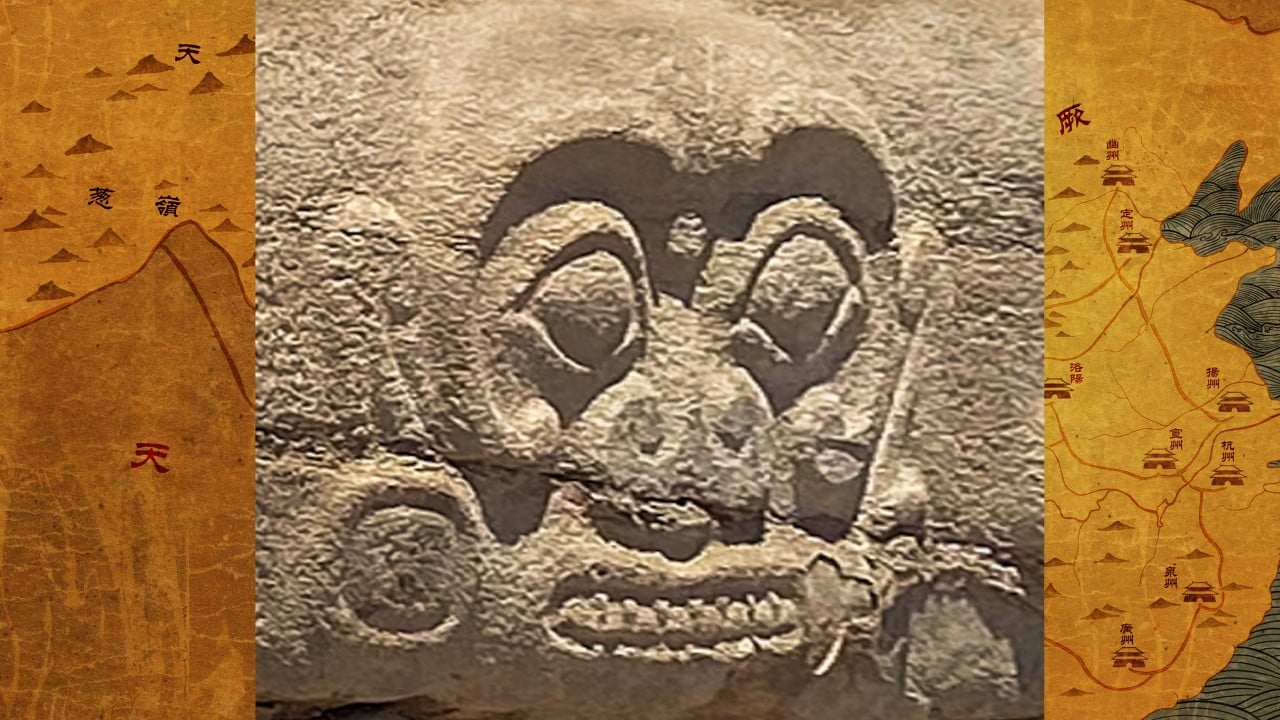
For decades, archaeologists stared at the sprawling stone ruins of Shimao on the northern edge of China's Loess Plateau and made assumptions. They dug up the massive fortifications, examined the eerie pits filled with human skulls, and guessed who these people were. They were wrong.
When researchers recently extracted ancient DNA from 169 human remains across seven archaeological sites, the genetic data shattered long-held beliefs about prehistoric power dynamics. This wasn't just a minor update to a textbook. It proved that human sacrifice four thousand years ago operated as an engineered, highly gendered system that mirrored an emerging political state. For a different view, see: this related article.
If you want to understand how early civilisations actually formed, you have to look past the stone walls and listen to what the bones are whispering.
The Myth of the East Gate Skulls
Let's talk about the most famous feature of the Shimao site: the East Gate. Archaeologists previously uncovered roughly eighty human skulls buried in pits beneath this massive structure. Based on early visual and bone-shape assessments, researchers assumed most of these victims were female. It fit neatly into standard archaeological models of ancient ritual violence. Similar insight on this matter has been published by The New York Times.
Genetics completely wrecked that theory.
DNA profiling revealed that nine out of ten individuals in those East Gate burials were actually male. These weren't random casualties of war or captive women. They were men gathered specifically for public, collective rituals tied to the defense or spiritual fortification of the city's main entrance.
This discovery changes how we view public architecture in the ancient world. The gates of Shimao didn't just keep physical enemies out. They served as altars where state-level authority demanded blood, and that blood was explicitly male.
Where the Women Were Buried
While men guarded the gates in death, elite women occupied an entirely different ritual sphere.
Inside the city walls, at high-status zones like Huangchengtai and Hanjiagedan, archaeologists found sacrificial remains accompanying noble tombs. Unlike the mass male burials at the gate, these female victims were entombed alongside rulers. Genetic analysis proved they weren't related to the nobles they accompanied, nor did they share local genetic signatures in every case.
This separation points to a chillingly organized society:
- Male sacrifices concentrated at public thresholds and gates for communal rituals.
- Female sacrifices accompanied high-status individuals in private, elite funerary contexts.
Death was segregated by gender because life was segregated by political function. The rulers of Shimao utilized different segments of the population for specific symbolic duties, proving that social hierarchy had reached a sophisticated, albeit brutal, level.
Unlocking a Patrilocal Blueprint
The DNA study led by the Chinese Academy of Sciences didn't just stop at sacrifice. By reconstructing family pedigrees spanning up to four generations, scientists mapped the actual social wiring of Shimao.
The data exposed a firmly patrilineal descent structure and patrilocal residence. Male tomb owners across generations carried matching paternal genetic markers. This biological continuity shows that stable, male-led family lines formed the backbone of the ruling class.
At the same time, the population didn't live in a vacuum. Genetic links showed deep local roots stretching back over a thousand years to the earlier Yangshao culture, alongside unexpected connections to distant agricultural and pastoral networks. Shimao was a melting pot of regional influence wrapped inside a rigid class structure.
Why This Matters Today
We tend to project modern views of equality onto antiquity, assuming that early societies operated with fluid social roles. Ancient DNA keeps proving us wrong. Shimao shows us that state-building often went hand-in-hand with institutionalized inequality, severe division of labor, and ritualized violence.
Physical anthropology combined with genomics is stripping away centuries of romantic guesswork. We are no longer guessing what happened behind the stone walls of China's earliest cities. The DNA leaves zero room for debate.
If you are tracking anthropological research, keep a close eye on ancient genomic mapping projects in East Asia. Traditional digging yields artifacts, but DNA reveals the human cost of empire.
Dig into regional excavation reports from the Institute of Vertebrate Paleontology and Paleoanthropology to examine the primary data yourself, or review recent publications in Nature to trace how genetic archaeology continues to rewrite human history.