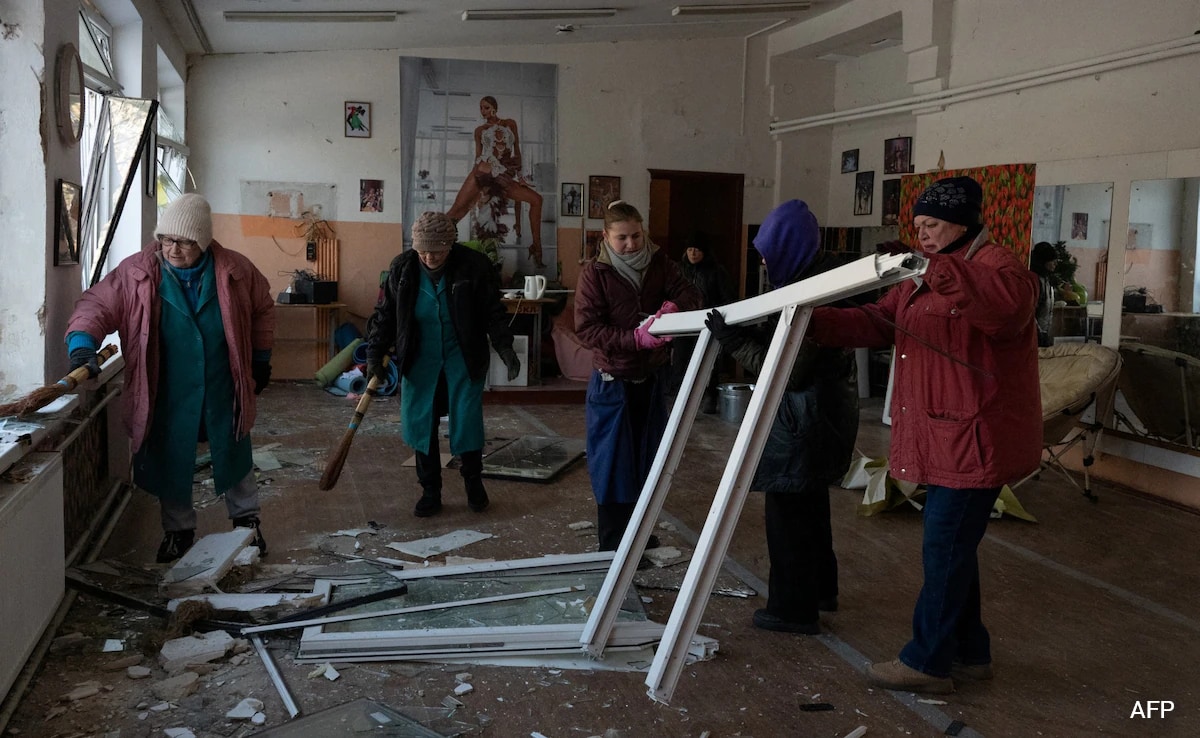
The escalation of internal systemic instability within a state at war follows predictable, quantifiable vectors. In the Russian Federation, this structural breakdown has breached the domestic perimeter, manifesting as an unprecedented surge in juvenile violence within educational institutions. Independent statistical tracking reveals that at least 14 violent attacks inside schools and educational facilities have been documented within the first five months of 2026 alone, matching virtually the entire baseline of 15 attacks recorded during the 12 months of 2025.
To analyze this phenomenon strictly through the lens of localized criminal deviance is an analytical failure. The surge represents a systemic crisis—a domestic cost function of prolonged, high-intensity conflict. When a state systematically lowers the barrier to state-sanctioned violence externally, it fundamentally recalibrates the internal risk thresholds, social controls, and psychological guardrails of its civilian population, particularly its youth. This breakdown operates across three distinct operational pillars: the militarization of civil infrastructure, the glorification of hyper-aggression as a cultural norm, and the institutional failure of state-level psychological mitigation frameworks. Discover more on a similar topic: this related article.
The Three Pillars of Domestic Violence Escalation
The velocity of this transformation is driven by structural mechanisms that translate external geopolitical warfare into internal civic breakdown.
[State Sanctioned Violence] ---> [Militarized Curriculum] + [Glorification of Combatants]
                                                 |
                                                 v
                                  [Lowered Threshold for Violence]
                                                 |
                                                 v
                                    [Domestic School Attacks]
1. The Weaponization of the Pedagogical Space
The primary pillar is the state-directed dismantling of the school as a neutral psychological sanctuary. Educational institutions have been forcibly integrated into the state's military-logistical propaganda apparatus. The introduction of mandatory curricula such as "Fundamentals of Security and Defense of the Homeland," alongside specialized drone-piloting, firearm handling, and tactical training modules, serves a dual purpose. While intended to foster long-term recruitment pipelines, it systematically desensitizes adolescents to operational violence. Weapons, combat mechanics, and lethal force are transitioned from abstract, forbidden concepts into daily classroom variables. Further reporting by Reuters delves into similar views on this issue.
2. The Return of the Un-vetted Combatant Class
The secondary pillar is a direct consequence of current Russian mobilization and recruitment policies. The influx of tens of thousands of returning convicts and battle-hardened mercenaries granted state clemency has injected an unprecedented volume of untreated post-traumatic stress disorder (PTSD) directly into municipal populations. When these individuals are integrated into the educational framework as "honored guests," lecturers, or instructors, it creates a severe sociological misalignment. Adolescents are presented with role models whose primary social utility and validation stem from their capacity for extreme violence. This shifts the cultural equilibrium, establishing coercion and physical dominance as valid mechanisms for conflict resolution.
3. The Collapse of Preventive Institutional Controls
The tertiary pillar is the structural decay of the state’s internal monitoring mechanisms. The Russian educational security apparatus relies heavily on passive defense measures—such as basic turnstiles, low-wage private security guards, or rudimentary metal detectors. However, the system is completely unequipped to identify or mitigate the internal psychological decay of its student body. Because the state’s ideological mandate demands total conformity and performance of wartime loyalty, standard psychological counseling has been subordinated to ideological vetting. Students displaying severe anti-social behavior or trauma are frequently ignored or misdiagnosed until the threshold of physical action is crossed.
The Economics of Hate: ideological and Ethnic Fragility
The internal mechanics of these school attacks show a distinct polarization along ideological and ethnic lines, functioning as localized flashpoints for broader state fractures. The 2025 mass stabbing at the Uspenskaya Secondary School in Odintsovo, Moscow Oblast—where a 15-year-old student targeted students and faculty with a knife, pepper spray, and improvised devices—demonstrates this mechanism. The perpetrator’s self-documented motivations explicitly linked far-right, neo-Nazi sentiment, and acute xenophobia to his choice of targets, resulting in the murder of a ten-year-old pupil of Tajik descent.
This dynamic reveals a profound irony in the state's internal control function. While the central government enforces strict state-backed nationalism to unify the population against external adversaries, it simultaneously validates an exclusionary, aggressive worldview. In multi-ethnic regions or urban centers with high migrant populations, the domestic absorption of this rhetoric translates into localized radicalization.
Subsequent incidents across early 2026 follow a highly predictable pattern of copycat tactical executions:
- The Nizhnekamsk Incident (January 2026): A 13-year-old student deployed firecrackers and a flare gun inside Lyceum No. 37, explicitly targeting school personnel.
- The Krasnoyarsk Assault (February 2026): A 14-year-old female student introduced a Molotov cocktail into School No. 153, generating an active arson scenario while simultaneously executing a hammer attack against five individuals.
- The Ufa University Dormitory Attack (February 2026): A 15-year-old perpetrator executed a coordinated stabbing attack targeting foreign international students, directly mimicking the tactical parameters of the Odintsovo incident.
These actions demonstrate that the proliferation of violence is not uniform; it is highly concentrated among adolescents who weaponize available, low-tech materials (medical scalpels, hammers, firecrackers, basic incendiaries) to exert control over their immediate environment. The state’s rhetoric creates an existential "us versus them" binary, which fragile or marginalized adolescents readily project onto teachers, peers, or ethnic minorities.
Systemic Limitations of State Countermeasures
The Russian state's response to this domestic crisis exposes the structural limitations of an authoritarian regime operating under severe fiscal and military constraints. The government cannot deploy a viable solution due to three distinct bottlenecks:
First, allocating capital toward comprehensive school security upgrades, advanced behavioral analytics, and psychiatric intervention infrastructure directly competes with the financial requirements of the defense budget. With state resources heavily prioritized toward military production, ammunition procurement, and tactical recruitment incentives, the domestic educational infrastructure remains chronically underfunded and vulnerable.
Second, the state cannot address the root cause of the violence without undermining its own wartime messaging. To de-escalate the culture of violence in schools would require reducing the militarization of the curriculum and curtailing the glorification of combat veterans. Doing so would jeopardize the Kremlin's long-term objective of preparing the domestic population for a protracted, generational conflict. Consequently, the regime is structurally locked into perpetuating the exact cultural variables that fuel the internal school attacks.
Third, the judicial system relies entirely on reactive, punitive measures. Increasing prison sentences for minors or charging the parents of delinquent youth does nothing to alter the psychological feedback loops driving these adolescents. The state is attempting to solve a fluid, psychological crisis using rigid, bureaucratic coercion.
The tactical reality for civilian populations within this ecosystem is increasingly precarious. The data indicates that school attacks are no longer isolated anomalies; they are a predictable, structural consequence of a society fully mobilized for war. As long as external military aggression remains the central organizing principle of the state, the domestic perimeter will continue to suffer violent fractures, transforming classrooms into secondary zones of combat.
Deploy structural defensive parameters across all regional administrations immediately. Shift regional educational budgets away from ideological curriculum delivery and directly into physical access-control infrastructure, independent behavioral monitoring, and unannounced security audits. Failure to isolate the academic environment from the broader societal militarization will guarantee that the rate of domestic adolescent violence outpaces the state’s capacity to contain it.