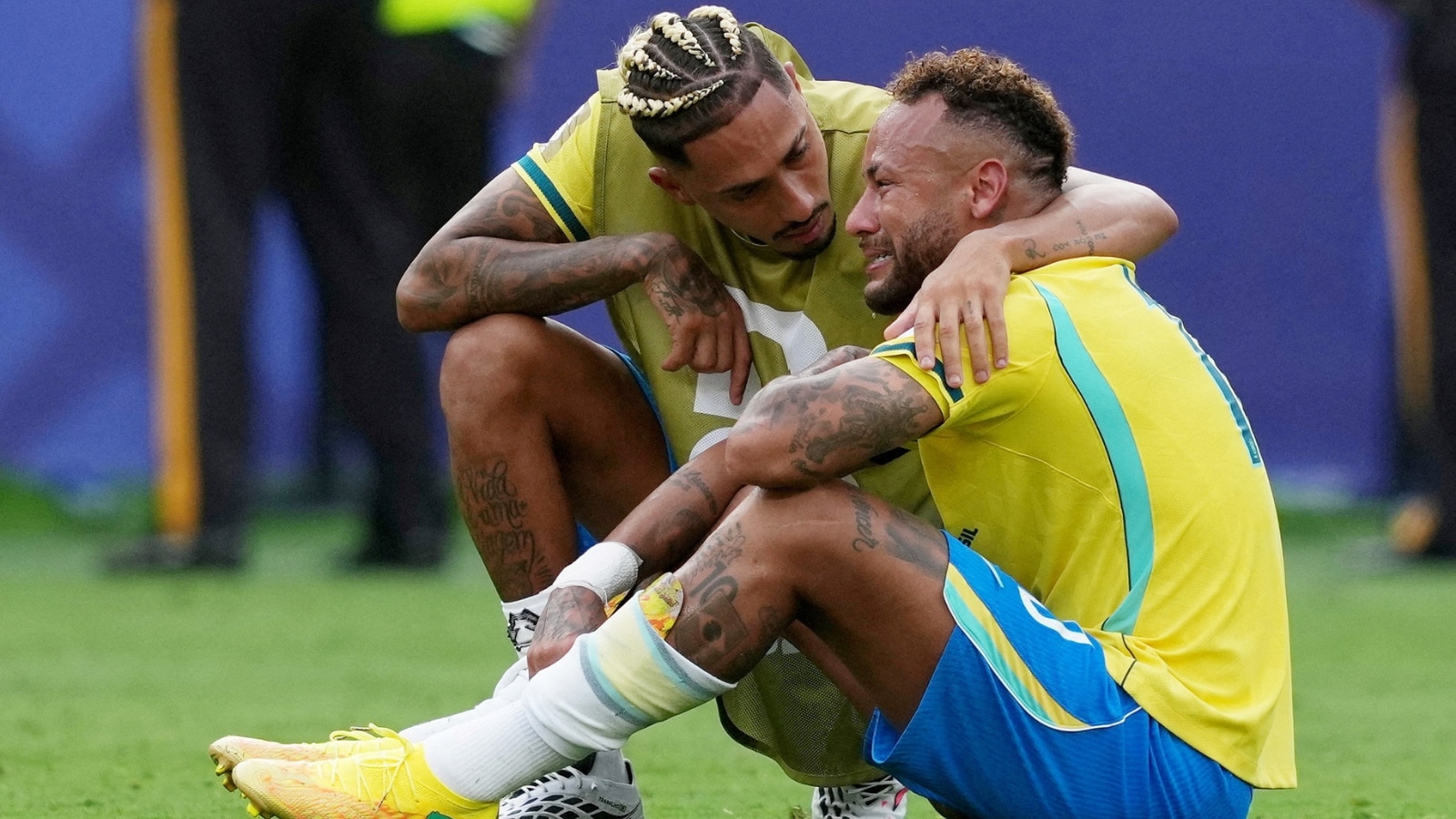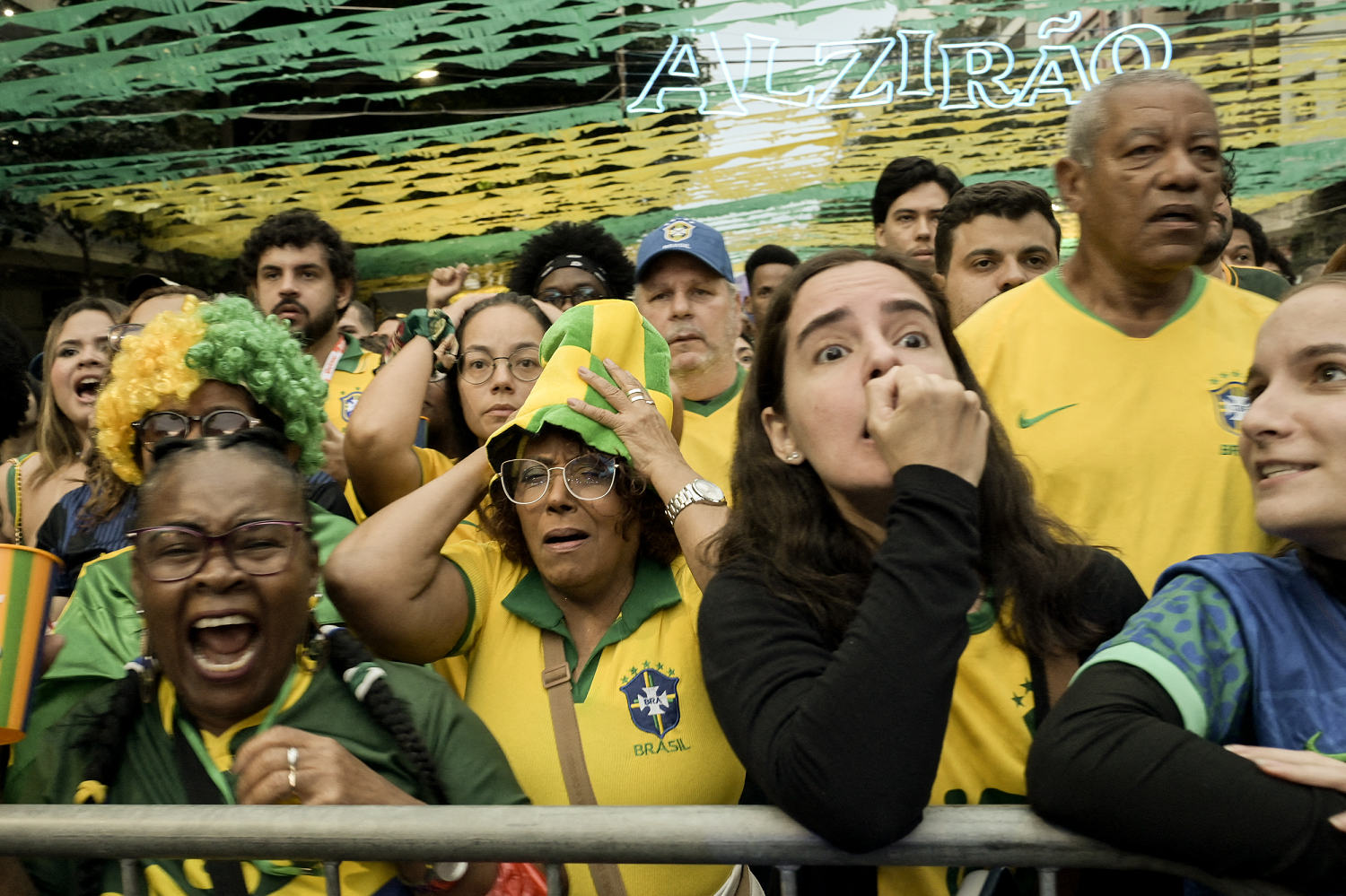
Brazil’s recent defeat to Norway cannot be dismissed as an anomaly of tournament football or a simple failure of execution. It represents a fundamental structural breakdown where a high-talent, high-fluidity system collapsed when confronted by a rigid, spatially optimized defensive block. The emotional fallout—distraught players and a disillusioned fanbase—is merely the lagging indicator of deep-seated tactical and developmental vulnerabilities that have long plagued the national program. To understand why Brazil failed, we must look past the emotional narrative and isolate the precise operational friction points that dictated the outcome on the pitch.
The failure mechanics can be categorized into three distinct pillars: structural inefficiencies in transition phases, a critical mismatch in physical profiles, and the absence of a systematic, non-emotional crisis management protocol. When these three vulnerabilities intersected, the match trajectory became entirely predictable.
The Structural Breakdown of Brazil’s Possession Model
Brazil’s offensive identity relies on positional fluidity and technical superiority in isolated 1v1 duels. However, this model introduces a severe structural vulnerability during the negative transition—the exact moment possession is lost.
In high-performance football, offensive shape must simultaneously serve as the defensive safety net. Brazil’s tactical deployment failed to establish this equilibrium. By committing both fullbacks to advanced vertical corridors without establishing a disciplined counter-pressing sub-structure in the central midfield zone, Brazil left their center-backs exposed to massive tranches of uncovered space.
Norway’s defensive architecture utilized a low-block 5-4-1 configuration designed specifically to exploit this structural asymmetry. By ceding the wide channels and concentrating defensive density in the central half-spaces, Norway forced Brazil into low-value, horizontal ball circulation. Brazil’s possession became purely decorative, lacking the vertical penetration required to unbalance a disciplined defensive line.
Brazil Possession Shape (Flawed):
[LB]-------------------[LW]-----[CF]-----[RW]-------------------[RB]
-------------[CM]---------------------------------[CM]-------------
-------------------------[CB]-----------[CB]------------------------

Norway Defensive Block (Compact):
----------------------[LW]------[CF]------[RW]---------------------
-----------------[CM]------[CM]------[CM]------[CM]-----------------
------------[LB]------[CB]------[CB]------[CB]------[RB]------------
When Brazil's attacking sequences stalled, Norway did not engage in immediate recovery; instead, they triggered targeted vertical counter-attacks into the vacant channels vacated by Brazil’s advanced fullbacks. The geometric reality of the pitch dictated that Brazil’s center-backs had to cover lateral distances for which they lacked the recovery speed, resulting in high-stress defensive interventions and critical disciplinary exposure.
The Physicality Mismatch and Low-Block Attrition
The second failure point lies in the optimization of physical profiles. Norway’s tactical blueprint prioritized physiological dominance in defensive aerial duels and second-ball recovery. Brazil’s attacking contingent, while possessing superior acceleration and technical variance, lacked the physical mass and height required to contest a condensed penalty box.
This created a massive efficiency deficit in the final third:
- Cross Efficiency: Brazil attempted a high volume of crosses from wide areas, yet the probability of success neared zero due to the height deficit against Norway’s central trios.
- Second-Ball Probability: In low-block scenarios, the initial clearance rarely settles. Norway systematically positioned their midfield line to win the "second ball"—the dropped clearances—leveraging their physical frame to shield the ball and launch transitions.
- Deceleration Fatigue: Constantly chasing physical attackers over long distances in transition accelerated the physical degradation of Brazil's core defensive unit across the 90 minutes.
By forcing Brazil out of the central channels and onto the periphery, Norway converted the match from a contest of skill into a battle of attrition and spatial containment. Brazil’s inability to alter their attacking profile—shifting from aerial crosses to rapid, low-driven combination play through the half-spaces—demonstrates a lack of tactical variance within the squad's operational toolkit.
Emotional Cascades and the Absence of Crisis Protocols
Elite sports science recognizes that tactical discipline is inextricably linked to cognitive load. When a favored team fails to break down an opponent early, psychological frustration introduces cognitive friction, leading to a breakdown in tactical adherence.
Brazil’s performance displayed the classic markers of an emotional cascade. As the match progressed without a breakthrough, individual players began abandoning the collective positional structure in favor of low-probability individual actions. Forwards dropped excessively deep to demand the ball, cluttering the midfield and removing the depth needed to stretch Norway’s backline. Center-backs began carrying the ball into congested areas, increasing the turnover risk in high-danger zones.
This behavioral shift reveals the absence of a structured crisis protocol. In highly optimized teams, conceding a goal or encountering an stubborn low-block triggers a pre-rehearsed tactical pivot—such as shifting to a three-man base or altering the pressing triggers. Brazil, conversely, reverted to emotional urgency. The visible distress at the final whistle was not just grief over a loss; it was the psychological exhaustion of a squad that ran out of ideas long before they ran out of time.
Strategic Realignment and the Path Forward
To rectify these systemic deficiencies before the next major tournament cycle, the Brazilian technical apparatus must execute an immediate shift in asset allocation and tactical ideology.
First, the team must implement a strict rest-defense framework during the possession phase. This requires at least three defensive players plus one holding midfielder to maintain a fixed, conservative shape behind the ball at all times, neutralizing the space opponents can exploit during transitions. Technical superiority is useless if the structural foundation remains highly volatile.
Second, squad selection must diversify physical profiles. While technical trickery remains a core competency, elite modern football demands physical outliers capable of disrupting low-blocks through brute force and aerial supremacy when subtlety fails.
Finally, the coaching staff must introduce rigorous cognitive pressure scenarios in training to immunize the squad against emotional cascades. Players must be conditioned to respond to adversity with structural rigidity rather than individualized desperation. Until these structural and psychological protocols are institutionalized, Brazil will remain highly vulnerable to disciplined, physically imposing opponents who understand that space, not talent, dictates the outcome of modern football matches.