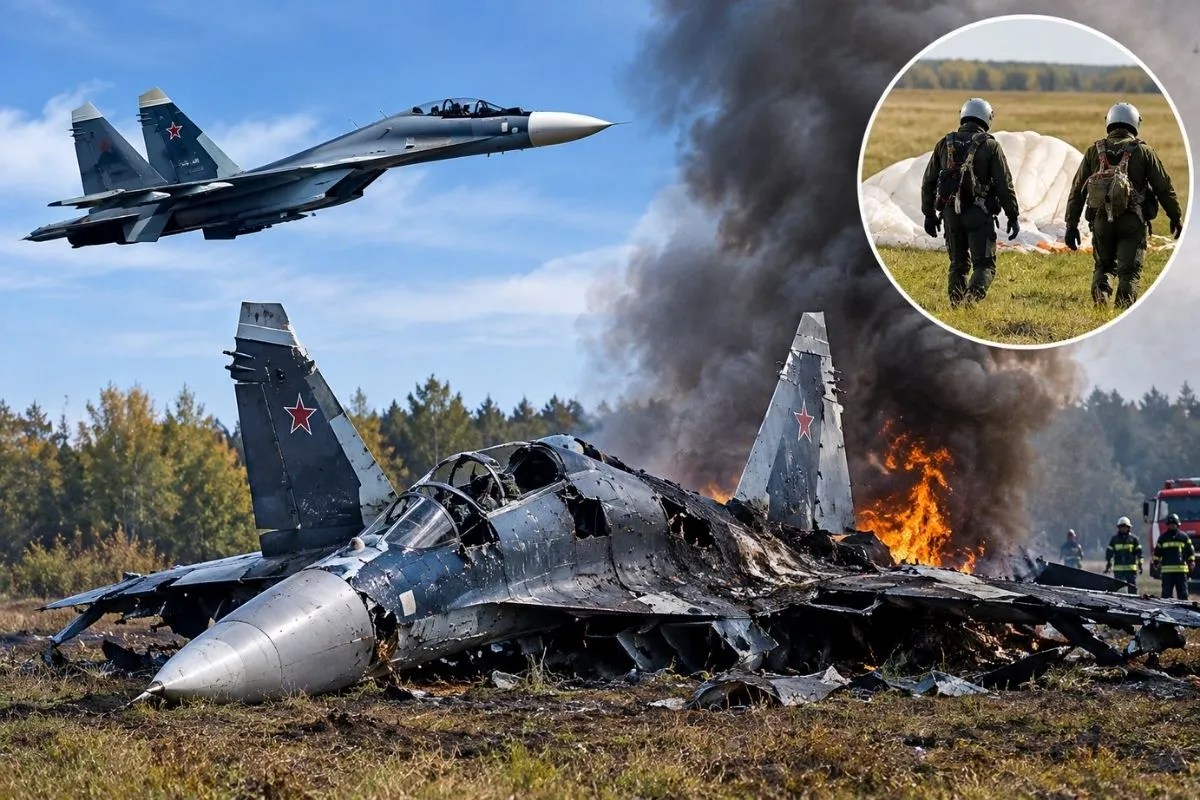
Modern tactical aviation operates under extreme physical constraints, where the margin between successful flight regime execution and catastrophic failure is measured in milliseconds. The recent crash of a Russian Su 30SM multirole fighter aircraft in the Kaliningrad exclave, resulting in the ejection and survival of both crew members, offers a critical case study in high-performance aerospace risk management, kinetic envelope limitations, and emergency ejection system reliability.
The Operational Envelope and Kinetic Stress Vectors
The Sukhoi Su 30SM represents an evolution of the fourth-generation heavy fighter design, featuring thrust-vectoring engines and a close-coupled canard configuration designed to maximize instantaneous turn rates and high-alpha maneuverability. However, extreme agility introduces distinct mechanical vulnerabilities.
- Structural Fatigue under High-G Loading: Prolonged tactical maneuvering places immense strain on composite and metallic airframe joints, particularly around the wing roots and canard attachment points. Micro-fractures accumulated over operational lifecycles can propagate rapidly under thermal and mechanical stress.
- Propulsion-Control Interaction: Thrust-vectoring systems require precise synchronization between aerodynamic control surfaces and nozzle vectoring. A divergence in this feedback loop during low-altitude or high-energy regimes can induce unrecoverable flight path deviations.
- Environmental and Maintenance Factors: Operating in strategically isolated zones like the Kaliningrad exclave places heavy reliance on localized logistics and maintenance chains. Environmental factors such as high coastal humidity and corrosive maritime air accelerate component degradation if inspection protocols experience any latency.
The Cost Function of Crew Extraction
When a tactical airframe enters an unrecoverable state, the primary variable shifts from vehicle preservation to human capital recovery. The survivability of both pilots in this incident validates the efficacy of modern zero-zero ejection seat technology, specifically systems like the K-36DM utilized in Russian tactical jets.
The decision loop for crew ejection operates under severe time compression:
- Perception Phase: Flight data anomaly or structural failure indication.
- Evaluation Phase: Determining whether the kinetic vector can be corrected within available altitude.
- Execution Phase: Initiating the automated sequential ejection sequence to clear the vertical stabilizer and deploy stabilization parachutes.
The successful recovery in Kaliningrad highlights that while vehicle loss represents a catastrophic capital failure, the preservation of trained tactical aviators minimizes the strategic deficit, as human capital replacement requires years of specialized institutional training and millions of dollars in resource allocation.
Systemic Implications for Aerospace Logistics
Incidents involving high-value assets prompt a reassessment of fleet-wide airworthiness directives. Fleet managers must balance operational readiness tempos against mandatory inspection intervals for critical flight-control components. When an accident occurs due to mechanical or structural failure, the immediate strategic requirement is not merely accident investigation, but the implementation of root-cause mitigation across the entire operational deployment vector to prevent systemic grounding of air superiority assets.