Qatar’s economic trajectory between 1995 and 2013 provides a structural blueprint for overcoming the resource curse. Under the rule of the late Father Emir, Sheikh Hamad bin Khalifa Al Thani, the state did not merely experience an oil boom; it executed a deliberate capital-allocation strategy that scaled liquefied natural gas (LNG) production 24-fold and transformed a highly illiquid asset base into a global investment portfolio. The mechanism behind this expansion relies on a three-part framework: leveraging external debt for high-risk infrastructure deployment, institutionalizing wealth through a global sovereign asset-diversification function, and converting economic rents into geostrategic security.
Understanding this economic architecture requires moving past superficial descriptions of wealth and analyzing the precise fiscal models that enabled a state with fewer than 300,000 citizens to build a $524 billion sovereign wealth engine while maintaining a total domestic welfare state.
The Capital Expenditure Mechanics of LNG Scaling
Prior to 1995, Qatar’s economy was constrained by a heavy reliance on declining crude oil reserves and an inability to monetize the North Field, the world’s largest non-associated natural gas field. The economic bottleneck was technological and financial: natural gas could not be easily piped to major global markets, requiring capital-intensive liquefaction infrastructure.
The core strategy shifted from a conservative cash-flow model to an aggressive debt-financed capital expenditure (CapEx) strategy. The late Emir bypassed regional financing limits by forming joint ventures with international oil companies, primarily ExxonMobil, to share technical risk and secure global supply chains.
[North Field Reserves]
        │
        ▼ (Highly Leveraged Debt + Project Finance)
[Mega-Train Liquefaction Infrastructure]
        │
        ▼ (Long-Term Supply & Purchase Agreements)
[Global Spot & Contract Markets] -> [Fiscal Surplus]
This model relied on specific structural pillars:
- Project Finance Optimization: Qatar secured multi-billion-dollar international syndications, balancing high debt-to-equity ratios against the verified scale of the North Field reserves. This insulated the state’s sovereign balance sheet from total exposure.
- Scale Efficiency (Mega-Trains): By developing large-scale processing facilities capable of producing 7.8 million tons per annum per train, the country reduced the per-unit cost of liquefaction. This cost advantage insulated Qatar from global price drops.
- Vertical Integration: Investing in a state-owned fleet of specialized Q-Flex and Q-Max LNG vessels removed reliance on third-party shipping markets. This ensured margin capture across the full value chain from extraction to regasification.
By 2010, this infrastructure reached its target capacity of 77 million tons of LNG per year, capturing nearly 20% of the global market. The resulting exponential revenue growth represents a case study in converting high-risk infrastructure debt into structural fiscal dominance.
The Liquidity Absorption Engine: Qatar Investment Authority
Unchecked inflows of resource revenue present a classic macroeconomic risk: Dutch Disease. When massive capital enters a small economy, the domestic currency appreciates, making non-resource sectors uncompetitive and driving domestic inflation.
To mitigate this volatility, the Qatar Investment Authority (QIA) was established in 2005 to operate as an offshore liquidity absorption engine. The strategy shifted from holding short-term liquid reserves to acquiring global, inflation-hedged trophy assets. This approach followed a calculated diversification framework.
                       [LNG Export Revenues]
                                 │
                                 ▼
                     [Sovereign Wealth Fund]
                    (Offshore Asset Absorption)
                                 │
        ┌────────────────────────┼────────────────────────┐
        ▼                        ▼                        ▼
[Real Estate Assets]   [Public/Private Equity]   [Strategic Allocations]
- Canary Wharf          - Volkswagen             - Paris Saint-Germain
- The Shard             - Barclays               - Media & Soft Power
The fund target areas focused on distinct asset classes:
Real Estate and Financial Trophy Assets
QIA targeted high-barrier-to-entry, illiquid real estate in Tier-1 global cities, notably London. Acquisitions included Canary Wharf, the Shard, and Harrods. These assets provided predictable yield and long-term capital appreciation, effectively converting finite hydrocarbon wealth into permanent real estate equity.
Strategic Equity Stakes
The fund acquired significant minority stakes in foundational Western corporations, including Volkswagen, Porsche, and Barclays. These holdings provided institutional influence and integrated Qatar directly into the corporate governance of major global economies.
Soft Power Allocations
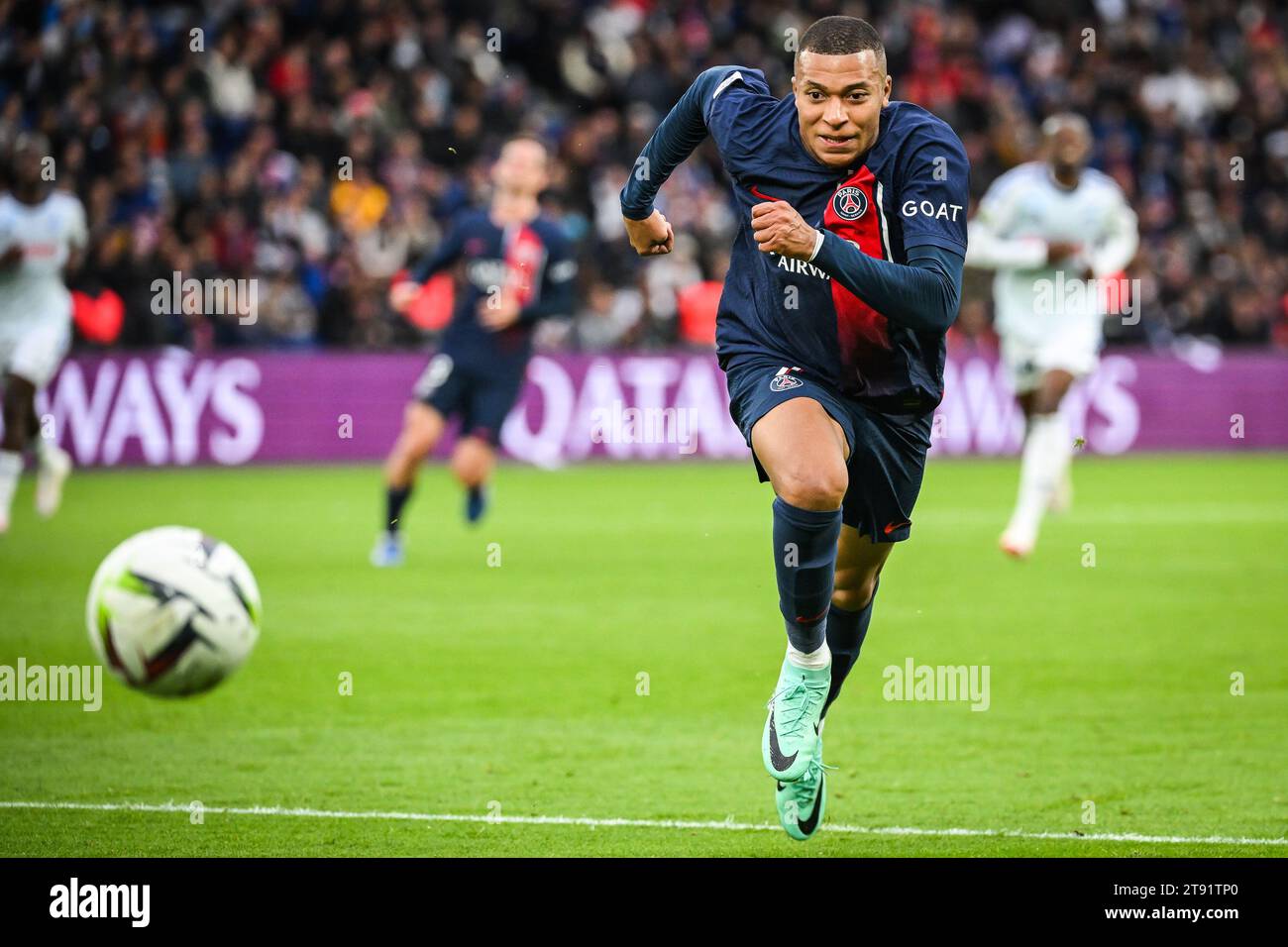
Through specialized vehicles like Qatar Sports Investments, the state acquired Paris Saint-Germain for approximately $139 million in 2011, scaling its valuation over the subsequent decade. This was not a standard portfolio play; it was a capital allocation targeted at global brand equity and international visibility.
The primary limitation of this model is its vulnerability to global regulatory shifts and protectionist policies in Western economies. However, by running this offshore absorption strategy, the state successfully insulated its domestic economy from hyperinflation while building a diversified revenue stream independent of hydrocarbon market cycles.
Geopolitical Hedge as an Economic Prerequisite
For a micro-state positioned geographically between larger regional powers Saudi Arabia and Iran, economic policy cannot be separated from national survival. The late Emir recognized that a massive sovereign balance sheet is useless without structural defense mechanisms. Consequently, economic policy was engineered to build international interdependence.
The state created a dual-layer strategy of soft power and infrastructure interdependence:
- Information Arbitrage: The founding of the Al Jazeera network in 1996 broke the regional monopoly on state-controlled media. By creating a globally recognized broadcasting infrastructure, Qatar secured an asymmetrical diplomatic tool that elevated its relevance far beyond its geographic footprint.
- Global Energy Interdependence: By supplying a significant share of the natural gas imports for critical global economies across Europe and Asia, Qatar made its territorial sovereignty a matter of energy security for major world powers.
This interdependence was validated during the 2017–2021 regional embargo, where the infrastructure and trade relationships built during the late Emir's reign allowed the state to re-route supply chains rapidly and maintain fiscal stability under intense geopolitical pressure.
The Domestic Welfare Trade-off and Structural Risks
Domestically, the model created a high-income welfare state characterized by zero personal income tax, fully subsidized healthcare, and free utility distribution for citizens. While this model ensured long-term social stability, it introduced structural distortions into the domestic labor market.
The primary systemic challenge is the creation of a dual-labor economy. The public sector absorbs the vast majority of the national workforce through high-paying administrative roles funded by LNG rents. This creates a distortion where the private sector remains heavily dependent on foreign expatriate labor, hindering organic, non-hydrocarbon productivity growth.
Additionally, the domestic financial model remains tied to the global dollar-pegged regime, limiting independent monetary policy options. If global energy markets face structural demand destruction due to accelerating decarbonization energy transitions, the fiscal break-even point required to sustain this total welfare model will face severe compression.
The Strategic Play
To sustain the economic architecture established by the late Father Emir, policymakers must pivot from passive asset accumulation to active technology capital deployment. The state cannot rely indefinitely on extraction cost advantages or real estate yields in Western capitals.
The next structural move requires leveraging current LNG surpluses to build a domestic sovereign computing and advanced manufacturing ecosystem. This means shifting QIA's investment mandates away from Western real estate and directly into supply-chain ownership of semiconductor manufacturing, artificial intelligence physical infrastructure, and regional grid integration. True sovereignty in the next economic era requires shifting from global financial rentier to indispensable technology infrastructure provider.