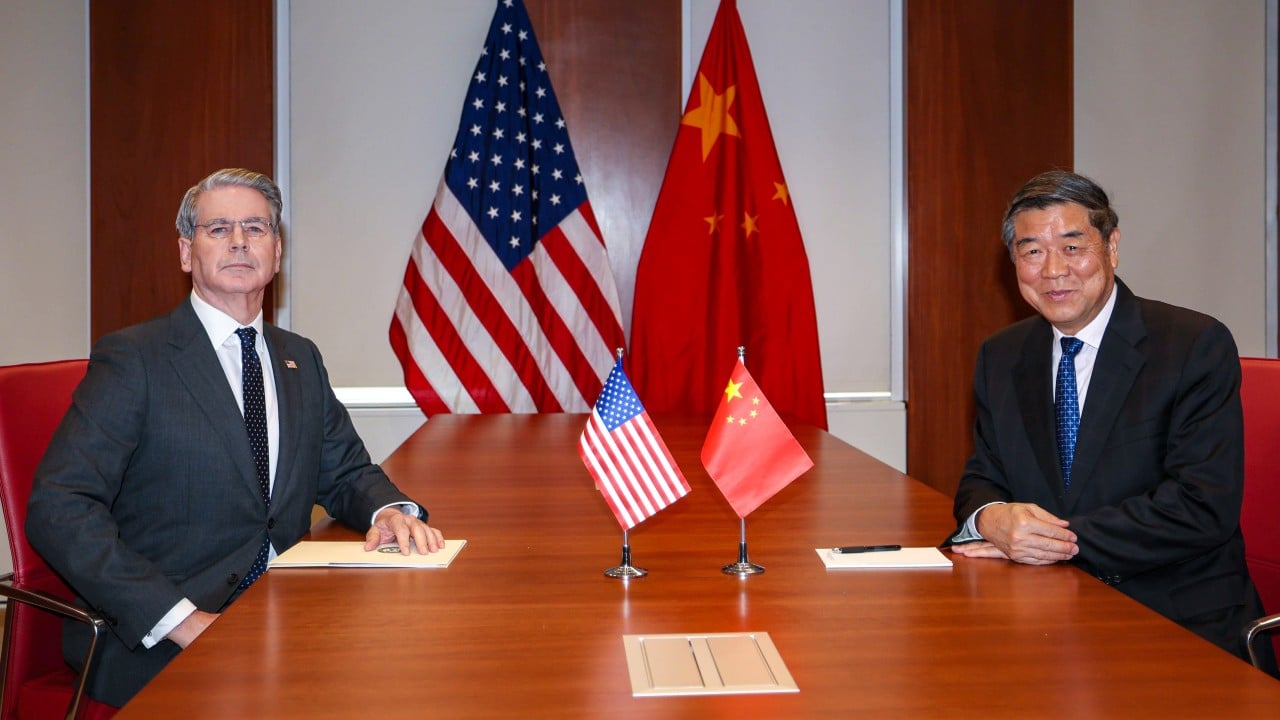
Bilateral diplomatic calls between the top trade negotiators of the United States and China immediately preceding a head-of-state summit function as risk-containment mechanisms rather than breakthrough negotiations. When the United States Trade Representative and China’s Vice Premier or Minister of Commerce speak ahead of a Trump-Xi meeting in Shenzhen, the primary objective is to lock in the variance of outcomes, ensuring neither leader faces an unscripted public failure on the world stage.
Standard media coverage treats these preparatory calls as routine diplomatic pleasantries or vague signals of "warming ties." That interpretation misses the structural mechanics of high-stakes trade diplomacy. In reality, a pre-summit call operates as an institutional filter designed to separate solvable transactional issues from non-negotiable structural conflicts before the principals enter the room. You might also find this connected story insightful: Mark Carney Refusing to Call Democrats on Tariffs Is a Masterclass in Survival.
The Structural Function of Pre-Summit Sherpa Calls
In international trade negotiations, leaders do not negotiate line-by-line tariff schedules or technical regulatory standards. Instead, cabinet-level trade chiefs act as operational filters, known in diplomatic parlance as sherpas, who map the exact boundaries of acceptable concessions.
The preparatory call serves three distinct operational functions: As extensively documented in latest reports by The Wall Street Journal, the effects are worth noting.
- Agenda Quarantine: Both sides establish explicit boundaries around topics that will derail the summit. For Washington, this typically involves separating national security export controls—such as advanced semiconductor lithography or artificial intelligence compute restrictions—from traditional market-access tariffs. Beijing seeks to quarantine domestic industrial policy, state-owned enterprise subsidies, and sovereign regulatory frameworks from direct negotiation.
- Deliverable Verification: A head-of-state summit requires tangible announcements to justify the political capital expended by both administrations. Trade chiefs use the call to audit proposed deliverables—such as agricultural purchase commitments, targeted tariff exclusions, or working-group charters—to confirm they are legally executable and politically defensible back home.
- Signaling Calibration: The public readouts released by the Office of the United States Trade Representative (USTR) and China’s Ministry of Commerce (MOFCOM) are drafted with extreme precision. The choice of verbs—whether talks were "candid," "constructive," or "in-depth"—communicates the baseline tension level to global equity markets, currency traders, and multinational supply chain operators.
By executing these three steps prior to the Shenzhen meeting, the trade chiefs transform an unpredictable geopolitical encounter into a managed sequence of pre-vetted announcements.
The Strategic Geography of Shenzhen
The selection of Shenzhen as the venue for a Trump-Xi summit carries specific economic and symbolic weight that directly shapes the trade chiefs' agenda. Unlike Beijing, which represents the political and bureaucratic center of the Chinese state, Shenzhen is the physical manifestation of China’s export-oriented manufacturing model and its transition toward indigenous technological self-sufficiency.
Holding bilateral trade discussions in the Pearl River Delta places the physical infrastructure of global supply chains directly in the background of the negotiations. Shenzhen is the headquarters for major Chinese technology champions, telecommunications hardware manufacturers, and electric vehicle supply chains. From a game-theory perspective, hosting the summit in Shenzhen allows Beijing to project technological resilience and manufacturing scale, signaling that external tariff pressure has accelerated rather than halted domestic industrial upgrading.
For the US trade delegation, negotiating in Shenzhen sharpens the focus on overcapacity and industrial subsidies. When American negotiators discuss non-market policies and practices, they are doing so in the exact municipality where state-backed venture capital, municipal land grants, and localized supply chain clustering have created dominant global competitors in clean energy hardware, consumer electronics, and battery manufacturing.
The Three-Variable Trade Equation
To understand what the US and Chinese trade chiefs actually negotiate during a pre-summit call, analysts must strip away diplomatic rhetoric and examine the core economic variables governing the bilateral relationship. Every concession or threat maps onto a three-variable equation: Tariff Elasticity, Technology Chokepoints, and Supply Chain Rerouting.
1. Tariff Elasticity and Inflationary Pass-Through
Tariffs remain the primary blunt instrument of US trade policy, yet their economic impact is governed by price elasticity and currency offsets. When Washington threatens across-the-board tariff hikes or targeted increases on strategic sectors, US trade officials must calculate the domestic inflationary pass-through—the percentage of the tariff cost absorbed by American importers and consumers versus Chinese exporters.
During pre-summit calls, Chinese trade officials routinely push for the rollback of existing Section 301 tariffs, arguing they distort bilateral trade flows and harm US consumers. American negotiators counter by pointing to the persistent bilateral goods trade deficit and the asymmetric market access faced by US firms operating in China. The trade chiefs' job is to identify narrow tariff exclusions where US domestic substitution is currently impossible, trading those exclusions for specific Chinese market-access commitments or regulatory approvals for American companies.
2. Technology Chokepoints and Export Controls
The most acute friction point in US-China economic relations lies outside traditional trade law, residing instead in national security export controls administered by the US Department of Commerce’s Bureau of Industry and Security (BIS). Beijing consistently demands the relaxation of restrictions on high-end semiconductors, chipmaking equipment, and outbound US investment screening.
Washington’s standard doctrine holds that national security measures are non-negotiable. However, the boundary between commercial trade and national security has blurred. During pre-summit calls, trade chiefs must manage the spillover effects of these controls. While the USTR cannot trade away BIS export restrictions for soybean purchases, the two sides can negotiate predictability—establishing clear compliance channels, licensing timelines, and technical thresholds so that commercial trade in legacy chips and non-sensitive hardware does not freeze entirely due to regulatory uncertainty.
3. Supply Chain Rerouting and Rules of Origin
Since the initial wave of bilateral tariffs, global manufacturing has not simply returned to the United States; much of it has rerouted through third-party jurisdictions in Southeast Asia and Latin America, particularly Vietnam and Mexico. Chinese manufacturers have established final-assembly facilities in these countries to bypass direct US tariffs while continuing to source core components and raw materials from mainland China.
US trade chiefs enter pre-summit discussions with acute awareness of this transshipment dynamic. Any framework discussed ahead of the Shenzhen summit must address Rules of Origin—the legal criteria used to determine the national source of a product. Washington seeks stricter enforcement mechanisms to prevent tariff circumvention, while Beijing defends the right of its enterprises to integrate into regional production networks.
Asymmetric Incentives and Domestic Constraints
A rigorous analysis of the pre-summit call requires examining the domestic political constraints that bind both negotiating teams. Neither side operates with unlimited flexibility; each trade chief must satisfy powerful internal constituencies while extracting concessions from the other.
Washington’s Operational Constraints:
- Electoral and Legislative Pressure: US trade policy is heavily influenced by domestic manufacturing constituencies, labor unions, and bipartisan congressional skepticism toward Beijing. Any perceived softening on tariffs or enforcement mechanisms triggers immediate political backlash in Washington.
- Allied Coordination: The US cannot unilaterally enforce export controls or supply chain restrictions without cooperation from key allies in Europe and East Asia. Concessions made bilaterally in Shenzhen risk undermining multilateral alignment if allies feel blindsided by a sudden US-China accommodation.
- Legal Mechanisms: Utilizing statutory authorities such as Section 301 of the Trade Act of 1974 or the International Emergency Economic Powers Act (IEEPA) requires procedural adherence. Trade chiefs must ensure that any timeline agreed upon during the call aligns with domestic statutory review periods.
Beijing’s Operational Constraints:
- Macroeconomic Stabilization: China’s economy faces structural headwinds, including a protracted real estate contraction, local government debt burdens, and weak domestic consumer confidence. Exports remain a critical engine of GDP growth, making the preservation of access to the US and European markets an urgent macroeconomic priority for Beijing.
- Ideological Commitment to Self-Reliance: Under Xi Jinping’s economic doctrine, achieving technological self-sufficiency ("new quality productive forces") is a core regime priority. Chinese trade negotiators cannot agree to structural reforms that dismantle state support for strategic industries, as doing so would contradict top-level party directives.
- Retaliatory Calibration: Beijing possesses asymmetric retaliatory tools, including export controls on critical minerals (such as gallium, germanium, and rare earth processing technologies) and regulatory investigations into major US corporations operating in China. Trade chiefs use the pre-summit call to signal restraint on these levers in exchange for tariff stability.
Decoding Diplomatic Readouts: Signal vs. Noise
When the call concludes, both governments release carefully worded summaries. Institutional investors and corporate risk officers rely on comparative textual analysis of these readouts to gauge the probability of a successful summit.
| Analytical Dimension | Washington Readout Framing | Beijing Readout Framing | Strategic Reality |
|---|---|---|---|
| Core Objective | "Leveling the playing field," addressing "non-market policies," and protecting US workers. | "Mutual respect," "win-win cooperation," and opposing "unilateralism and protectionism." | Both sides are restating entrenched ideological baselines to appease domestic audiences. |
| Tone Indicators | "Candid and substantive exchange." | "Candid, in-depth, and constructive communication." | "Candid" signals sharp disagreement; "constructive" indicates the disagreement did not end the dialogue. |
| Action Items | "Agreed to maintain open lines of communication." | "Agreed to work together to create favorable conditions for high-level exchanges." | No major breakthroughs occurred; working groups will continue technical-level haggling until the summit. |
Notice the absence of specific quantitative commitments in pre-summit readouts. Hard numbers—such as dollar amounts for commodity purchases, exact tariff percentage reductions, or specific licensing quotas—are deliberately withheld until the principals meet face-to-face. Releasing deliverables early deprives the leaders of the political theater required to validate the summit.
Limitations of Bilateral Trade Diplomacy
Even if the pre-summit call succeeds in clearing the path for a smooth Trump-Xi meeting in Shenzhen, practitioners recognize the severe structural limitations of top-down trade agreements between these two economies.
First, enforcement mechanisms remain weak. Previous bilateral trade frameworks relied on dispute resolution processes that lacked independent arbitration, leaving unilateral tariff re-imposition as the only viable enforcement tool. When compliance relies solely on the threat of renewed trade warfare, agreements become inherently unstable.
Second, industrial policy cannot be negotiated away through tariff schedules. When a sovereign state decides to subsidize a strategic sector—whether semiconductors in the US via the CHIPS Act or electric vehicles in China via state-backed financing—minor adjustments to import duties do not alter the underlying capital allocation. The structural divergence between American market-driven capitalism and Chinese state-directed capitalism ensures that friction will persist regardless of summit communiqués.
Third, corporate decoupling has acquired its own momentum. Multinational enterprises make capital expenditure decisions on five-to-ten-year horizons. A tactical truce brokered during a pre-summit call does not reverse boardroom mandates to diversify manufacturing footprints under "China Plus One" strategies. Once supply chains relocate to India, Vietnam, or Mexico, the sunk capital prevents an easy return to pre-tariff configurations.
Strategic Forecast for the Shenzhen Summit
Based on the institutional mechanics of pre-summit negotiations and the current macroeconomic constraints facing both capitals, the call between the US and Chinese trade chiefs points toward a managed tactical stabilization rather than a comprehensive grand bargain.
Multinational corporations, institutional investors, and trade compliance teams should position their operations for the following three outcomes in Shenzhen:
- A Tariff Standstill Agreement: Expect an announcement delaying newly threatened tariff escalations for a defined review period (typically 90 to 180 days) while technical working groups evaluate compliance benchmarks. Existing structural tariffs on strategic goods will remain intact.
- Targeted Commercial Deliverables: Beijing will likely offer accelerated regulatory approvals for pending US corporate mergers, agricultural commodity purchase commitments, and expanded market access in non-sensitive service sectors such as finance and insurance. In return, Washington will likely grant narrow, time-bound tariff exclusions for specific industrial inputs where US domestic supply chains lack immediate alternatives.
- Institutionalized Dialogue Channels: Both sides will formalize regular bilateral working groups covering macroeconomic policy, commercial disputes, and supply chain transparency. While these mechanisms do not resolve core ideological conflicts, they lower the probability of accidental escalation by keeping technical negotiators engaged.
Corporate supply chain leaders should treat any post-summit relief as a temporary window to execute structural diversification rather than a signal to halt decoupling initiatives. Use the stability provided by the Shenzhen truce to audit tier-two and tier-three supplier exposure to Chinese inputs, lock in alternative logistics contracts, and stress-test margin models against the eventual expiration of temporary tariff exclusions.



