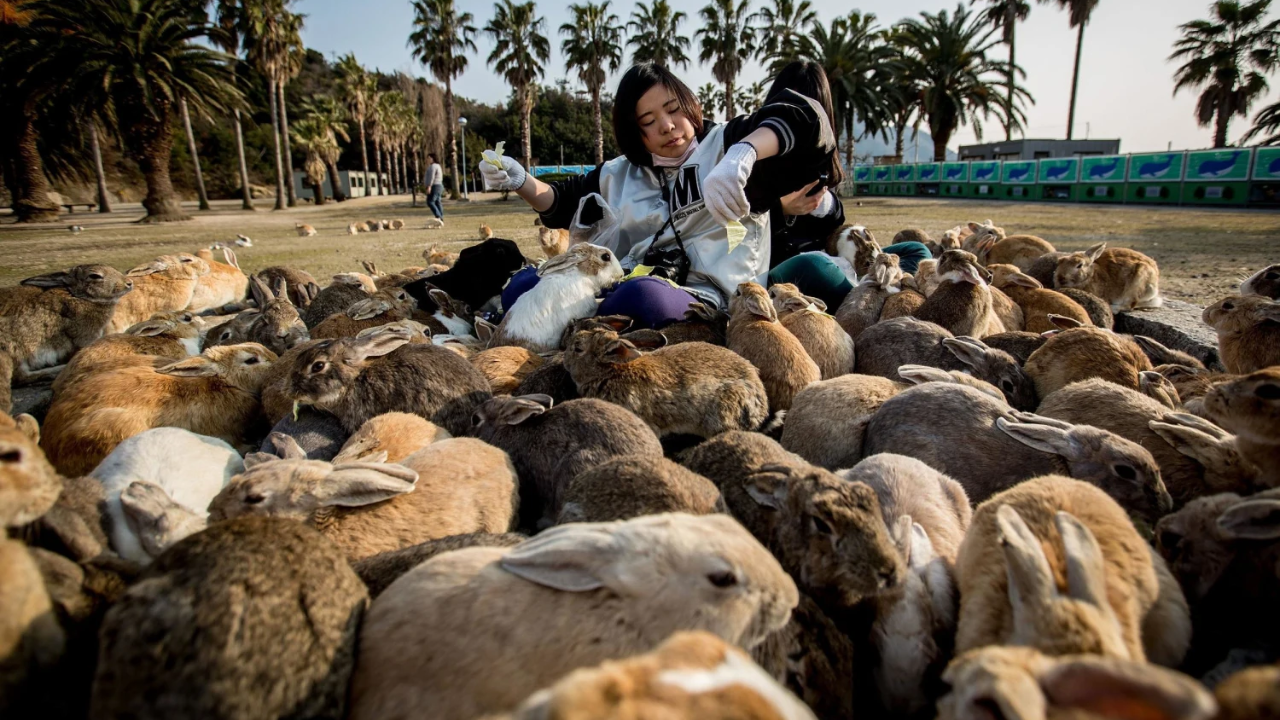
When an isolated ecosystem meets an unconstrained external caloric subsidy, the resulting trajectory follows a predictable biological collapse curve. Okunoshima, commonly designated as Rabbit Island in Hiroshima Prefecture, presents a textbook case study in ecological carrying capacity failure induced by tourism. The prevailing narrative attributes the decline of the rabbit population solely to excessive tourist feeding. That explanation ignores the structural feedback loops, multi-variable stress metrics, and systemic design flaws inherent in managing an artificial wildlife attraction.
Understanding how Okunoshima breached its natural limits requires moving past simplistic hand-wringing over carrot distribution. We must dissect the mechanics of population growth, waste accumulation, behavioral pathology, and infrastructural bottlenecks that govern tourist-animal interfaces.
The Tripartite Stress Model of Wildlife Saturation
Populations exposed to high-density human tourism do not merely grow until food runs out. They experience structural collapse driven by three distinct, compounding vectors: nutritional distortion, behavioral degradation, and environmental contamination.
1. Nutritional Distortion and Metabolic Load
Wild European rabbits rely on a foraging strategy optimized for fibrous, low-calorie vegetation, including grasses, roots, bark, and herbs. This diet provides steady energy while maintaining proper dental wear and gut motility. On Okunoshima, visitors introduce massive quantities of high-carbohydrate, high-sugar, and low-fiber domestic produce like cabbage, carrots, and commercial pellets.
This dietary shift triggers a cascade of physiological failures. High simple-sugar intake alters the gastrointestinal microbiome, precipitating fatal enteritis and gut stasis. Soft leafy vegetables lack the structural integrity required to grind down continuously growing incisors, leading to malocclusion and eventual starvation despite adequate stomach volume.
The caloric subsidy removes seasonal bottlenecks. In a natural regime, winter food scarcity stabilizes population size by causing natural mortality among the weak. Artificial feeding creates perpetual summer conditions. Reproduction continues year-round without regard for environmental carrying capacity, multiplying the generational burden on a fixed geographic area.
2. Behavioral Pathology and Density-Dependent Aggression
Carrying capacity is frequently measured in food units, but space and social tolerance impose stricter limits. Rabbits are territorial and hierarchical. Natural population densities are self-regulating through territorial exclusion and dispersal.
Okunoshima restricts spatial dispersal. The island's boundaries create a hard geographic limit, forcing unnatural proximity. As population numbers surge near ferry terminals and visitor hubs, territorial stress escalates.
Hyper-concentration around food sources replaces foraging exploration with aggressive competition. Dominant individuals monopolize tourist-supplied provisions. Weaker animals suffer bite wounds, secondary infections, and chronic cortisol elevation from constant stress. Immunocompromised by poor nutrition and social exhaustion, these populations become vectors for endemic disease outbreaks, including rabbit hemorrhagic disease virus and various parasitic infections.
3. Environmental Contamination and Waste Accumulation
Every caloric input leaves an output. Thousands of daily visitors feeding hundreds of rabbits generate organic waste streams that overwhelm the soil's natural processing capacity.
Uneaten food rots, attracting secondary pests like corvids, rats, and flies, which introduce novel pathogens to the ecosystem. Fecal accumulation spikes nitrogen and phosphorus levels in the localized soil and runoff water, altering soil chemistry and degrading native plant cover. As native vegetation dies out from trampling, chemical toxicity, and selective over-grazing, the island loses its secondary line of environmental stabilization. The habitat transitions from a diverse coastal scrubland into an eroded, barren landscape dependent entirely on imported food.
The Economic and Logistical Feedback Loop
The degradation of Okunoshima is sustained by an economic feedback loop that incentivizes the very conditions causing ecological failure.
Tourism operators, regional transport companies, and local municipalities capture economic rent from visitor volume. Ferries run at high capacities; souvenir shops sell branded rabbit feed; hotels host tourists seeking novelty interactions. The marginal revenue of an additional tourist is positive for private and municipal stakeholders, while the marginal ecological cost is externalized onto the island's wildlife and physical environment.
Management interventions routinely arrive too late and target symptoms rather than systemic drivers. Educational signage requesting that visitors use specific approved feeds or restrict feeding locations fails because it relies on voluntary compliance in a recreational setting where dopamine rewards from animal interactions override abstract environmental rules.
Physical barriers, culling programs, or strict rationing require capital investment and risk public relations backslash from international animal welfare advocates. Consequently, managers adopt a passive stance, allowing the ecosystem to oscillate between boom periods of high rabbit density and crash periods of disease and starvation.
Systemic Interventions for Island Ecological Stabilization
Reversing carrying capacity overshoot on closed island systems requires replacing moralistic appeals with hard engineering and rigorous ecological controls.
Enforced Caloric Caps
Managing animal populations in tourist zones requires treating the animal food supply as a regulated resource. Permitting open-market distribution of arbitrary foods by visitors guarantees pathology.
An optimized management framework bans outside food entirely. It replaces private feeding with centralized, automated, or ranger-managed provisioning stations that dispense nutritionally balanced, species-appropriate feed in measured quantities calibrated to support a stable target population. Once the daily caloric quota is reached, feeding stops.
Spatial Zoning and Habitat Rotations
To prevent localized environmental collapse around tourist nodes, management must introduce dynamic spatial zoning.
Pathways and viewing areas can be reconfigured using boardwalks and barriers that restrict human access to sensitive breeding and foraging zones. Rotating accessible visitor sectors allows overgrazed soil and depleted vegetation communities to undergo natural remediation and seed regeneration.
Population Regulation Mechanics
When populations exceed the biological carrying capacity of a fixed habitat, non-lethal management alone—such as contraception or relocation—frequently proves economically and logistically prohibitive given the high reproductive rates of rabbits.
A data-driven strategy establishes clear trigger thresholds based on body condition scores, disease prevalence surveys, and vegetation cover indices. If these metrics cross critical danger lines, active population management via controlled reduction must be deployed to preserve the long-term health of the remaining cohort. Allowing populations to crash through starvation and epizootic disease is an abdication of stewardship, resulting in worse animal welfare outcomes than managed intervention.
The long-term viability of Okunoshima depends on shifting the paradigm from passive exploitation of wildlife novelty to active, data-driven biosecurity and resource management. Without structural limits on caloric inputs and spatial access, the system will continue to cycle through artificial abundance followed by biological correction.