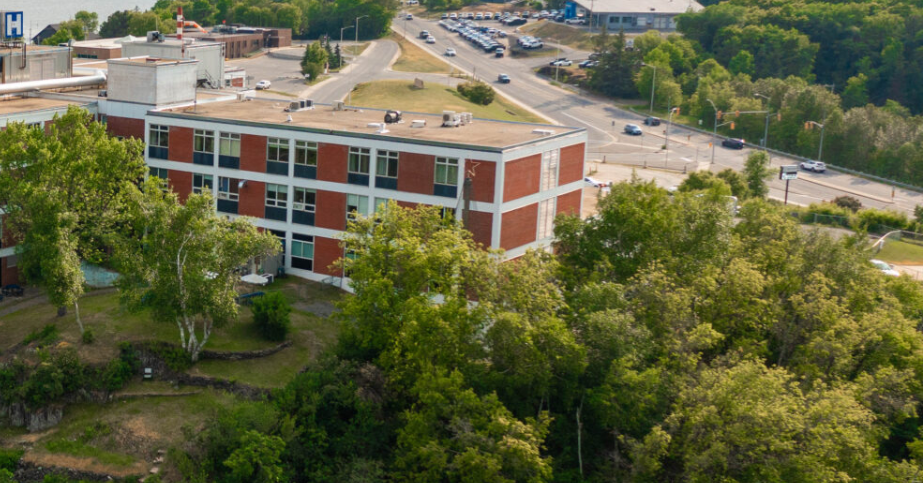
A single point of failure in a secondary utility line can compromise a regional healthcare network when infrastructure asset management lags behind structural depreciation. The critical failure at the Lake of the Woods District Hospital (LWDH) in Kenora, Ontario, demonstrates this structural vulnerability. A rupture in a one-inch supply pipe within a fourth-floor washroom effectively incapacitated 25 percent of the 81-bed facility's physical footprint, forcing the cancellation of all scheduled surgeries and requiring regional and interprovincial emergency intervention.
This operational shutdown illustrates how small, unmonitored sub-systems can trigger large-scale failures within critical infrastructure. By analyzing the fluid dynamics, spatial propagation, and operational economics of this event, we can establish a clear model for evaluating risk in aging public facilities. Also making news lately: Forty Five Days of Borrowed Time.
The Fluid Dynamics of Small-Aperture Ruptures
The tendency to minimize infrastructure risk based on the small physical size of a component ignores basic hydraulic principles. In a multi-story institutional building, utility systems must maintain high baseline municipal operating pressures to ensure consistent flow to upper levels.
[Fourth-Floor Pipe Rupture]
       │
       ▼
[High Baseline Municipal Pressure] ──► [Rapid Volumetric Discharge]
                                               │
                                               ▼
[Gravity-Driven Vertical Migration] ──► [Multi-Floor Contamination]
                                               │
                                               ▼
[Structural and Atmospheric Compromise] ◄──────┘
When a one-inch ($25.4\text{ mm}$) pipe suffers a catastrophic shear failure, the volume of water discharged is governed by the orifice flow equation: Additional insights on this are covered by USA Today.
$$Q = C_d A \sqrt{\frac{2 \Delta P}{\rho}}$$
Where:
- $Q$ represents the volumetric flow rate.
- $C_d$ is the discharge coefficient (reflecting the geometry of the rupture).
- $A$ is the cross-sectional area of the opening.
- $\Delta P$ is the differential pressure between the internal pipe environment and the atmospheric boundary.
- $\rho$ is the fluid density.
Because institutional plumbing systems typically operate at pressures between 50 and 80 pounds per square inch (psi), a complete breach in a one-inch line creates a high-velocity discharge. Within minutes, this system can release hundreds of liters of water.
Compounding this discharge rate was the location of the failure on the fourth floor. This elevation established a high gravitational potential energy gradient, driving the water downward through utility chases, electrical conduits, elevator shafts, and structural floor assemblies. This vertical migration expanded a localized plumbing failure into a multi-floor structural threat that damaged departments across every level of the facility.
Spatial Contamination and the Operational Bottleneck
The primary consequence of an internal fluid surge in a healthcare environment is not structural collapse, but the immediate loss of environmental control. Hospital operations depend on strict biosecurity and environmental parameters. Uncontrolled water intrusion violates these boundaries through three distinct mechanisms:
- Atmospheric and Microbiological Risk: Water intrusion into drywall, ceiling tiles, and insulation triggers immediate protocols for indoor air quality and mold mitigation. Porous building materials must be tested and dried or removed within 24 to 48 hours to prevent the growth of fungal spores like Aspergillus, which pose severe risks to immunocompromised patients.
- Surgical System Contamination: Operating theaters require positive pressure and sterile air filtration systems. Moisture in nearby structural walls or overhead plenums can introduce humidity fluctuations, compromising sterile packaging, damaging sensitive diagnostic imaging equipment, and invalidating cleanroom certifications.
- Physical Footprint Reduction: The loss of 25 percent of physical space directly reduces the hospital's operational capacity. In an 81-bed facility, losing a quarter of the floor plate creates immediate bottlenecks in patient flow, emergency triaging, and specialized care delivery.
The operational impact of this breakdown is evident in the immediate suspension of elective and scheduled surgeries. While the emergency department can continue running via localized containment, surgical suites require total environmental isolation. A failure in a non-clinical zone, like a washroom, can directly shut down core clinical services.
The Economics of Deferred Maintenance
The structural failure at Kenora is a direct consequence of a systemic problem facing rural infrastructure: the compounding cost of deferred maintenance. Portions of the LWDH facility date back to 1929, creating an asset profile with mismatched lifespans across structural, mechanical, and architectural systems.
The financial realities of managing an aging facility can be evaluated using a standard Facility Condition Index (FCI):
$$\text{FCI} = \frac{\text{Deferred Maintenance Deficiencies}}{\text{Current Replacement Value}}$$
A high FCI score indicates a building entering an accelerated depreciation phase, where the cost of reactive repairs outpaces planned capital improvements. In 2021, a facility condition assessment of LWDH identified $53.8 million in deferred deficiencies. While targeted provincial investments reduced this liability to $37.2 million by 2026, the remaining balance left critical vulnerabilities throughout the facility's legacy utility systems.
| Year | Total Infrastructure Deficiencies | Status of Core Facility Systems |
|---|---|---|
| 2021 | $53.8 Million | Baseline condition assessment indicates high system risk across multiple eras of construction (dating to 1929). |
| 2026 | $37.2 Million | Partial mitigation via provincial funding; legacy utility linkages remain vulnerable to localized failures. |
| 2031+ | $0.0 Million (Targeted) | Projected completion of the proposed $50-million replacement facility (All Nations Hospital Project). |
This $37.2 million deficit represents a latent liability. When capital replacement is delayed, minor components like valves, couplings, and distribution pipes operate long past their engineered service life. This increases the probability of sudden failures, turning predictable maintenance costs into unpredictable emergency expenses.
Supply Chain Realities and Regional Redundancy
The impact of the Kenora flood highlights a major vulnerability in rural healthcare delivery: a lack of geographic redundancy. In major urban centers, a localized hospital closure can be managed by diverting patients to nearby facilities within the same metropolitan footprint. In contrast, remote regions operate under severe geographic constraints.
Kenora serves a local population of 15,000, along with several surrounding First Nations communities. The nearest alternative facility capable of handling complex acute care is in Dryden, Ontario, located approximately 140 kilometers to the east. Winnipeg, Manitoba, lies over 200 kilometers to the west.
[Winnipeg, MB] <────── 200 km ──────> [Kenora, ON (LWDH)] <────── 140 km ──────> [Dryden, ON]
(Interprovincial Divert)             (25% Incapacitated)                       (Regional Backup)
This isolation makes patient diversion logistically complex and expensive. Moving care across provincial borders into Manitoba requires interprovincial billing coordination and emergency medical transport resources.
The severity of the capacity deficit is further worsened by seasonal population shifts. Kenora and the Lake of the Woods region experience significant population increases during the summer. This seasonal surge increases demand on the emergency room at the exact time the facility's baseline capacity is restricted by ongoing restoration work.
To address this gap, the hospital has had to evaluate unusual external support mechanisms. Deploying Ontario’s Emergency Medical Assistance Team (EMAT) or requesting logistical support from the Canadian Armed Forces (CAF) to set up field triage or mobile medical units emphasizes the scale of the crisis. These measures show that a minor plumbing failure in a remote area can quickly scale into a multi-jurisdictional emergency response.
Strategic Capital Allocation to Prevent Infrastructure Failures
The long-term solution for LWDH relies on capital redevelopment, specifically the planned $50-million All Nations Hospital Project. However, with design and construction timelines extending five to seven years into the future, the immediate operational challenge is preventing similar failures within the legacy structure during the transition period.
To manage risk across an aging asset portfolio during a multi-year decommissioning phase, organizations should implement an accelerated risk-mitigation framework.
First, facilities must pivot from time-based maintenance to condition-based monitoring for high-risk points of failure. This requires installing non-invasive acoustic sensors and digital flow meters on primary and secondary wet utility lines. These sensors detect micro-fissures and pressure drops before a catastrophic rupture occurs.
Second, engineering teams should establish localized isolation capabilities. Legacy institutional plumbing often lacks sufficient zone valving, meaning large sections or entire floors must be shut down to isolate a single leak. Retrofitting branch lines with automated shut-off valves tied to moisture-detection sensors ensures that fluid releases are contained to the room of origin.
Finally, organizations should run predictive operational stress tests. This involves modeling how the loss of specific building zones affects clinical workflows. By identifying these dependencies early, administrators can build localized system redundancies—such as independent HVAC filtration units and pre-arranged mobile medical partnerships—long before an infrastructure failure occurs.