The Weight of a Signature in Washington
Ink dries quickly on official stationery in Washington. A bureaucratic stamp falls. A ledger shifts. Across oceans, miles away from the mahogany desks where policy is drafted, a family sits in the fading evening light, watching the currency ticker crawl downward with the grim certainty of a tide.
They do not read the Federal Register. They do not parse the dense legal phrasing of executive orders or analyze the nuanced justifications broadcast from podiums draped in flags. They feel the outcome. Expanding on this idea, you can find more in: The Double Game Behind Qatar Rejection of American Sanctions.
When the United States Treasury widened the aperture of its financial prohibitions, adding new layers of restrictions designed to squeeze an already strained economy, the architects of the policy spoke in the clean, sterile language of deterrence. They talked about pressure points, compliance mechanisms, and strategic imperatives. But coercion has a physical address. It lives in kitchens where cooking oil has doubled in price. It lives in hospital wards where imported chemotherapy drugs sit behind customs doors, blocked by the invisible wall of secondary penalties.
Consider what happens next: the logic of escalation is rarely a straight line. It is a spiral. Experts at TIME have also weighed in on this matter.
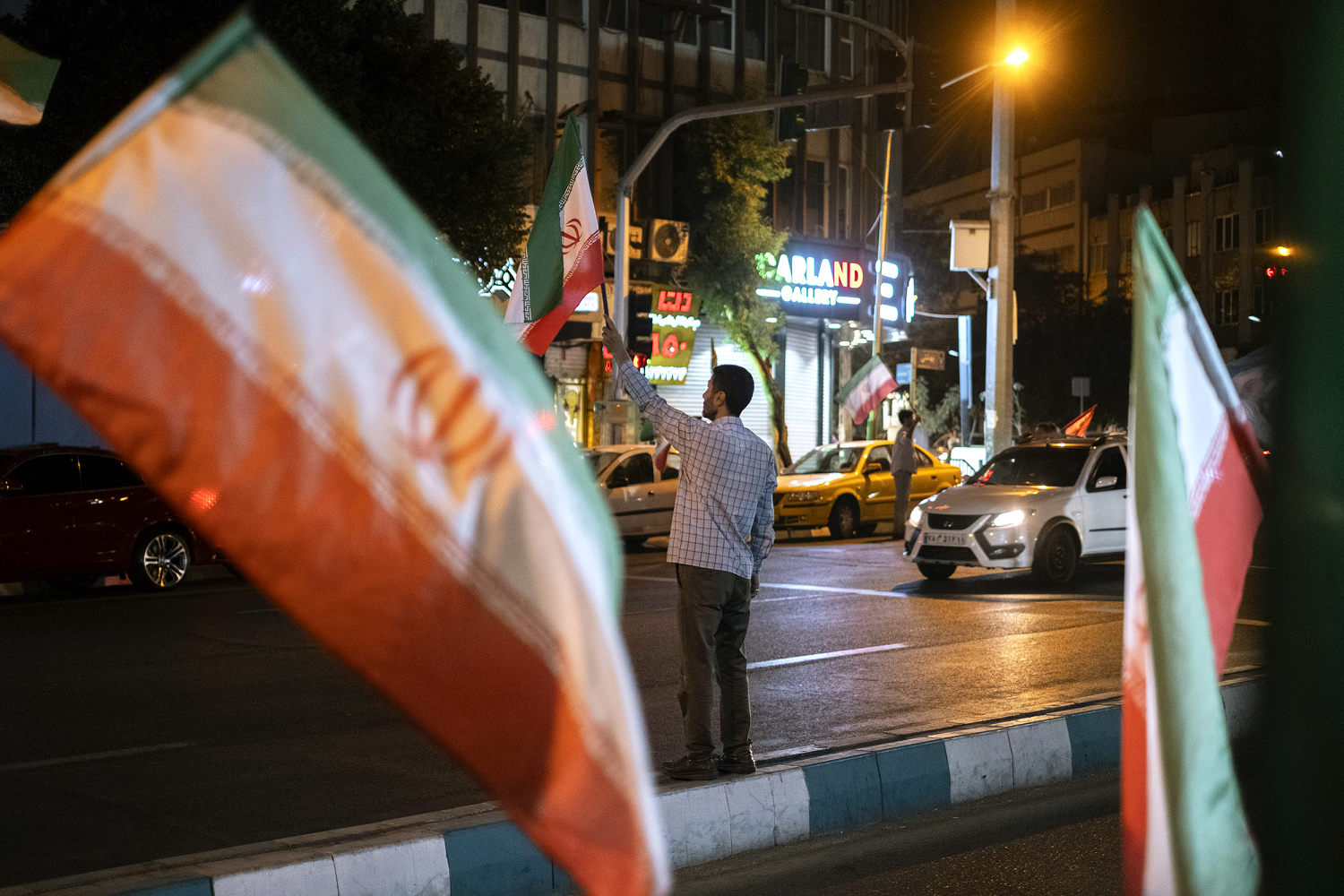
In Tehran, the response did not arrive as a quiet diplomatic note or a concession. It arrived as a vow. Retaliation. The word carries a heavy, archaic weight, evoking ancient cycles of action and reaction. Yet it is deployed in a hyper-modern arena of cyber networks, proxy maneuvers, and brinkmanship that leaves very little room for human error.
I remember the smell of sulfur and stale dust from a dusty television screen years ago, watching the dawn break over foreign capitals while commentators spoke of inevitable friction. You learn quickly that geopolitics is rarely about the grand armies moving across physical maps. It is about the friction between pride and survival. When you back a nation into an economic corner, you alter its calculus. The rational actor model breaks down. Desperation finds strange outlets.
The Arithmetic of Escalation
Sanctions are often sold as the civilized alternative to war. A bloodless weapon. A way to punish without deploying a single battalion.
History suggests otherwise.
Financial warfare is an invisible siege. It targets the baker, the student, the mechanic, and the nurse, operating on the theory that if the civilian population suffers deeply enough, they will rise up and reshape their government's foreign policy. Yet, behavioral patterns across the globe show a different human truth. When external pressure mounts, populations tend to circle the wagons. The adversary becomes the common enemy. The state tightens its grip on internal dissent, and the moderates lose the floor to the hardliners who were waiting in the wings all along.
The recent widening of U.S. restrictions targets remaining lifelines—petrochemical networks, shipping conduits, and financial intermediaries that had managed to thread the needle of previous embargoes. To the strategists in Washington, these are leaks that need plugging. To the planners in Tehran, these are existential gasping breaths.
When you choke a nation's ability to sell its primary resource, you do not convince them to surrender. You convince them that they have nothing left to lose.
And that is where the real danger begins. A cornered animal does not calculate the odds. It strikes.
The Quiet Panic on the Ground
Walk through the grand bazaars of the Middle East during a currency crisis, and you will hear a specific kind of silence. It is not the silence of peace. It is the hush of anticipation. Merchants stand behind glass counters displaying imported goods they can no longer afford to replace. They calculate their inventory in gold, not paper, because tomorrow the local currency might lose another ten percent of its purchasing power.
We talk about escalation as if it were a board game. We move pieces labeled deterrence and retaliation across virtual maps.
Meanwhile, ordinary people are just trying to buy bread.
A hypothetical shopkeeper named Reza—representing thousands of real individuals caught in this crossfire—unlocks his shutter each morning with a sinking feeling. He is not a revolutionary. He does not harbor grand geopolitical ambitions. He wants to pay for his daughter’s university tuition and keep his aging mother supplied with her heart medication. But every time a new policy memorandum is signed in a Western capital, Reza's world shrinks. The medicine becomes scarce. The tuition fee becomes a mathematical impossibility.
When the state television announces that retaliation is coming, Reza does not feel a surge of national pride. He feels a cold dread. He knows that when superpowers trade blows, the shockwaves always travel downward, crushing the pavement where ordinary people stand.
The Illusion of Containment
There is a dangerous arrogance at the heart of modern statecraft. It is the belief that you can dial pressure up or down like a thermostat.
Turn it up a notch: the adversary feels the heat, but stays at the table.
Turn it up another notch: they sweat, but comply.
Physics does not work that way, and neither does human nature. At a certain threshold, pressure transforms into structural failure. The containment strategy cracks. A proxy group launches a missile. A tanker is seized in a narrow strait. A cyberattack hits a critical infrastructure node thousands of miles away. Suddenly, the architects of the policy are scrambling to manage an escalation they insisted they could control.
We have seen this script before. It is old, worn, and deeply predictable. Yet we watch it play out again, act by act, as if surprised by the ending.
The U.S. administration expands the sanctions to send a message of strength. Iran vows a crushing retaliation to project resolve. Both sides are trapped by their own rhetoric, terrified that backing down will be read as weakness by their domestic constituents and regional rivals.
So the ratchet clicks forward. One more notch.
The Edge of the Map
We live in an interconnected world where a single bureaucratic decision in a sterile office building can trigger a chain reaction that alters the price of energy in Tokyo, the security of shipping lanes in the Persian Gulf, and the safety of families living thousands of miles from any battlefield.
The tragedy is not just the potential for open conflict, though that fear is real and pressing. The tragedy is the steady, grinding erosion of hope for millions of people who are guilty of nothing more than being born on the wrong side of a political fault line.
As the diplomatic channels grow silent and the rhetoric hardens into concrete positions, the space for dialogue vanishes. The air grows thin.
On the horizon, the sky is clear, but the air smells faintly of ozone—that strange, electric stillness that comes right before the lightning strikes.
The match is already in hand. The only question left is who will drop it first.