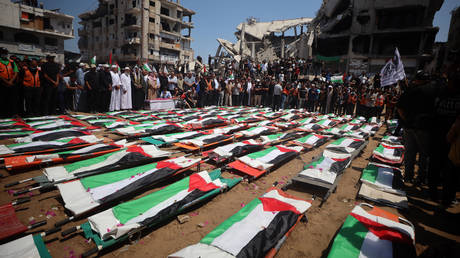
Mass casualty incidents function as acute stress tests for regional infrastructure, institutional resilience, and population dynamics. When a high-density kinetic strike occurs, the immediate aftermath triggers a cascade of systemic failures across emergency medical response networks, forensic identification protocols, and public documentation channels. Evaluating these events requires stripping away anecdotal friction to examine the exact mechanics of civilian impact, casualty processing bottlenecks, and the socio-political feedback loops that emerge when mass funerals become focal points for collective mobilization.
The Operational Mechanics of High-Density Kinetic Strikes
Understanding the structural weight of a single concentrated attack demands an analysis of ordnance delivery systems versus urban density parameters. When high-yield munitions impact enclosed residential zones, the physics of blast propagation interact directly with urban architecture to maximize structural collapse and personnel trauma.
The primary vector of destruction is not solely the initial detonation, but the secondary structural failures that follow. Concrete-reinforced masonry fails catastrophically under localized overpressure, transforming interior environments into high-velocity fragment fields. This creates a distinct injury distribution profile dominated by polytrauma, blast lung, and severe crush syndrome.
In environments characterized by restricted supply chains and degraded municipal utilities, medical triage systems face immediate saturation. The operational capacity of emergency medical services is defined by the formula of bed availability, surgical throughput, and blood product reserves. When incoming casualty volume exceeds throughput capacity by orders of magnitude, the system shifts from a curative model to a palliative triage model. Field practitioners must abandon standard protocols of aggressive intervention, prioritizing salvageable casualties while documenting resource deficits. This operational reality directly shapes the subsequent mortality curve, where secondary deaths occur not from the initial pathology, but from delayed surgical intervention and systemic shock.
The Forensic Processing Bottleneck
Following a mass casualty event, the processing of deceased individuals transforms into a critical administrative and forensic challenge. The logistical friction of identifying, documenting, and burying large cohorts of victims simultaneously strains legal, religious, and public health frameworks.
Mass funerals serve as both cultural imperatives and institutional pressure valves. In societies where traditional funerary practices mandate rapid internment, the imperative to bury the dead within strict timeframes clashes with the requirements of forensic accountability.
The Triad of Forensic Constraints
- Identification Integrity: The degradation of remains through thermal and mechanical trauma necessitates dental, fingerprint, or DNA profiling, all of which require specialized laboratory infrastructure that is frequently compromised during active conflict.
- Chain of Custody: Maintaining rigorous documentation for each body is essential for establishing legal mortality records, tracking missing persons, and preventing demographic under-reporting or over-reporting.
- Logistical Transport: Moving bodies from blast sites to central morgues and onward to designated burial sites requires coordinated fuel, vehicle, and refrigeration assets that are typically scarce under blockade or siege conditions.
When these constraints intersect with public visibility, the funeral itself becomes a structured venue for collective grief and sociopolitical cohesion. The concentration of mourners converts private bereavement into a synchronized public demonstration, altering the local information environment and solidifying communal narratives around the event.
Institutional Reporting and Data Verification
The quantification of casualties in active conflict zones relies on a fragmented ecosystem of reporting mechanisms, each subject to distinct structural biases and operational limitations. Discrepancies between local institutional counts and international oversight estimates are driven by methodological divergence rather than random error.
Local health ministries typically derive their numbers from hospital intake registries and morgue arrivals. This methodology captures immediate fatalities and those who succumb to injuries shortly after admission. However, individuals trapped beneath structural rubble who die before extraction, as well as those who bypass official medical facilities due to systemic collapse, remain uncounted in baseline hospital logs. Conversely, retrospective journalistic investigations utilize open-source intelligence, satellite verification, and witness testimonies to retroactively map impact zones, but these methods struggle to differentiate between civilian and combatant casualties in high-density urban theaters.
To evaluate data reliability, analysts must apply a triangulation model. This approach compares municipal intake records against structural damage assessments derived from synthetic aperture radar and optical satellite imagery. By measuring the volume of demolished square meters against historical population density coefficients within the specific target radius, investigators establish a statistical baseline for expected casualties. Significant deviations from this baseline indicate either reporting lag or access restrictions that impede data collection.
The Socio-Political Feedback Loop of Mass Funerals
Mass funerary gatherings exert a distinct gravitational pull on regional dynamics, functioning as amplifiers for public sentiment and catalysts for institutional realignment. From a strategic perspective, the staging of large-scale public burials creates a high-visibility media environment that projects the immediate human cost of kinetic operations onto global information networks.
The visual and numerical scale of the procession alters political calculus. When thousands of individuals congregate around a single mass interment site, the event transcends localized mourning to become a structural indicator of civic endurance. Institutional authorities, political factions, and international observers monitor these gatherings to gauge population morale, social cohesion, and the limits of civilian endurance under sustained operational stress.
This dynamic establishes a direct feedback loop between tactical military actions and strategic communications outcomes. High-casualty strikes that culminate in large public funerals accelerate the crystallization of public opinion, hardening resistance identities and shifting the diplomatic posture of external actors. The funeral acts as an empirical checkpoint where the abstract metrics of conflict manifest in tangible, visible, and numerically undeniable terms.
Resource Allocation Protocols for Mass Casualty Management
Managing the aftermath of severe urban kinetic strikes requires the implementation of standardized operational frameworks that bypass degraded bureaucratic channels. Emergency coordinators utilize tiered triage protocols to maximize resource efficiency across three distinct operational phases.
Phase One: Immediate Stabilization and Extrication
- Prioritize heavy machinery deployment to structural collapse zones with verified live acoustic signatures.
- Establish decentralized first-aid stabilization points to reduce transit time to tertiary hospitals.
- Secure perimeter access routes for ambulance transit, preventing gridlock caused by civilian congregation.
Phase Two: Forensic Logging and Documentation
- Implement standardized digital tagging systems for unidentified remains to prevent administrative loss.
- Collect and secure personal effects alongside biological samples for future familial matching.
- Standardize death certificate issuance parameters to maintain epidemiological accuracy despite infrastructural damage.
Phase Three: Communal Management and Interment
- Coordinate with community and religious leadership to streamline burial permissions without compromising forensic standards.
- Designate high-capacity burial zones equipped with municipal drainage controls to prevent environmental health hazards.
- Maintain transparent public registries of interred individuals to mitigate community anxiety regarding missing persons.
Operational success in high-fatality environments is determined by the speed at which institutional actors can transition from reactive chaos to structured processing. By treating casualty management as an engineering and logistical problem rather than a purely humanitarian response, administrative bodies can mitigate secondary public health crises and establish an unassailable evidentiary record of the event's true scope.