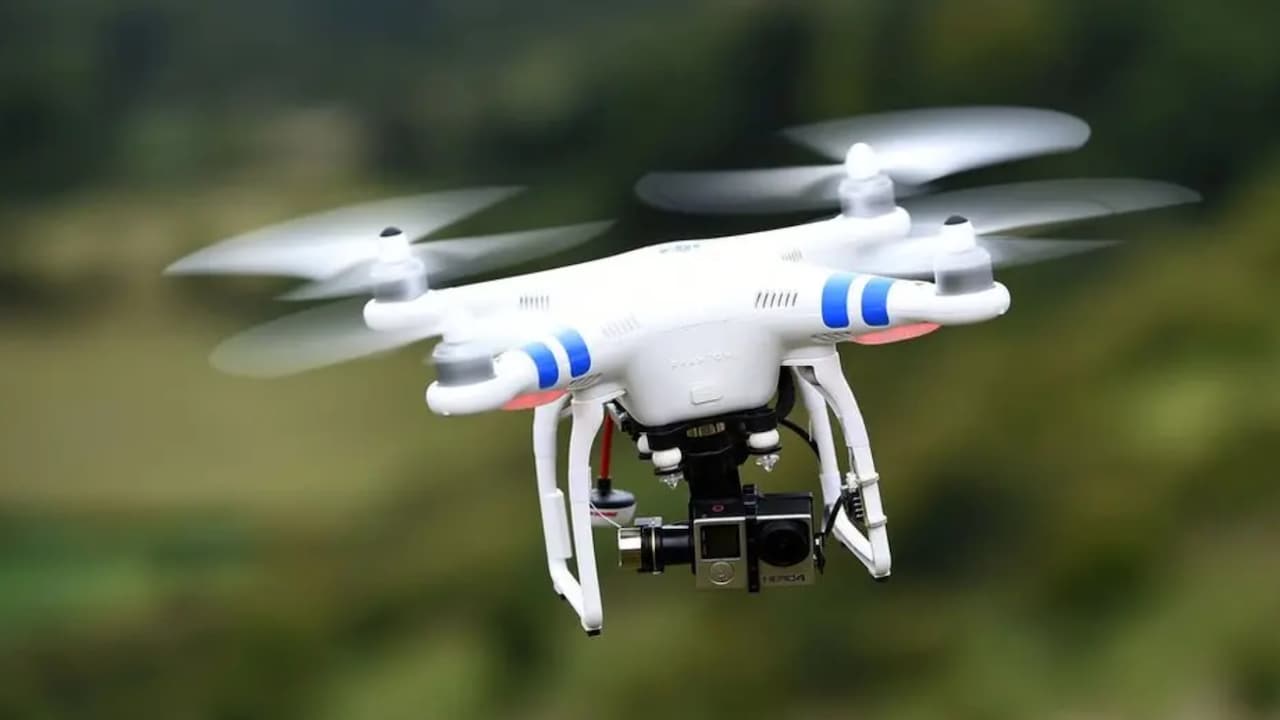
Military operations are governed by the friction of moving mass across distance. In southern and eastern Ukraine, the traditional assumption that a military force can achieve operational depth through secure, high-throughput ground lines of communication has collapsed. The deployment of structured, mid-range unmanned aerial vehicle (UAV) architectures by Ukraine’s Unmanned Systems Forces (USF) has instituted a non-linear blockade. This campaign does not rely on the physical seizure of terrain to sever supply lines; instead, it raises the operational cost function of transportation until the distribution network fractures under its own friction.
Understanding this shift requires moving past descriptions of drone technology and analyzing the structural mathematical constraints now imposed on Russian theater logistics.
The Logistic Cost Function: The Math of Deep Interdiction
The fundamental vulnerability of a mass-dominant military architecture lies in its reliance on truck-based logistics to bridge the gap between railheads and frontline tactical units. The efficiency of this system is bound by a fixed relationship between distance, cycle time, and throughput volume.
When Ukrainian mid-range drone units—such as the 414th Strike UAV Brigade and the 2nd Battalion "Wormbusters"—expanded their effective kill zone from a historical depth of 10 kilometers to an operational depth spanning 30 to 150 kilometers, they structurally altered this equation. The economic and mechanical consequences can be calculated through a simple distribution model.
Assume a logistics battalion operates a fleet of standard Ural or KamAZ cargo trucks over a set shift. The throughput capacity is governed by the following mechanics:
- Cycle Time Expansion: A distribution run over a 50-kilometer route can reliably complete three round trips within a 12-hour operational window under optimized conditions. Extending that required distance to 100 kilometers due to the forced relocation of supply depots does not merely double the transit time; it cuts the total volume delivered per vehicle by approximately 33% to 50% due to driver fatigue, maintenance overhead, and checkpoint friction.
- The Spatial Dissipation of Mass: To maintain the identical tonnage of ammunition, fuel, and rations to frontline positions at twice the distance, a logistics staff must double the absolute number of transport chassis on the road. This increases the target density within the interdiction zone, creating a self-reinforcing loop where more targets are exposed to active hunting architectures.
- The Depot Displacement Vector: Geolocated strike data indicates a systemic migration of Russian supply nodes. Fixed warehouses previously positioned within 40 kilometers of the forward line of troops have been forced back beyond the 100-kilometer threshold, notably near major border crossings like Izvaryne. This displacement shifts the logistical burden from high-efficiency short-haul shuttling to highly vulnerable long-haul convoys.
The Three Pillars of the Middle-Strike Architecture
The systematic degradation of supply lines across the southern land bridge and the Donetsk-Mariupol corridor relies on three distinct functional layers within Ukrainian drone organizations. Rather than deploying singular assets in isolation, the USF utilizes a layered stack designed to bypass counter-measures.
Phase 1: Electronic Warfare and Air Defense Suppression
The prerequisite for sustained interdiction is the creation of localized corridors of technical dominance. Specialized units, including the 1st USF Center, dedicate early-wave sorties exclusively to mapping, blinding, and destroying mobile electronic warfare (EW) nodes and short-range air defense systems (such as Tor and Pantsir complexes). By neutralising the radar arrays and directional jamming units that protect transport routes, the airspace is opened for deep-penetration assets.
Phase 2: Autonomous Mid-Range Penetration
Once an electronic corridor is established, mid-range strike assets are introduced. To counter terminal signal degradation—the loss of radio connectivity when a drone descends close to the horizon to strike a vehicle—autonomous flight frameworks are heavily utilized.
Systems like the domestically produced Hornet utilize optical navigation and onboard computer-vision algorithms. These platforms fly via pre-programmed coordinates using visual telemetry rather than satellite signals, rendering GPS-jamming ineffective. When the drone detects a target matching the structural profile of a fuel tanker or ammunition truck, internal guidance tracking takes over, eliminating the need for a continuous operator link.
Phase 3: The Persistent Surveillance and Relay Network
The range of strike platforms is mechanically extended through the use of tethered or high-altitude aerial relays, including specialized balloon-assisted communication nodes. These assets remain elevated outside the immediate engagement zone of Russian tactical air defenses, acting as line-of-sight signal repeaters. This network topology allows operators situated 30 kilometers behind friendly lines to maintain positive control over strike assets maneuvering deep within enemy territory, optimizing target acquisition against moving convoys.
Counter-Measures and Technical Bottlenecks
No military strategy operates in a vacuum. The current state of logistics interdiction is defined by rapid, iterative adaptation cycles. Russian forces have deployed several structural modifications to mitigate transport losses along major arteries like the E58 and E105 highways:
- Convoy Dispersion and Escort Protocols: Standard multi-vehicle logistics columns have been largely banned in high-threat sectors. Movement is restricted to individual vehicle dashes or micro-convoys escorted by mobile fire support groups equipped with truck-mounted electronic jamming systems and open-bore automatic shotguns.
- Passive Physical Shielding: The structural modification of logistics routes includes installing overhead wire netting structures across vulnerable highway segments to pre-detonate incoming first-person view (FPV) and mid-range loitering munitions before they impact soft-skinned vehicles.
- Camouflage and Decoy Proliferation: The ratio of real logistics assets to static or mobile decoys has been adjusted to force the expenditure of expensive Ukrainian precision munitions on low-value targets.
Conversely, the Ukrainian interdiction model faces its own severe structural constraints. The primary vulnerability is capital and supply-chain continuity. While Ukraine’s domestic production capacity is estimated to reach five to six million systems annually, a significant percentage of this capability remains unexecuted due to capital deficits.
The strategy is heavily dependent on external financing, such as European Union loan frameworks, to secure raw components, specialized optical sensors, and unjamable microchips. Furthermore, reliance on global commercial component pipelines introduces systemic supply-chain fragility, as critical manufacturing inputs remain vulnerable to shifting export regulations.
The Structural Realignment of the Frontline
The cumulative effect of this interdiction campaign is not defined by a single catastrophic collapse of the front, but rather by the progressive imposition of operational paralysis. By targeting locomotives, fuel tankers, and logistical hubs across the occupied south, the USF is enforcing a localized logistics lockdown.
When the input volume of critical supplies falls below the daily consumption rate of an army corps, tactical options contract. Artillery units are forced into strict ammunition rationing, limiting their ability to suppress counter-battery operations. Mechanized units must conserve fuel, restricting tactical maneuverability and rendering them static defensive fixtures.
The ultimate strategic play of this campaign is to strip the opposing command of operational initiative. By using autonomous mid-range unmanned systems to structurally increase the friction of transportation, the theater is converted into a series of isolated logistics islands, setting the baseline conditions for localized territory reclamation without requiring symmetric mass.


