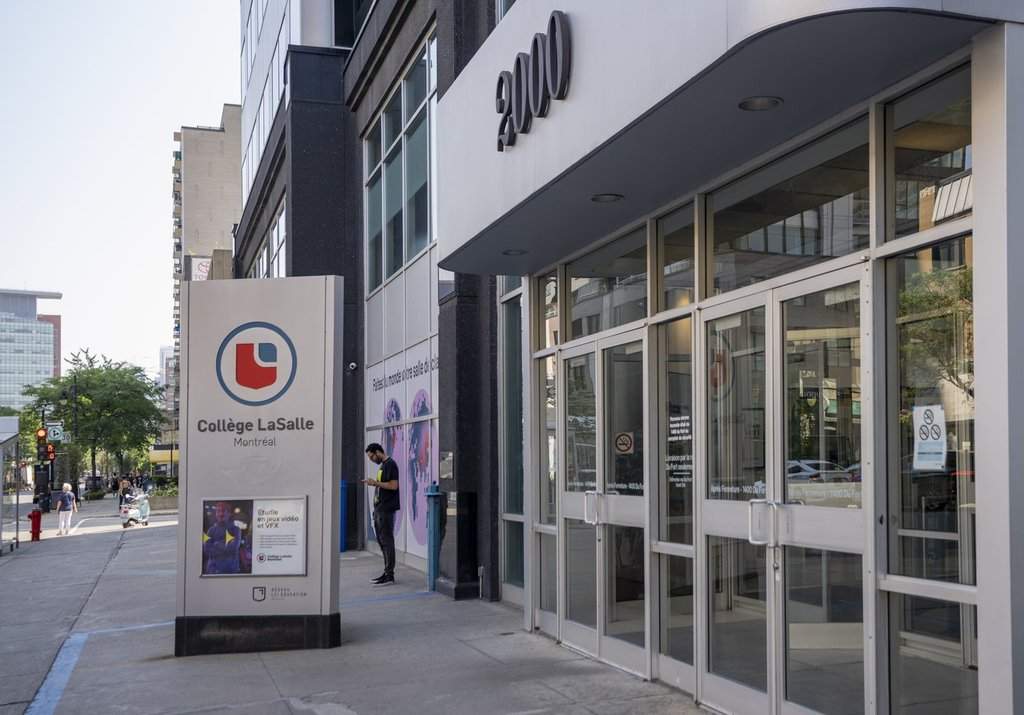
The intersection of state regulatory enforcement and private educational finance creates acute vulnerability when compliance parameters shift faster than institutional cash conversion cycles. When Quebec Superior Court Justice Martin Castonguay prolonged creditor protection for LaSalle College under the Companies Creditors Arrangement Act, the ruling exposed the brittle economics of private higher education operating under sudden statutory quota contractions. The institution faces a cumulative debt liability approaching forty-eight million dollars owed primarily to the provincial government, split between approximately thirty million dollars in penalties for statutory over-enrolment in English-language programs and nearly eighteen million dollars in retroactive subsidy clawbacks.
To evaluate how an established private college with sixty-seven years of operating history reached this liquidity threshold, one must deconstruct the financial mechanics of the crisis into three distinct operational vectors: regulatory shocks, working capital depletion, and structural fixed-cost rigidity. Learn more on a connected topic: this related article.
The Regulatory Shock Vector and Quota Asymmetry
Private post-secondary institutions in Quebec operate within a heavily regulated jurisdictional framework governed by the Ministère de l Enseignement supérieur. In 2023, the provincial government instituted strict enrolment caps targeting English-language programs, specifically affecting Attestation of College Studies tracks.
The structural failure occurred because enrolment pipelines in higher education operate on long-term lead times. Student acquisition, international recruitment cycles, and curriculum planning require commitments twelve to eighteen months in advance. When the state imposed retroactive and concurrent caps, LaSalle College found itself over-enrolled relative to the new statutory limits by 716 students in the 2023-2024 academic cycle and 1,066 students in the 2024-2025 cycle. More analysis by Reuters Business highlights related perspectives on this issue.
The penalty function applied by the state was linear and punitive: approximately $8.8 million for the first violation tier and $21.1 million for the second. Compounding this, the province executed a final reconciliation of the 2025-2026 academic year subsidies, reducing the initial allocation from $29.2 million down to $11.9 million, which produced an immediate seventeen-million-dollar clawback demand. This dynamic illustrates a regulatory hazard where compliance failure does not merely halt growth; it actively confiscates operational capital generated by past cohorts.
The Balance Sheet Liquidity Squeeze
The financial statements of LaSalle College for the fiscal year ending June 30, 2026, reveal the classic symptoms of structural insolvency driven by working capital starvation. Total revenues contracted sharply from $71.9 million to $51.1 million year-over-year, widening the annual operating deficit from $8.9 million to $11.8 million.
This top-line contraction was dual-sourced. Domestically, provincial quota restrictions choked English-language enrolment. Internationally, federal study permit caps introduced in January 2024 disrupted a vital revenue channel where foreign students historically accounted for roughly thirty-five percent of the student body. Foreign cohorts traditionally subsidize domestic program delivery through differential tuition pricing. When foreign enrolment dropped, the internal cross-subsidization model collapsed.
By late August 2026, the balance sheet exhibited extreme stress:
- Total assets stood at approximately $29.5 million against liabilities of $50.5 million.
- Liabilities included $32.4 million in subsidies payable, $8.7 million in deferred tuition revenue, and $5.0 million in accrued salaries and benefits.
- Unrestricted cash reserves plummeted from $1.7 million at the close of June to a negligible $100,000 by August 20.
Without secured debt holders threatening immediate foreclosure, the primary creditor became the state itself. This created a bilateral monopoly where the debtor depended entirely on state-allocated subsidies to function, while the creditor held the power to withhold those very funds through penalty offsets.
The CCAA Mechanism as a Strategic Delay
Filing under the Companies Creditors Arrangement Act halts all creditor actions, providing a legal protective bubble to stabilize operations. For LaSalle College, this intervention averted the immediate cancellation of the Fall 2026 term for approximately 3,000 registered students and preserved 283 direct jobs.
During the initial protection period, the parent network LCI Education deployed intercompany liquidity support, arranging up to $2.3 million in advances with lender consent to fund the immediate operational runway. Meanwhile, restructuring advisors from Deloitte and financial consultants from Raymond Chabot mapped out capitalization strategies.
The court-ordered continuation of classes and the maintenance of the preliminary 2026-2027 subsidy allocation—estimated at $31.8 million—prevented the immediate cash-flow zero-point. However, court protection is a temporal asset, not a solvency solution. The underlying debt obligations remain intact unless altered by judicial review or political settlement.
Strategic Outlook and Restructuring Parameters
The resolution of this solvency crisis depends on two non-financial variables outside standard corporate control: judicial outcomes regarding the legality of the retroactive penalties and political shifts resulting from upcoming provincial electoral cycles.
Management cannot cost-cut its way out of a forty-eight-million-dollar liability imposed by regulatory fiat. Operational efficiency measures, administrative staff reductions, and campus footprint optimization can reduce the baseline burn rate, but they cannot absorb a penalty magnitude nearly equal to total annual revenue.
The strategic path forward requires decoupling historical penalties from prospective operating subsidies. Institutional continuity relies on securing a multi-year settlement framework that amortizes compliance fines against future performance metrics rather than executing immediate cash offsets. If the provincial administration refuses to adjust its recovery terms, private equity recapitalization via the LCI Education network remains the sole mechanism to clear the state ledger, transforming short-term regulatory debt into long-term subordinated capital.