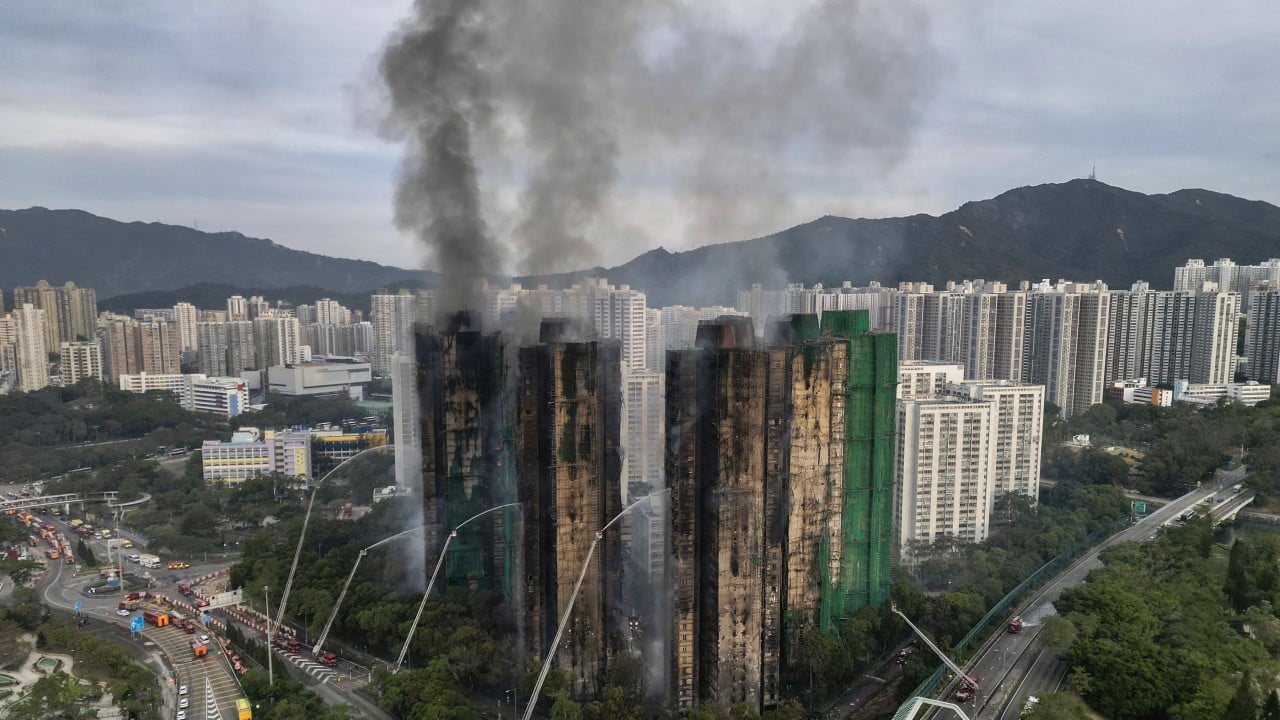
When a fatal urban fire exposes systemic regulatory failure, municipal administrations face a binary choice between cosmetic personnel changes and structural statutory reform. The reported decision to hold at least one senior official accountable for the deadly Tai Po fire, framed as part of a broader package of aggressive reforms, represents a classic crisis-management maneuver in public administration. To understand whether this intervention will prevent future casualties or merely absorb public outrage, one must separate individual administrative liability from the structural mechanics of urban fire safety enforcement.
The Architecture of Administrative Accountability
In complex municipal bureaucracies, particularly within high-density jurisdictions like Hong Kong, public safety failures rarely stem from a single point of negligence. Instead, they emerge from the intersection of fragmented jurisdiction, legacy infrastructure, and misaligned enforcement incentives. When an executive leadership group announces that a senior official will "take the rap," it is deploying a specific governance mechanism: centralized culpability.
This mechanism operates on two distinct levels:
- Political Pressure Valve: High-casualty events create an immediate legitimacy deficit for the governing apparatus. Assigning blame to a senior bureaucrat demonstrates responsiveness to public demand for justice, halting the upward contagion of political liability toward the chief executive or cabinet level.
- Deterrence Signaling: Removing or disciplining a high-ranking official alters the risk calculus for peer directors across other departments. It signals that passive compliance with outdated safety protocols carries career-ending personal risk.
The limitation of centralized culpability lies in its diagnostic inaccuracy. In bureaucratic theory, specifically within the framework of Normal Accident Theory developed by Charles Perrow, tightly coupled systems with complex interactions inevitably produce failures when safety margins erode over time. If a senior official is removed without dismantling the operational bottlenecks that allowed fire hazards to accumulate in Tai Po, the incoming replacement inherits the exact same institutional vulnerabilities. Accountability becomes a personnel transaction rather than an operational fix.
The Three Pillars of Municipal Fire Safety Failure
Evaluating the efficacy of any proposed reform package requires mapping the underlying failure modes common to older suburban and urban districts like Tai Po. Historically, fatal fires in mixed-use and aging residential structures are driven by three compounding variables:
- Regulatory Grandfathering and Statutory Drift: Building codes evolve faster than the physical stock of a city. Structures erected decades ago often remain legally compliant under legacy ordinances that lack modern requirements for compartmentalization, sprinkler retrofitting, or non-combustible facade materials. When municipal departments fail to bridge the gap between historical building standards and contemporary occupancy loads, statutory drift occurs. The building is legal on paper, yet lethal in practice.
- Siloed Inspection Regimes: Fire safety in dense districts falls across multiple bureaucratic boundaries. Fire services oversee suppression readiness and egress clearance; buildings departments regulate structural alterations and unauthorized subdivisions; home affairs or district offices manage community liaison and building management corporations. When these agencies operate on separate data architectures without unified inspection triggers, a violation noted by one inspector fails to generate an enforcement mandate for another.
- The Enforcement Cost Function: Inspection regimes are constrained by finite human capital. When the ratio of aging structures to certified inspectors drops below a critical threshold, departments shift from proactive, randomized auditing to reactive, complaint-driven enforcement. Reactive enforcement guarantees that high-risk, unmaintained properties—often those lacking active owners' corporations—remain invisible to regulators until a catastrophic failure occurs.
Deconstructing "Bold" Reforms
The designation of upcoming policy shifts as "bold" serves a clear communications objective, yet in public policy execution, boldness must be measured by shifts in statutory authority and capital allocation rather than rhetorical intensity. True structural reform in post-fire governance manifests through specific, verifiable changes to the regulatory operating system.
First, reform requires statutory retroactivity. Voluntary compliance programs for fire safety upgrades in older buildings consistently fail due to collective action problems among fragmented property owners. If a reform package does not empower the government to execute mandatory safety upgrades—such as installing automated fire suppression systems or sealing compromised fire doors—and subsequently recover costs through property liens, the physical risk profile of the district remains unchanged.
Second, genuine reform demands cross-departmental liability sharing. Under traditional bureaucratic structures, a department head is penalized only for failures strictly within their statutory lane. A structural reform eliminates the defense of jurisdictional boundaries. By establishing a unified command structure for high-risk buildings, the failure to remediate a known fire hazard becomes a shared metric across the Buildings Department, the Fire Services Department, and district governance bodies.
Third, the inspection model must transition from periodic manual checks to continuous risk-weighted triage. Relying on annual or multi-year physical walkthroughs cannot keep pace with rapid, unauthorized interior modifications, such as subdivided flats that obstruct escape routes and overload electrical circuits. Effective reform integrates utility consumption anomalies, property transaction records, and historical violation data to direct inspectors to the highest-probability failure sites before ignition occurs.
Known Facts Versus Institutional Hypotheses
When analyzing early reports of pending disciplinary actions and reform rollouts, maintaining strict epistemic discipline prevents misreading political signaling as operational reality.
Established Realities:
- A fatal fire occurred in Tai Po, resulting in significant loss of life and triggering an intensive investigation into both the immediate cause of ignition and the broader regulatory environment.
- Senior government leadership has acknowledged systemic shortcomings sufficient to warrant both high-level personnel accountability and a formal policy overhaul.
- The administrative apparatus possesses the legal authority to discipline, demote, or terminate senior civil servants, as well as the legislative capacity to introduce amendments to fire safety and building management ordinances.
Analytical Hypotheses:
- The selection of a senior official for disciplinary action is likely tied to documented lapses in supervisory oversight—such as unexecuted inspection mandates or ignored warning flags—rather than direct operational involvement on the day of the incident.
- The forthcoming reform package will likely emphasize accelerated enforcement timelines, increased penalties for non-compliant property owners, and enhanced inter-departmental task forces, as these measures offer the highest visibility within a compressed political timeframe.
- Without a corresponding increase in technical headcount and capital subsidies for low-income property owners, stricter enforcement mandates risk creating an implementation bottleneck where thousands of buildings are declared non-compliant without a viable path to remediation.
The Mechanics of Bureaucratic Scapegoating vs. Systemic Learning
There is an inherent tension between punitive accountability and institutional learning. In high-reliability organizations—such as commercial aviation or nuclear power generation—incident investigations prioritize root-cause analysis over individual blame. When the primary institutional response to a disaster is punitive, mid-level managers and frontline inspectors react defensively. They prioritize procedural compliance and paper-trail generation over substantive risk mitigation, a phenomenon known in organizational behavior as defensive bureaucracy.
If the disciplining of a senior official in the wake of the Tai Po fire is executed without protecting frontline whistleblowers and inspectors who report systemic resource deficits, the reform will backfire. Inspectors will focus on easily documented, minor infractions to inflate enforcement metrics while avoiding complex, legally entangled properties where the actual lethality risk resides.
Conversely, if the removal of a senior leader is paired with the dismantling of the administrative barriers that prevented decisive action prior to the fire, the move establishes a new operational baseline. It demonstrates that senior leadership is accountable not merely for following existing rules, but for updating those rules when real-world urban conditions render them obsolete.
Strategic Execution for Post-Crisis Governance
To convert the political momentum of a high-profile disciplinary action into measurable reductions in urban fire mortality, the administration must execute a precise sequence of operational interventions rather than relying on broad legislative pledges.
- Audit the Unincorporated Building Stock: Immediately isolate all residential and mixed-use structures in Tai Po and comparable districts that lack functioning owners' corporations. Deploy government-contracted engineering teams to execute mandatory fire-door, egress, and electrical-riser remediations within a fixed 180-day window, bypassing voluntary compliance delays.
- Establish a Single-Point Regulatory Ledger: Consolidate all building alteration records, fire inspection reports, and district complaint logs into a single, mandatory digital ledger accessible to all enforcement agencies. Eliminate the administrative friction that allows structural hazards to fall between departmental mandates.
- Tie Senior Executive Compensation and Tenure to Leading Indicators: Shift the evaluation metrics for department directors away from lagging indicators (such as post-incident response times) and toward leading indicators (such as the percentage reduction in unresolved high-risk fire safety directions within aging building cohorts).
Personnel changes at the top of a bureaucracy provide a necessary shock to an inertial system, but they do not alter the physics of fire or the economics of urban maintenance. The ultimate measure of the Tai Po reforms will not be the seniority of the official who steps down, but the speed at which statutory enforcement penetrates the city's most vulnerable buildings.