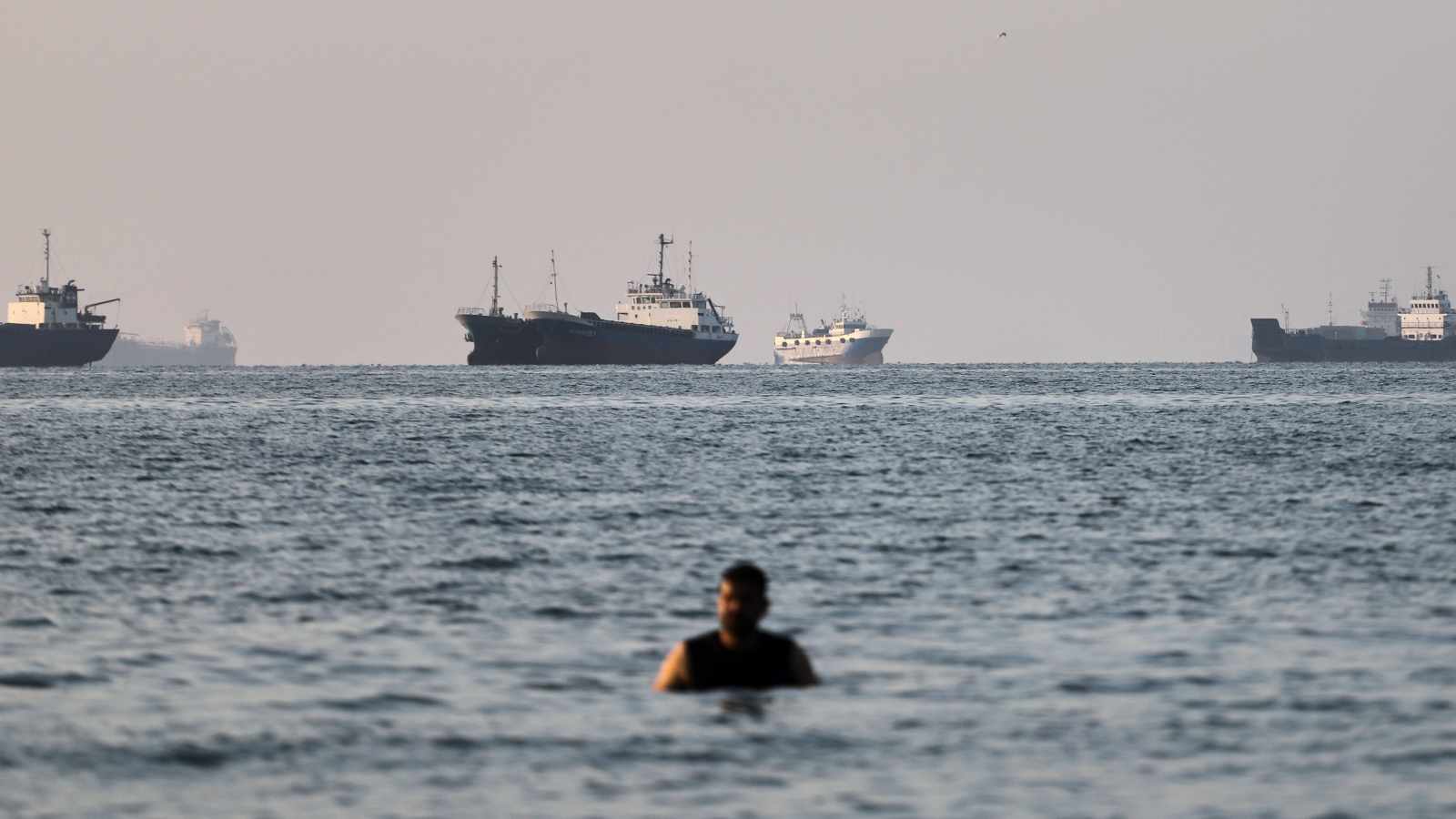
The blockade of the Strait of Hormuz has forced a fundamental recalculation of energy logistics, upending the historic reliance on the world's most vulnerable maritime chokepoint. When the conflict effectively closed the waterway, standard maritime transit protocols became obsolete overnight.
For the United Arab Emirates, this disruption exposed a critical vulnerability: despite controlling immense subterranean reserves, physical custody of unrefined crude yields zero economic value if it remains trapped behind a geopolitical blockade.
The UAE's response is an aggressive infrastructure expansion engineered to decouple its export capacity from the geographical reality of the Persian Gulf. By fast-tracking the West-East 1 pipeline and expanding deepwater port infrastructure at Fujairah, Abu Dhabi is executing a highly calculated infrastructure arbitrage strategy.
This operational blueprint establishes an overland bypass mechanism, shifting the logistics game from vulnerable littoral waters to fortified inland conduits.
       [Habshan Onshore Extraction Fields]
                       │
         ┌─────────────┴─────────────┐
         ▼                           ▼
[ADCOP Pipeline]            [West-East 1 Pipeline]
(1.8M bpd Operational)      (1.8M bpd Under Construction)
         │                           │
         └─────────────┬─────────────┘
                       ▼
         [Fujairah Deepwater Terminal]
         (Direct Access to Gulf of Oman)
The Logistics of Chokepoint Arbitrage
The physics of global energy logistics dictate that maritime shipping is the most cost-effective method of bulk transport, right until a kinetic conflict introduces prohibitive insurance risk or physical asset destruction.
The Strait of Hormuz historically handled roughly 20% of global seaborne petroleum products. Its closure creates a massive supply-side bottleneck. The UAE's strategy relies on a multi-layered bypass framework that re-routes crude overland to the Gulf of Oman, preserving export continuity to major Asian markets like India.
1. Midstream Conduits: Redoubling Throughput
The cornerstone of the bypass framework is the scaling of midstream transportation capacity. The existing Abu Dhabi Crude Oil Pipeline (ADCOP), known as the Habshan-Fujairah pipeline, spans 252 miles across the country's interior.
It originates at the Habshan extraction fields and terminates at the Port of Fujairah. This 48-inch diameter pipeline features three pumping stations designed to maintain flow pressure across varied terrain.
The current system possesses a maximum operational capacity of 1.8 million barrels per day (bpd). This volume was insufficient to handle the UAE's pre-conflict production, which hovered around 3.4 million bpd.
To close this operational deficit, Abu Dhabi state planners fast-tracked the construction of a parallel conduit: the West-East 1 pipeline. Scheduled for full integration by 2027, this asset will deliver an additional 1.8 million bpd of capacity.
This project effectively doubles the country's strait-free overland export capacity to 3.6 million bpd, allowing the UAE to insulate its core export volumes from maritime blockades.
2. Downstream Buffering: Storage and Loading Facilities
Overland pipelines are entirely dependent on the processing capacity of their endpoints. If the receiving terminal cannot ingest, store, or load the incoming volumes, the entire midstream system experiences a hydraulic backup.
The Port of Fujairah serves as the vital endpoint of this network. To prevent processing bottlenecks, the Abu Dhabi National Oil Company (ADNOC) has heavily invested in massive onshore storage facilities and offshore Very Large Crude Carrier (VLCC) loading berths.
- Onshore Storage Matrix: Deep rock caverns and conventional tank farms at Fujairah allow for structural inventory buffering. This storage volume enables continuous pipeline operations even when adverse weather or minor security events delay tanker berthing.
- Deepwater Terminals: The Gulf of Oman coast offers immediate access to deep water, removing the draft limitations found in shallow Persian Gulf ports. Tankers can load directly from subsea pipeline terminals without navigating restricted channels.
3. Non-Oil Freight Diversification
The chokepoint evasion strategy extends past liquid hydrocarbons. A complete blockade cuts off containerized commercial trade and essential food imports.
To counter this broader vulnerability, DP World and AD Ports Group are expanding container handling capabilities at Fujairah. By linking these eastern terminals to the newly operational Emirates Railway network, the UAE can move consumer goods and industrial supplies overland directly to Dubai and Abu Dhabi, completely bypassing the Western maritime route.
Macroeconomic Friction and Post-OPEC Realities
The execution of this infrastructure plan aligns directly with a major shift in regional geopolitics. The UAE's formal exit from the Organization of the Petroleum Exporting Countries (OPEC) signaled a total shift in its economic philosophy.
Under the previous framework, Saudi-led production quotas restricted the UAE from maximizing the return on its heavy upstream capital investments.
| Operational Metric | Pre-Conflict Baseline | Current Conflict Phase | Target Capacity (2027) |
|---|---|---|---|
| Total Production Capacity | 3.4M bpd | 4.85M bpd | 5.0M–6.0M bpd |
| Strait-Free Pipeline Export Capacity | 1.8M bpd | 1.8M bpd | 3.6M bpd |
| OPEC Production Constraint | Strict Quotas | Exempt (Exit) | Market-Driven |
By cutting ties with the cartel, the UAE freed its production targets from external constraints. The state is pushing upstream capacity toward 5 million bpd, with a long-term surge capability of 6 million bpd.
The primary limit on this strategy is not reservoir physics or drilling speed; it is the physical throughput limit of the alternative export infrastructure. Until the West-East 1 pipeline achieves operational status, a significant portion of production capacity remains constrained by the capacity of the original ADCOP line.
To bridge this operational deficit, shipping networks are using tactical maritime workarounds. Marine intelligence data indicates that the UAE uses its proprietary fleet of tankers alongside high-risk independent operators running "dark" vessels—transiting the Strait of Hormuz with automated identification system (AIS) transponders deactivated.
This tactic accepts high freight insurance premiums to move remaining volumes that exceed current pipeline throughput capacities.
Vulnerabilities of the Overland Paradigm
The strategic thesis that overland pipelines remove geopolitical risk contains a major flaw. Shifting transport from the sea to the land does not eliminate vulnerability; it alters the nature of the threat.
A fixed pipeline is a static, linear asset spanning hundreds of kilometers of unpopulated terrain. It presents a predictable target for asymmetrical kinetic strikes.
The start and end nodes of the UAE network remain highly vulnerable. Drone and missile attacks have targeted the gas-processing infrastructure at the Habshan origin point and damaged shipping infrastructure at the Port of Fujairah.
A single successful strike on a critical pumping station or an onshore storage tank farm can halt a 1.8 million bpd stream just as effectively as a naval blockade.
The second limitation is the mathematical mismatch between total upstream capacity and total bypass capacity. Even when the West-East 1 pipeline reaches its full 3.6 million bpd design capacity, a 1.4 million bpd deficit persists relative to the country's 5 million bpd production goal.
This structural gap means that total economic insulation from the Hormuz chokepoint is an impossibility under current infrastructure constraints.
The final strategic play for the UAE requires an immediate transition from a single-nation asset model to an integrated regional grid. To eliminate the remaining 1.4 million bpd export deficit and distribute kinetic risk, Abu Dhabi must negotiate cross-border connections linking the Habshan network directly into Saudi Arabia’s East-West pipeline system.
By creating a unified overland network capable of routing crude interchangeably between Fujairah on the Gulf of Oman and Yanbu on the Red Sea, the Gulf nations can establish an infrastructural defense network. This network would degrade the strategic utility of any maritime blockade, shifting the economic advantage firmly back to the producers.