Diplomatic architecture built during active military friction relies heavily on structural ambiguity to survive initial implementation. When the United States and Iran executed a memorandum of understanding on June 18, 2026, targeting regional conflict termination, the architecture contained built-in vulnerabilities. By examining Iranian President Masoud Pezeshkian's subsequent assertions regarding regional destabilization by external actors, analysts must deconstruct the mechanics of stalled diplomatic frameworks rather than accept rhetorical framing at face value.
The trajectory of the June 18 agreement illuminates recurring failure modes in bilateral crisis management. The text established a sixty-day operational window for concluding definitive terms, terminating on August 17, 2026. Instead of convergence, the expiration of this window coincided with hardening positions, mutual accusations of market manipulation in global energy sectors, and kinetic friction points around maritime choke points like the Strait of Hormuz. For a different look, see: this related article.
The Three Structural Failure Points of Bilateral Memorandums
Verification asymmetry remains the primary driver of diplomatic collapse in high-stakes negotiations. When two hostile states sign a preliminary framework without immediate, third-party verification mechanisms, each side evaluates compliance through a worst-case lens.
- Enforcement Deficits: Without an independent monitoring apparatus to track troop postures or maritime transit security in real time, minor tactical skirmishes are interpreted as strategic breaches of faith.
- Divergent Chronologies: Staged implementation schedules create immediate friction when party A expects behavioral modification before economic relief, while party B demands structural sanction removal as a precondition for operational halts.
- Domestic Veto Actors: Internal security apparatuses, such as the Islamic Revolutionary Guard Corps or regional allied networks, operate on separate decision-making loops that frequently subvert diplomatic channels to preserve institutional relevance.
Pezeshkian's framing of the memorandum as a barrier against United States and Israeli destabilization efforts relies on an implicit deterrence theory. From Tehran's perspective, institutionalizing a bilateral text creates international legal scaffolding that raises the political cost of renewed military action. However, deterrence models fail when the baseline definitions of security differ irreconcilably. Washington evaluates stability through the lens of non-proliferation benchmarks and maritime transit freedom, whereas Tehran prioritizes sovereign immunity from external coercion and the lifting of financial restrictions. Further reporting on this trend has been shared by TIME.
Quantifying Regional Friction Costs
Economic and logistical fallout from prolonged diplomatic paralysis follows a predictable mathematical progression. Shipping insurance premiums across West Asian transit corridors scale non-linearly with each security escalation. Energy market volatility reacts instantly to rhetoric from foreign ministries, turning diplomatic stagnation into an inflationary tax on global supply chains.
The strategic play moving forward requires abandoning open-ended memorandums in favor of micro-transactional diplomacy. Both capitals must decouple broader regional disputes from immediate maritime navigation protocols to prevent total systemic collapse. Establishing a localized, unpublicized de-confliction hotline focused exclusively on the Strait of Hormuz bypasses grand political posturing and addresses the immediate material friction points driving military readiness on both sides.
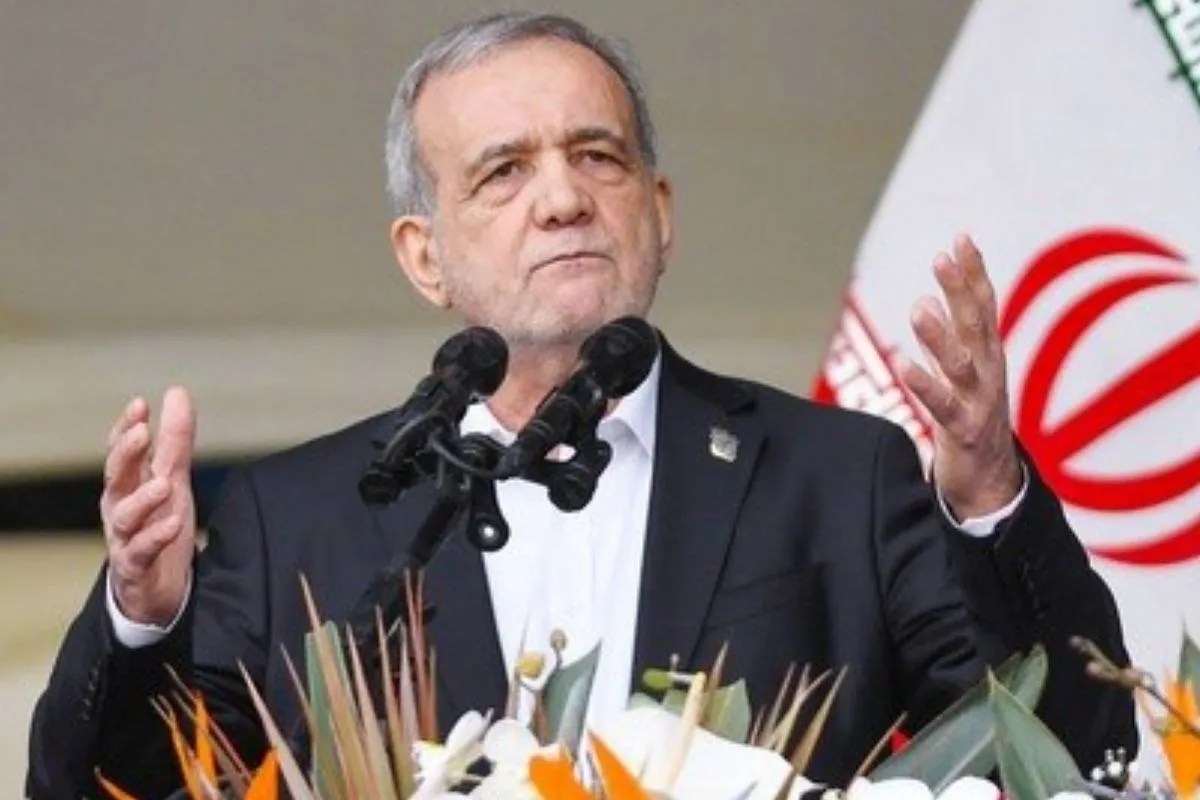
War End With US & Israel | Masoud Pezeshkian's Big Statement
This broadcast provides context on Masoud Pezeshkian's statements regarding regional negotiations and the strategic positioning of Tehran amid ongoing diplomatic friction.