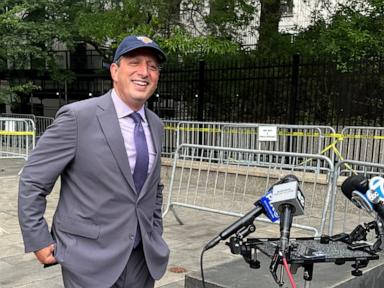
The acquittal of congressional candidate and former New York City Comptroller Brad Lander in Manhattan federal court exposes a structural friction point between federal administrative control and localized political resistance. By dismissing the misdemeanor obstruction charge against Lander, U.S. Magistrate Judge Henry Ricardo did more than clear a progressive challenger ahead of the June 23 primary for New York’s 10th Congressional District; the ruling established a demanding evidentiary threshold for prosecuting passive civil disobedience within federal installations under 41 C.F.R. § 102-74.390.
The federal government’s failed prosecution highlights a critical operational vulnerability in how federal law enforcement manages non-violent, sit-in demonstrations. Media narratives frequently reduce such trials to political theater. An analytical breakdown of the case reveals that the outcome was dictated by a specific legal framework: the failure of the prosecution to fulfill the necessary intent criteria within the cost-benefit parameters of a low-level federal offense.
The Dual Elements of Federal Obstruction: Intent vs. Presence
The prosecution’s core argument rested on a simple spatial equation: physical presence equals obstruction. On September 18, 2025, Lander and ten other local elected officials staged a demonstration on the 10th floor of 26 Federal Plaza, an administrative hub housing Immigration and Customs Enforcement (ICE) facilities and an immigration court. Upon being denied entry to inspect detention holding cells, the group sat in a circle within the elevator lobby for roughly 20 to 25 minutes.
The government asserted that because Lander sat in front of an elevator bank, he was automatically guilty of "unreasonably obstructing the usual use" of federal property. To secure a conviction under federal property management regulations, the prosecution had to satisfy two distinct legal components:
- The Actus Reus (Physical Act): Proof that the defendant physically blocked or impeded the normal flow of personnel or operations.
- The Mens Rea (Mental State): Proof that the defendant acted with the specific intent to cause an obstruction, rather than occupying space for an alternative purpose.
The prosecution attempted to use the group's chanting of the civil rights anthem "We Shall Not Be Moved" as explicit evidence of a declaration of intent to block federal operations.
This legal theory collapsed under judicial scrutiny. Judge Ricardo’s analysis of the recorded video evidence isolated the physical mechanics from the political messaging. The court observed that Lander’s body language and demeanor appeared "tired" and "resigned to the situation," signaling a lack of active, purposeful resistance.
The defense successfully decoupled the political statement from the physical reality. Singing a historic anthem was classified as a protected form of expression rather than a literal threat to infrastructure access. Because the government failed to present any corroborating evidence of active interference—such as individuals actually being prevented from exiting or entering the elevator—the physical presence alone could not fulfill the statutory definition of obstruction.
Law Enforcement Coordination Breakdowns and Evidentiary Failure
The operational protocols executed by the Federal Protective Service (FPS) during the demonstration inadvertently compromised the prosecution's case. A successful obstruction conviction typically requires law enforcement to establish a clear timeline of non-compliance following an official order.
The timeline reconstructed during the one-day bench trial revealed an operational bottleneck in the government's enforcement mechanism:
[0 to 20 Minutes]: Demonstrators occupy floor -> FPS tells group they can stay if they stop banging doors.
       ↓
[Minute 21]: Sudden tactical escalation -> Orders to clear the lobby are issued.
       ↓
[Minute 21.5]: Arrests executed within 30 seconds -> Failure to establish a prolonged window of non-compliance.
By telling the demonstrators they could remain in the lobby as long as they ceased pounding on doors, federal officers established an implicit, conditional authorization of presence. When the tactical command shifted to clearing the hallway, federal agents gave a warning window that lasted a mere 30 seconds before deploying zip ties.
Judge Ricardo critiqued this "lack of coordination" within federal law enforcement operations. From an evidentiary standpoint, a 30-second window is insufficient to prove a willful, deliberate refusal to comply with a lawful command. To substantiate an intentional obstruction charge, the state must afford the target a reasonable operational window to process the command and clear the premises. The abrupt transition from institutional tolerance to arrest eliminated the state’s ability to prove a sustained, defiant mental state.
The High-Risk Discovery Calculus in Political Trials
Lander’s decision to reject a standard pre-trial diversion agreement—which would have dismissed the misdemeanor charge automatically after six months—defied standard legal risk mitigation. In petty offenses carrying no realistic threat of incarceration, defendants almost universally accept diversion to minimize financial and reputational exposure.
Lander's deviation from this norm reveals a deliberate strategic calculus aimed at asymmetrical discovery leverage. In federal criminal proceedings, the defense can utilize the discovery phase to compel government agencies to produce internal communications, logs, and operational guidelines relevant to the arrest environment. Lander’s legal team intended to use the trial to force disclosure regarding:
- The operational conditions, capacity limits, and treatment protocols inside the 10th-floor ICE holding cells.
- Internal Department of Homeland Security (DHS) directives regarding the policing of local elected officials.
- Communications involving former DHS Assistant Secretary Tricia McLaughlin, who had publicly singled out Lander as a "sanctuary politician pulling a stunt."
This strategy highlights a systemic limitation of the federal judicial framework for low-level offenses. Because magistrate judges maintain strict guardrails on relevance, the court restricted the scope of discovery exclusively to the mechanics of the elevator lobby incident.
The defense failed to secure a broader systemic inquiry into ICE facilities. However, the trial successfully forced federal prosecutors to spend institutional capital litigating a minor property violation on a national stage. This dynamic underscores a persistent structural vulnerability: when a political actor is indifferent to standard legal penalties, the state's traditional deterrence mechanisms can be leveraged into high-visibility platforms for the defense.
The Operational Reality of Immigration Enforcement Friction
The underlying friction driving this legal clash is an escalating jurisdictional conflict over federal immigration infrastructure in metropolitan areas. Facilities like 26 Federal Plaza act as high-density processing nodes. These sites operate under strict federal authority, yet they sit directly within localities governed by conflicting political mandates.
The structural tension manifests across three distinct operational layers:
Institutional Insulation
Federal immigration enforcement relies heavily on restricted physical access to protect administrative workflows and maintain detainee custody. This insulation is designed to prevent local interference and secure sensitive federal operations from external disruption.
Local Legislative Oversight
Conversely, local officials attempt to exercise municipal and state oversight powers. They view inspecting these spaces as part of their duty to protect constituents and ensure human rights standards within their borders.
The Enforcement Friction Point
This clash of mandates creates a clear flashpoint. When municipal authorities are barred from entering federal facilities, they frequently pivot to public, non-violent civil disobedience. This tactical shift forces federal law enforcement to police local officials, creating a highly visible public relations vulnerability.
The Lander acquittal demonstrates that federal properties are not legal vacuums where administrative convenience overrides standard criminal law requirements. If the federal government intends to insulate its facilities through the criminal justice system, its law enforcement units must execute highly coordinated, patient, and documented protocols.
To secure future convictions under 41 C.F.R. § 102-74.390, agencies cannot rely on the assumption that a demonstration is inherently unlawful. Officers must issue clear, unambiguous dispersal commands, provide a legally defensible window for compliance, and explicitly document how the demonstration physically degrades the facility’s core operational capacity. Failure to execute these precise steps leaves federal prosecutors unable to meet the burden of proof, turning routine enforcement actions into highly public legal defeats.