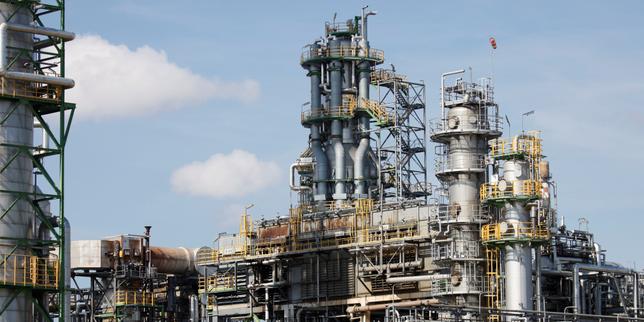
Geographic location dictates industrial destiny far more than political declarations. When Berlin sought to sever its hydrocarbon umbilical cord to Moscow, the policy collided with an immutable physical reality: the PCK refinery in Schwedt. Built in the 1960s as a terminal node of the Druzhba pipeline network, the facility was engineered to process heavy, sour Ural crude piped directly from the Volga-Urals fields.
Deconstructing this vulnerability requires moving past political rhetoric and examining the structural mechanics of path dependence. A complex oil refinery is not a modular chemical processor that can switch feedstocks with the flick of a switch. It is an integrated, pressure-and-temperature-balanced metallurgical ecosystem optimized for specific molecular weights, sulfur contents, and impurity profiles.
The Three Vectors of Path Dependence
The difficulty of re-engineering the Schwedt facility exposes a triple constraint framework that binds regional energy infrastructure to historical supply architectures.
- Topological Lock-in: The refinery was never connected to Western European import terminals via high-capacity inbound crude lines. Its entire hydraulic design assumes pressurized delivery from the east through a dedicated trunk line. Attempting to reroute supply requires utilizing alternative maritime corridors feeding secondary pathways, such as the Rostock-Schwedt pipeline, which inherently caps maximum throughput at a fraction of nameplate capacity.
- Chemical Compatibility Constraints: Ural crude features specific density and sulfur characteristics. Substituting light, sweet Brent crude or maritime imports alters the internal thermal cracking dynamics, catalyst poisoning rates, and corrosion profiles of distillation towers. Operating below optimal throughput thresholds drastically escalates unit fixed costs per barrel refined.
- Ownership and Governance Friction: Majority equity control remaining tied to Russian corporate structures—even when superseded by government trusteeship—creates legal, financial, and operational paralysis. Private capital and international partners hesitate to invest modernization capital into an asset characterized by unresolved ownership litigation and sanctions exposure.
The Cost Function of Alternative Supply Logistics
Replacing an incumbent pipeline monopoly with a diversified maritime and secondary-pipeline hybrid introduces severe cost inflation. Economics textbooks assume frictionless substitution, but physical supply chains operate on bottlenecks.
When the facility transitioned away from direct Russian input, operators turned to alternative sourcing via the Baltic port of Rostock and imports transiting through Poland. This operational shift triggers an immediate cost function penalty. First, logistics expenses rise due to tanker freight rates, port handling fees, and secondary pipeline tariffs. Second, lower capacity utilization—frequently hovering below full nameplate potential—prevents the refinery from spreading fixed operational overhead across optimal volume.
The financial deficit is absorbed either by margin compression for the facility owners, state subsidies to prevent regional fuel shortages in northeastern Germany and western Poland, or elevated retail prices for end-consumers. This dynamic transforms a geopolitical sanction into a permanent structural tax on regional industrial output.
Structural Bottlenecks in Regional Fuel Distribution
The strategic importance of Schwedt extends beyond crude processing; it acts as the primary node supplying jet fuel to Berlin-Brandenburg Airport and gasoline and diesel across the entire Brandenburg region.
Decoupling the refinery from its historical feedstock created a localized supply-demand imbalance. Regional distributors faced shrinking inventory buffers because maritime deliveries lack the continuous, steady flow rate of a dedicated pipeline. To mitigate shortages, the state intervened by placing the majority stakeholder, Rosneft Deutschland, under federal trusteeship. While this legal maneuver preserved physical operations, it froze strategic decision-making. Potential private buyers, such as international energy firms or regional actors like Poland's Unimot, repeatedly stall or terminate acquisition talks due to the unresolved legal status of the frozen equity stakes.
Consequently, the asset remains caught in a governance purgatory. State trusteeship ensures short-term operational continuity, but it deters the long-term capital expenditure required to transition the plant toward green hydrogen integration, secondary refining optimization, and modern low-emission processing configurations.
The Strategic Play
Abandon hope for a frictionless market-driven resolution to the Schwedt impasse. Policymakers must accept that legacy energy infrastructure carries multi-decade amortizations that cannot be wished away by administrative decree.
The optimal path forward requires the federal government to convert its temporary trusteeship into formal expropriation, clear all legal encumbrances from foreign corporate claimants, and package the asset with direct sovereign capital injections earmarked for pipeline debottlenecking from Rostock. Only by absorbing the capital expenditure required to transform Schwedt into an independent, multi-feedstock processing hub can the state eliminate the structural discount currently penalizing eastern German industrial competitiveness.